



A bedroom wardrobe used to be something you chose mainly for storage. In 2026, that feels increasingly outdated. The best wardrobes are becoming part of the architecture of the room — quieter, warmer and far more considered than the bulky cabinets many of us grew up with.
The shift makes sense. Bedrooms are being designed as calmer spaces, and storage has to work harder without adding visual clutter. That means seamless built-ins, tactile wood, softer colors and interiors designed around the clothes and accessories you actually own.
If you’re planning a bedroom update, these are seven wardrobe ideas worth paying attention to in 2026 — plus the choices that will still look good when the trend cycle moves on.
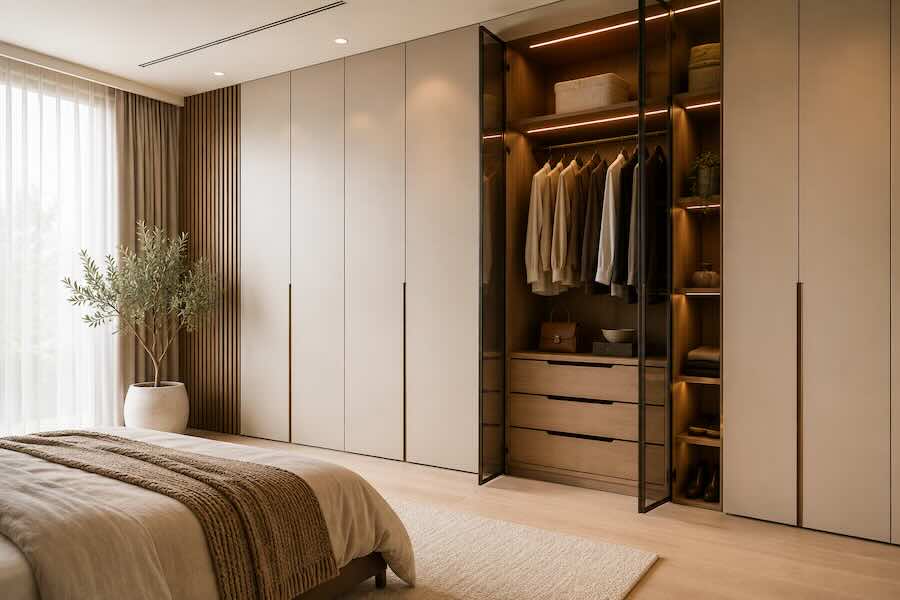
1. Wall-to-Wall Wardrobes That Feel Built Into the Room
One of the most elegant wardrobe directions is also one of the least visually complicated: storage that stretches from wall to wall and, where possible, floor to ceiling.
Instead of looking like a large piece of furniture placed against the wall, fitted cabinetry can become part of the room itself. Taking doors all the way to the ceiling also avoids the awkward strip above a wardrobe that inevitably becomes a collection point for boxes, bags and things nobody quite knows where to put.
The look works particularly well when the wardrobe finish relates closely to the surrounding walls. Soft white, warm beige, muted taupe and other quiet neutrals allow a large run of cabinetry to recede rather than dominate.
In smaller bedrooms, that visual continuity can make a surprising difference. One uninterrupted storage wall often feels calmer than several freestanding pieces competing for attention.
2. Warm Wood Is Replacing Cold, Glossy Finishes
The glossy white wardrobe isn’t disappearing completely, but bedrooms are warming up.
Oak, walnut and other natural-looking wood finishes bring texture into a room without requiring additional decoration. Rather than the heavy dark furniture associated with traditional bedroom sets, the newer approach tends to feel cleaner: simple doors, restrained hardware and wood grain doing most of the visual work.
You don’t need every piece of furniture to match, either. In fact, a room can feel more collected when the bed, nightstands and wardrobe aren’t purchased as one identical set.
The trick is repetition. If the wardrobe has a warm oak finish, echo that warmth somewhere else — perhaps through a bedside table, picture frame, bench or smaller decorative detail.
3. Handleless Doors Are Making Storage Almost Disappear
For anyone drawn to Scandinavian minimalism, this may be the wardrobe trend with the most staying power.
Flat-front doors with recessed pulls, discreet edge handles or push-to-open mechanisms create a continuous surface with very little visual interruption. When painted in a similar tone to the bedroom walls, the effect can be remarkably subtle.
This is particularly effective when you’re dealing with a large wardrobe. Six traditional doors with prominent handles immediately announce themselves; the same amount of storage behind simple fronts can read almost like architectural paneling.
Minimal doesn’t have to mean sterile. Warm lighting, natural bedding, wood furniture and tactile fabrics can stop a streamlined wardrobe from making the room feel too clinical.
4. Fluted and Textured Wardrobe Fronts Add Quiet Character
Not every wardrobe needs to disappear.
For rooms that need a little more depth, textured fronts offer an alternative to completely flat cabinetry. Vertical fluting, reeded details and subtle grooves introduce shadow and movement without relying on bold patterns.
The key word is subtle. Covering an enormous wall with highly decorative panels can overwhelm a bedroom surprisingly quickly. Texture tends to work best when the color palette remains restrained or when it’s limited to part of the cabinetry.
It’s also worth thinking about maintenance before falling in love with an intricate finish. Deep grooves and highly textured surfaces can collect more dust than simple flat doors, something beautiful showroom photography rarely mentions.
5. Wardrobes Are Moving Beyond White
White remains one of the safest choices for bedroom storage, but it isn’t the only neutral anymore.
Muted mushroom, clay, warm gray, dusty green and earthy brown can give wardrobes considerably more presence while still keeping the bedroom restful. These softer shades work especially well with natural wood, linen, wool and other materials that already belong comfortably in a bedroom.
If you’re nervous about committing to color across an entire fitted wall, go slightly deeper than the wall color rather than choosing a dramatic contrast. The difference will still be noticeable, but the cabinetry won’t become the first thing you see every time you enter the room.
For a finish that’s likely to age well, think less about the year’s fashionable color and more about the palette already running through your home.
6. Integrated Lighting Makes the Inside Matter Too
A beautiful wardrobe isn’t particularly successful if you can’t see what’s inside it.
Integrated lighting is one of those details that can make fitted storage feel genuinely luxurious while solving a practical problem. Subtle illumination around shelves, hanging sections or drawers makes darker interiors easier to navigate, particularly early in the morning or at night.
Lighting can also transform open wardrobe sections. A softly illuminated niche for bags, jewelry or a few carefully chosen pieces creates a display moment without turning the entire bedroom into a dressing room.
Keep the light warm and understated. Bright, cool lighting may be useful in an office or utility space, but it can work against the softer atmosphere most people want from a bedroom.
7. The Biggest Trend Is Storage Designed Around Real Life
The most important wardrobe trend of 2026 may not be visible from the outside at all.
Instead of accepting the standard combination of one hanging rail and a shelf, more thoughtful wardrobes divide storage according to what actually needs to live there.
Someone with a collection of long dresses needs a very different interior from someone who mostly owns shirts, folded knitwear and trousers. The same applies to shoes, handbags, jewelry and seasonal clothing.
- Double hanging rails can make better use of vertical space for shorter clothing.
- Drawers keep smaller items contained without adding another dresser to the bedroom.
- Adjustable shelving gives storage room to change as your wardrobe changes.
- Dedicated shoe storage keeps pairs visible rather than stacked in boxes.
- Higher shelves can hold luggage and less frequently used seasonal pieces.
Before ordering a wardrobe, take inventory of what you actually own. Designing the inside first and the doors second often produces a much more useful result.
Fitted or Freestanding: Which Wardrobe Is Better?
Neither option automatically wins. The right choice depends on the bedroom, budget and how permanently you’re designing the space.
Choose a fitted wardrobe when…
- You want to maximize awkward alcoves or an entire wall.
- The bedroom has sloped ceilings or unusual dimensions.
- You want storage to visually blend into the architecture.
- You expect to stay in the home long enough to justify a more permanent solution.
Choose a freestanding wardrobe when…
- You rent your home or expect to move.
- You want the flexibility to rearrange the bedroom.
- You prefer furniture with more individual character.
- You don’t need to use every inch of available wall space.
A beautiful freestanding wardrobe can also become a focal point in a way fitted cabinetry rarely does. Vintage pieces, painted armoires and simple solid-wood wardrobes can bring warmth to an otherwise minimal bedroom.
The Best Wardrobe Ideas for a Small Bedroom
Small bedrooms make every piece of furniture work harder, so wardrobe design becomes less about trends and more about using space intelligently.
Going taller rather than wider can capture storage that would otherwise be wasted. Sliding doors may also help where there isn’t enough clearance for traditional hinged doors, although they usually prevent you from seeing the entire wardrobe interior at once.
Mirrored doors can reflect light and remove the need for a separate full-length mirror, but they aren’t essential. A wardrobe in the same tonal family as the walls can create an equally calm effect without covering the room in reflective surfaces.
Most importantly, resist filling a small bedroom with storage simply because you can. The room still needs enough negative space to feel comfortable.
How to Choose a Wardrobe That Won’t Look Dated
Trend-led interiors can be exciting, but a fitted wardrobe isn’t something most people want to replace every few years.
For the longest-lasting result, keep the expensive elements relatively restrained. Simple doors, good proportions and quality hardware give you room to experiment elsewhere with paint, bedding, lamps and accessories that are much easier to change.
If you love a current trend such as fluting or a strong color, consider using it on a smaller section rather than every door.
There’s a useful rule here: the harder and more expensive something is to replace, the less dependent it should be on a fleeting trend.
FAQ: Bedroom Wardrobes
What wardrobe colors are popular in 2026?
Warm neutrals and nature-inspired tones work particularly well with today’s softer bedroom palettes. Think warm white, taupe, mushroom, muted green and natural wood rather than relying exclusively on cool gray or high-gloss white.
Are fitted wardrobes good for small bedrooms?
They can be. Fitted storage can use the full height and width of an available wall and make awkward spaces more functional. However, the design should still leave enough open floor area for the bedroom to feel comfortable rather than crowded.
Are sliding wardrobe doors better than hinged doors?
Sliding doors are useful where floor space in front of the wardrobe is limited because they don’t need clearance to swing outward. Hinged doors, however, provide easier access to the full wardrobe at once and can offer more options for storage mounted to the inside of the doors.
Should a wardrobe match the bed and nightstands?
No. Bedroom furniture doesn’t need to come from a matching set. Repeating one or two elements — such as wood tone, hardware finish, color or shape — is usually enough to make different pieces feel connected.
The Wardrobe Is Becoming Part of the Bedroom
The most interesting wardrobe ideas for 2026 aren’t really about creating more furniture. They’re about creating less visual noise.
Storage is becoming taller, quieter and better integrated, while natural materials, warmer colors and subtle texture keep bedrooms from feeling overly minimal.
But the smartest wardrobe is still the one designed from the inside out. Start with what you need to store, give everything a logical place, and then choose an exterior that feels as though it has always belonged in the room.