




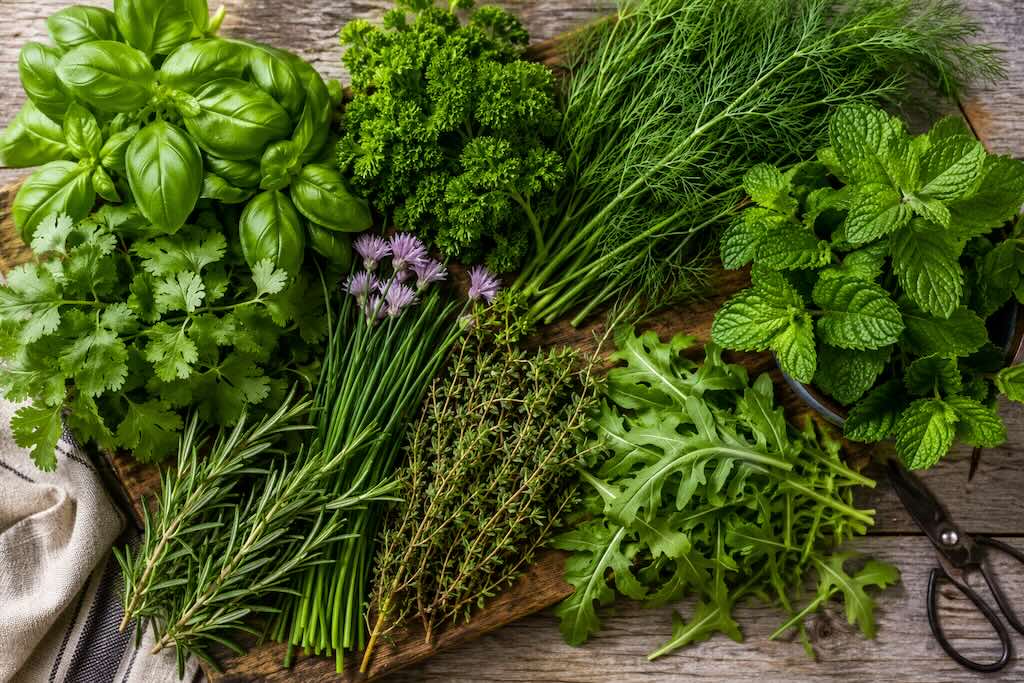
There is something about a handful of fresh herbs that makes a kitchen feel more alive. A few torn basil leaves over tomatoes, mint scattered through a summer salad or parsley chopped over warm potatoes can change a dish before you’ve done much cooking at all.
And perhaps that’s part of their appeal. Fresh herbs don’t demand complicated recipes or an overflowing spice cupboard. They’re small ingredients with an unusually large presence: fragrant, colourful and capable of waking up even the simplest plate.
They’re nutritionally interesting too. Herbs can contribute vitamins, minerals and plant compounds to the diet, although the amounts you actually consume matter. Rather than treating them as miracle remedies, it makes more sense to appreciate them for what they do exceptionally well: bringing flavour, freshness and variety to everyday food.
Basil: the smell of summer
Few herbs announce themselves quite like basil. Tear a leaf between your fingers and the scent arrives immediately: sweet, peppery and unmistakably green.
Basil is naturally associated with Italian cooking, but pesto and tomato sauce are only the beginning. Scatter fresh leaves over peaches and mozzarella, tuck them into sandwiches, stir them through pasta just before serving or pair them with strawberries for something unexpectedly good.
Because its flavour is delicate, basil is generally at its best added towards the end of cooking rather than simmered for a long time.
Parsley deserves better than garnish status
Parsley spent years being treated as the decorative sprig nobody actually ate. It deserves considerably more attention.
Its clean, slightly peppery flavour can brighten rich dishes without overwhelming them. Chop it generously into grain salads, mix it with lemon and garlic, add it to soups or use it to bring freshness to roasted vegetables.
Flat-leaf parsley tends to have a stronger flavour, while curly parsley has more texture. Both can earn permanent space in the fridge.
Dill: delicate, feathery and distinctive
Dill looks almost too delicate to have much impact. Then you taste it.
Its fresh, slightly grassy flavour works beautifully with potatoes, cucumber, yoghurt, eggs and fish. It is particularly good in cool dishes where its character isn’t lost beneath heavier flavours.
Try folding chopped dill into Greek yoghurt with lemon and a little garlic for an almost effortless sauce.
Coriander: the herb people argue about
Few herbs divide a dinner table as effectively as coriander, also known as cilantro. For some people it tastes intensely fresh and citrusy; for others, genetics can make its flavour seem unpleasantly soapy.
If you’re firmly in the first camp, coriander is extraordinary with lime, chilli and ginger. Use it generously in tacos, curries, noodle dishes, salsas and soups. Don’t forget the stalks either: finely chopped coriander stems contain plenty of flavour.
Mint goes far beyond tea
Mint has one of the most instantly recognisable aromas in the herb garden, yet it is surprisingly versatile.
Pair it with peas, cucumber, watermelon, yoghurt, couscous or fresh fruit. Add leaves to cold water with citrus on hot afternoons, or chop them into salads when everything else on the plate feels a little too rich.
If you grow mint at home, a pot is often preferable to an open bed. Given the opportunity, mint has a habit of deciding the entire garden belongs to it.
Chives: quiet but incredibly useful
Chives don’t demand attention. Their mild onion flavour simply makes an extraordinary number of everyday foods taste better.
Snip them over scrambled eggs, baked potatoes, soups and salads, or stir them into cream cheese and yoghurt-based dips. Their purple flowers are edible too and can make a simple summer salad look unexpectedly beautiful.
Rosemary likes things slow and golden
Unlike delicate basil or coriander, rosemary can stand up to serious heat. Its woody, pine-like fragrance is particularly at home with roasted potatoes, vegetables, breads and slow-cooked dishes.
A little goes a long way. Finely chop the leaves rather than leaving large pieces in a finished dish, and let the heat draw out their aroma.
Thyme is the herb you barely notice — until it’s missing
Thyme isn’t usually the loudest ingredient on the plate. That’s precisely why cooks return to it again and again.
Its earthy flavour settles naturally into soups, roasted vegetables, mushrooms, beans and slow-cooked dishes. Add whole sprigs while cooking and remove the woody stems before serving, or strip off the tiny leaves when you want the herb to remain in the dish.
Rocket brings the pepper
Rocket — or arugula — sits somewhere between leafy green and herb, but its peppery bite earns it a place here.
It can turn a simple plate of tomatoes, olive oil and cheese into lunch, soften slightly when scattered over freshly cooked pizza, or give sandwiches the sharpness they sometimes need. Pair it with sweeter ingredients such as pear, figs or roasted squash for contrast.
Sorrel: the green worth discovering
Sorrel is less common in supermarkets, which is a shame. Its bright, lemony sharpness feels almost surprising the first time you taste it.
Young leaves can be added sparingly to salads, while sorrel can also be cooked into soups and sauces. Because the flavour is naturally tart, it works best as an accent rather than something that needs to dominate the plate.
The easiest way to use more fresh herbs
Forget buying ten bunches at once. Choose two or three herbs that suit the food you already cook and start there.
Keep hardy herbs for roasted and slow-cooked dishes and use softer herbs when you want freshness at the end. Taste as you go. Mix them. Put more parsley into the salad than feels reasonable. Add mint somewhere you normally wouldn’t.
That may be the real pleasure of herbs and the colour green: they make everyday cooking feel a little less routine. Sometimes dinner doesn’t need another recipe. It just needs something fresh.