



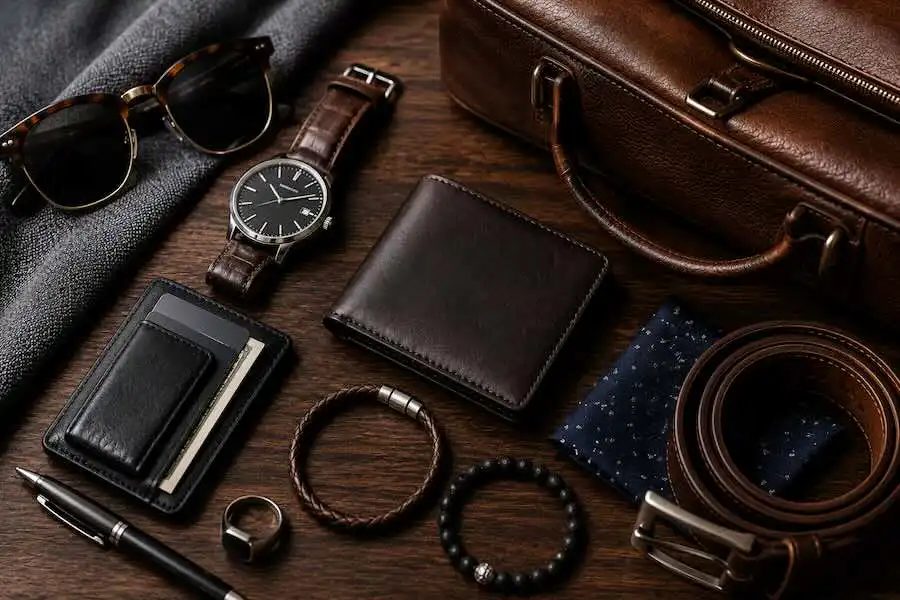
The strongest men’s accessories rarely shout. A good watch catches the light at the cuff, a leather bag develops character with age, and the right sunglasses quietly sharpen an otherwise simple outfit. These are small details, but they give a wardrobe structure and personality.
Rather than collecting accessories around short-lived trends, it makes sense to build a compact rotation of pieces that work across seasons. Focus on proportion, material, function, and how naturally each item fits into your daily life. Five categories form a particularly useful foundation.
A Watch That Fits Your Routine
A watch remains one of the easiest ways to bring definition to a man’s outfit. It occupies very little visual space, yet the choice of case, dial, strap, and finish can shift an entire look.
The key is proportion. A restrained steel watch on leather can sit comfortably beside tailoring, while a sportier model feels natural with denim, technical outerwear, or weekend clothes. There is no need to build a large collection immediately. One versatile watch that suits your wrist and lifestyle is a better starting point than several pieces you rarely wear.
Function matters too. Someone who travels frequently may prioritize durability, legibility, and multiple time zones, while another person may simply want a clean everyday piece. Our guide to choosing a travel watch for men explores some of those considerations in greater detail.
A Bag That Looks Better With Use
The modern men’s bag has moved well beyond the traditional briefcase. Backpacks, totes, messenger bags, compact crossbody styles, and structured work bags can all serve different routines without sacrificing appearance.
Choose according to what you actually carry. A commuter transporting a laptop, charger, headphones, and notebook needs a different silhouette from someone carrying only a phone and keys around the city.
Material can make the difference between something disposable and something worth keeping. Full-grain leather develops a distinctive patina, while high-quality canvas and technical fabrics can provide lighter weight and better weather resistance. Look closely at stitching, hardware, zippers, handles, and shoulder straps. Those are usually the components that reveal how well a bag will age.
A Wallet Without the Bulk
A wallet is primarily practical, but that does not mean it should be an afterthought. Bulging pockets can distort the line of trousers and jackets, which is one reason slimmer designs work particularly well in a considered wardrobe.
Start by removing what you rarely use. A few essential cards, identification, and a modest amount of cash may be all that needs to travel with you each day. From there, choose a format that matches those requirements rather than carrying unnecessary capacity.
Traditional leather bifolds remain timeless, while cardholders and designs such as a minimalist wallet offer a more compact approach. Whatever the construction, prioritize durable materials, clean edges, secure card retention, and a shape that remains comfortable in a pocket.
Sunglasses With the Right Proportions
Sunglasses combine visual impact with genuine utility. They are also not exclusively a summer accessory. Bright winter skies, reflected light, driving, and travel can make a dependable pair useful throughout the year.
Ignore rigid rules claiming that one face shape must wear one specific frame. Instead, pay attention to scale. The frame should sit comfortably at the bridge, remain secure around the temples, and feel proportionate to your features.
Classic shapes in black, tortoiseshell, dark acetate, or restrained metal finishes are particularly easy to wear repeatedly. Lens quality deserves equal attention. Style matters, but proper UV protection should remain a basic requirement when buying sunglasses.
Jewelry With Restraint
Men’s jewelry works particularly well when it feels personal rather than decorative for decoration’s sake. A slim chain disappearing beneath a T-shirt, a simple ring, or a bracelet beside a watch can introduce texture without dominating the outfit.
There is no requirement to wear several pieces simultaneously. In fact, restraint often produces the cleaner result. Start with one material or visual language and build slowly. Silver, gold, steel, leather, stone, and other jewelry materials each bring a different temperature and texture to an outfit.
Consider how jewelry interacts with hardware already present in your clothing and accessories. A silver watch, belt buckle, ring, and glasses hardware can create a subtle visual thread without looking overly coordinated.
How to Build an Accessory Collection That Lasts
Start slowly. Accessories are most convincing when they look as though they belong to the person wearing them, not as though an entire trend checklist was purchased in one afternoon.
- Buy for your routine: Choose pieces that solve real everyday needs.
- Prioritize materials: Good leather, metal, acetate, and fabric generally age more gracefully.
- Keep proportions balanced: Accessories should complement your frame and clothing rather than overwhelm them.
- Avoid excessive matching: Repeating subtle materials or tones creates cohesion without making an outfit feel calculated.
- Maintain what you own: Clean lenses, condition leather, store jewelry properly, and service mechanical watches when required.
Conclusion
A useful men’s accessory collection does not need to be large. A dependable watch, well-made bag, compact wallet, flattering sunglasses, and a small selection of jewelry can cover an enormous range of situations.
The difference is in the details: brushed metal against a dark sleeve, worn leather softening at the edges, or a simple frame catching late-afternoon light. Choose pieces you genuinely enjoy using, maintain them properly, and they can become familiar parts of your personal style for years.
Frequently Asked Questions
What accessories should every man own?
A versatile watch, practical everyday bag, slim wallet, quality sunglasses, and one or two understated pieces of jewelry provide a strong starting point.
Should men’s accessories match?
They do not need to match exactly. Repeating related colors, metals, or materials can make an outfit feel cohesive while still allowing individual pieces to have character.
Is an expensive watch necessary for good style?
No. Proportion, design, condition, and suitability for the outfit matter more than price or prestige.
How much jewelry should a man wear?
There is no fixed limit, but starting with one or two pieces makes balancing an outfit easier. A watch with a ring, bracelet, or simple chain is often enough.
What should I look for when buying timeless accessories?
Prioritize durable construction, restrained design, useful functionality, comfortable proportions, and materials that can age well rather than details tied closely to a passing trend.