



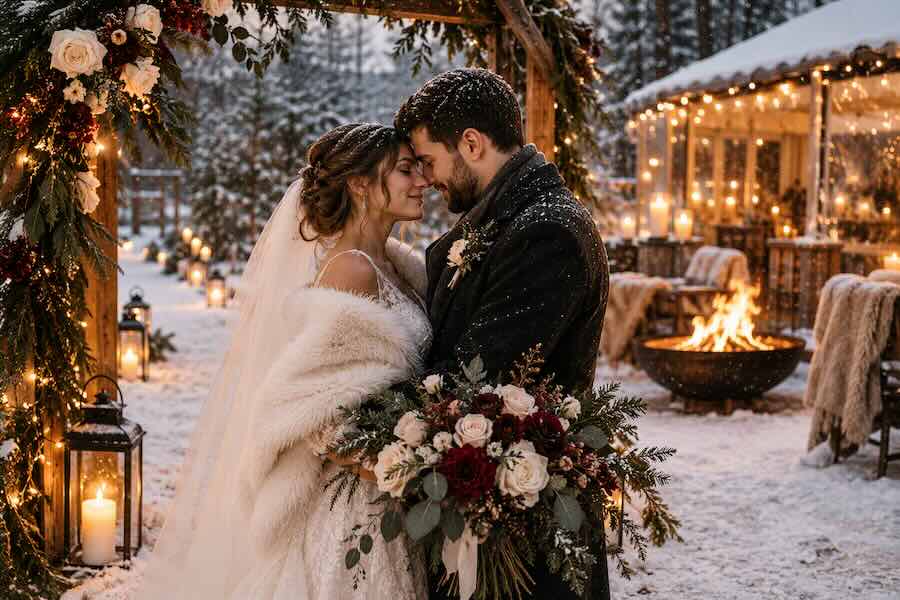
A winter wedding has its own atmosphere: low light, crisp air, candlelit tables, velvet textures, and the possibility of snow just beyond the windows. It can feel intimate and cinematic in a way few other seasons can match. The trade-off is that cold weather introduces practical details that need to be handled before the romance can take over.
The strongest winter celebrations treat comfort and aesthetics as part of the same design. A warm venue, thoughtful transport plan, seasonal menu, layered textiles, and flowers suited to the season can create an event that feels intentional rather than simply scheduled during winter.
Choose a Venue Built for Winter
Start with the building rather than the decorations. A beautiful venue loses much of its charm when guests are standing in a draft, navigating icy paths, or waiting outside between different parts of the celebration.
Ask prospective venues how they handle snow and ice, heating, coat storage, parking, accessibility, and severe-weather contingencies. If any portion of the wedding will take place outside, confirm that sheltered alternatives are available rather than relying entirely on the forecast.
An outdoor ceremony can still work beautifully. Heated tents, patio heaters, covered walkways, warm lighting, and a short ceremony format can preserve the open-air experience without asking guests to endure the cold for too long.
Keep Guests Warm Without Losing the Look
Comfort should become part of the visual language of the wedding. Instead of hiding practical cold-weather elements, work them into the styling.
Arrange folded wool blankets in baskets near outdoor areas. Consider faux-fur wraps, capes, tailored coats, or heavier fabrics for the wedding party. Outdoor lounge areas can incorporate safely positioned fire features where the venue permits them, while candlelight and warm-toned illumination can make indoor spaces feel visually warmer.
It is also worth telling guests clearly when part of the celebration will happen outdoors. A short note on the wedding website or invitation gives everyone the opportunity to choose appropriate footwear and outerwear rather than discovering the plan after arriving.
Build the Menu Around the Season
Winter gives the reception menu permission to become richer and more comforting. Roasted vegetables, warming soups, slow-cooked dishes, seasonal herbs, baked desserts, and deep savory flavors sit naturally against the colder landscape.
The same approach works beautifully with drinks. Hot chocolate, warm apple cider, coffee, tea, and other heated non-alcoholic options can become part of the guest experience rather than an afterthought. Where appropriate, a professionally managed bar can add seasonal cocktails or mulled drinks alongside them.
Presentation matters here. Picture ceramic cups, cinnamon sticks, dark fruit, brushed metal, amber glass, and candlelight reflected across the table. A winter menu can contribute as much to the atmosphere as the flowers.
Use Seasonal Florals With Texture
Winter florals do not need to resemble Christmas decorations. A restrained palette can feel far more sophisticated.
Roses, anemones and other seasonally available blooms can be mixed with evergreen foliage, branches, berries, dried elements, or pinecones to create arrangements with depth. Availability varies considerably by region, so working with a local florist is more reliable than building the entire design around a flower that may need to be imported.
For something moodier, consider ivory flowers against dark greenery, burgundy accents, smoked glass, and aged brass. A softer interpretation might combine cream, muted blush, pale greenery, natural wood, and linen. Winter does not demand one color palette.
Let Lighting Do More of the Decorating
Winter daylight disappears quickly, which makes lighting one of the most important design decisions of the day. Instead of fighting the darkness, use it.
Candles at different heights can bring movement to dinner tables, while warm wall lighting and discreet uplighting can soften large reception rooms. Strings of small warm-white lights can work in the right setting, but restraint keeps the room from feeling overly themed.
Coordinate the lighting plan with your photographer as well. Sunset may arrive considerably earlier than expected, so portraits and group photographs that require natural light should be scheduled accordingly.
Plan for Winter Travel
The least glamorous part of a winter wedding may also be one of the most important: transportation. Snow, ice, rain, fog, and shorter daylight hours can complicate journeys that would be straightforward in another season.
Keep travel between the ceremony and reception minimal when possible. If guests are staying nearby, organized transportation can remove another point of uncertainty. Build additional time into the schedule and have a clear communication plan in case weather affects arrival times.
Have a Weather Plan You Actually Like
A backup plan should not feel like the disappointing version of the wedding. Design it from the beginning as a second beautiful option.
If an outdoor ceremony has to move inside, know exactly where the floral installation, chairs, musicians, candles, and ceremony backdrop will go. Confirm who makes the final weather decision and when. Having those details settled removes an enormous amount of pressure from the wedding morning.
The Practical Takeaway
Plan the winter logistics first, then layer the beauty over them. Secure a genuinely weather-ready venue, shorten unnecessary outdoor periods, provide warmth, check sunset times, and create a strong indoor alternative. Once those pieces are resolved, the season becomes an advantage rather than an obstacle.
Conclusion: Make Winter Part of the Celebration
The appeal of a winter wedding lies in contrast. Cold air outside, warm light within. Bare branches against soft flowers. Heavy fabrics beside delicate glassware. Lean into those contrasts and the season supplies much of the atmosphere naturally.
The perfect winter wedding does not depend on snow arriving at precisely the right moment. It comes from designing a celebration that remains beautiful, comfortable, and memorable whatever the weather decides to do.
Frequently Asked Questions
What should guests wear to a winter wedding?
Guests should consider layers, warmer fabrics, suitable outerwear, and weather-appropriate footwear, particularly when any portion of the event takes place outside.
Can you hold a wedding ceremony outside in winter?
Yes, provided the venue can offer appropriate shelter and heating and there is a reliable indoor alternative for severe weather. Keeping the outdoor portion relatively short also helps guests remain comfortable.
What colors work well for a winter wedding?
Ivory, forest green, burgundy, navy, champagne, muted blush, chocolate brown, and metallic accents can all work beautifully. The season also suits restrained neutral palettes built around cream, wood, greenery, and candlelight.
What food works well at a winter wedding?
Seasonal roasted vegetables, soups, slow-cooked dishes, warm desserts, coffee, tea, cider, and hot chocolate can create a comforting cold-weather menu. Your caterer can adapt ingredients to what is locally available.
What is the biggest thing couples forget when planning a winter wedding?
Daylight and weather logistics are easy to underestimate. Check sunset times early, allow additional travel time, and make sure the indoor weather plan is fully designed rather than improvised.