




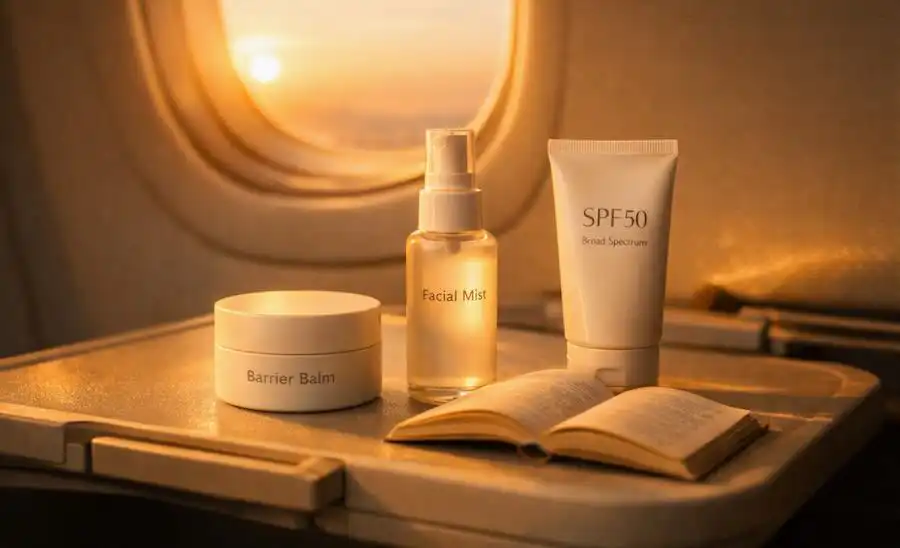
Keeping skin healthy and visibly alive in 2026 is a moving target for anyone who travels often. Ultra-long-haul routes and shifting climates mean a skincare routine now has to be as mobile as the person wearing it.
Globetrotting adventurer or seasoned business traveler, the constant exposure to dry, pressurized cabin air and the blue light of in-flight screens takes a real toll on skin. Combatting it starts with understanding your own skin type and adopting a modern, biocompatible routine that keeps your barrier intact while you’re in transit.
Understanding Your Skin Type in 2026
Different skin types carry genuinely distinct characteristics. The broad categories — oily, dry, combination, sensitive — still hold, but modern dermatology has added weight to the skin microbiome as part of the picture too. Each type reacts differently to recycled cabin air and shifting altitude. If you’re unsure where you fall, the Cleveland Clinic’s breakdown of the five recognized skin types is a solid, dermatologist-reviewed starting point. Choosing products suited to your actual skin — particularly ones formulated for high-altitude stress — is the first real step toward avoiding the dreaded “airplane face.”
Preventing Airplane Skin: Modern Tips and Tricks
- Hydration is key. Cabin humidity often sits below 20%, and moisture evaporates from skin fast in that kind of dryness. Prioritize hydration before, during, and after the flight — a moisturizer built around humectants like hyaluronic acid, or the newer Polyglutamic acid, which holds noticeably more water. The American Academy of Dermatology covers the science behind this in more clinical detail.
- Cleanse wisely. Before boarding, stick to a pH-balanced, non-stripping cleanser — nothing harsh enough to disrupt the skin’s acid mantle. After landing, a double-cleanse removes the “plane film” of recycled oils and microscopic cabin pollutants that settle over hours in the air.
- High-altitude sun protection. UV radiation runs meaningfully stronger at 30,000 feet. A broad-spectrum SPF 30 minimum before takeoff — SPF 50 for a window seat — matters more than most travelers assume. Mineral sunscreens do double duty here, adding a physical barrier against cabin pollutants as well as UV.
- Barrier support over makeup. Heavy makeup tends to clog pores in a pressurized cabin. A skin-first approach works better — travel bare-faced, or reach for a barrier-repair cream that acts as a shield. If coverage is non-negotiable, a light tinted serum with ceramides is the gentler compromise.
- Smart misting. Not all facial mists earn their place in a carry-on. Plain water mists can actually pull moisture out of skin as they evaporate. Look instead for mists built around ectoines or ceramides, which lock moisture in rather than letting it lift straight back off.
- Watch your intake. Alcohol and caffeine are both diuretics, dehydrating skin from the inside regardless of what’s applied topically. Many travelers in 2026 have switched to electrolyte-infused water for long transits, for exactly this reason.
- Humidify the air. Staying somewhere with a dry hotel climate calls for backup — a personal travel-sized humidifier makes a genuine difference to skin suppleness overnight.
- The post-flight reset. On arrival, a proper recovery routine earns its time — a soothing sheet mask or a “slugging” session with a barrier balm helps replenish what transit took out.
Conclusion
Frequent travel doesn’t have to mean trading away your glow. Identify your actual skin type, build a routine around it, and the physiological stress of air travel becomes something you can genuinely counter rather than just endure. Skin is the body’s largest organ and its first line of defense — a little extra care in transit means arriving looking as rested as you actually feel.
Frequently Asked Questions
Is it okay to use a sheet mask on a plane?
It was once a popular in-flight ritual, but many dermatologists now caution that in very dry cabin air, a sheet mask can pull moisture out of skin unless it’s sealed immediately with a heavy occlusive cream afterward. A thick leave-on overnight mask is generally the safer choice mid-flight.
Does drinking water really help my skin during a flight?
Yes, but only up to a point. Systemic hydration matters for overall health, but facial skin responds most directly to external humidity. Genuine protection against “airplane skin” needs both internal water intake and topical barrier support — neither one alone does the full job.
Should I change my routine based on the destination climate?
Absolutely. Humid, tropical destinations call for lightweight antioxidants. Cold or high-altitude ski destinations call for the opposite — heavier lipids and ceramides to guard against windburn and extreme dryness.
How do I protect my skin from blue light on long flights?
Many current sunscreens and day creams now include iron oxides or antioxidants — Vitamin C, niacinamide — specifically to offset the oxidative stress that comes from hours of screen exposure in a dark cabin.