

A self-published book has only a few seconds to make its first impression. Before a reader reaches the opening sentence, they have already encountered the cover, typography, paper, product description, and perhaps a sample page. Each detail quietly signals whether the book has been carefully produced.
Traditional publishers have editors, designers, production teams, and marketers handling those details. Independent authors have more control, but that freedom comes with responsibility. The goal is not to make a book look traditionally published. It is to make every element feel intentional, consistent, and ready to sit confidently beside professionally produced titles.
Start With a Professional Book Cover
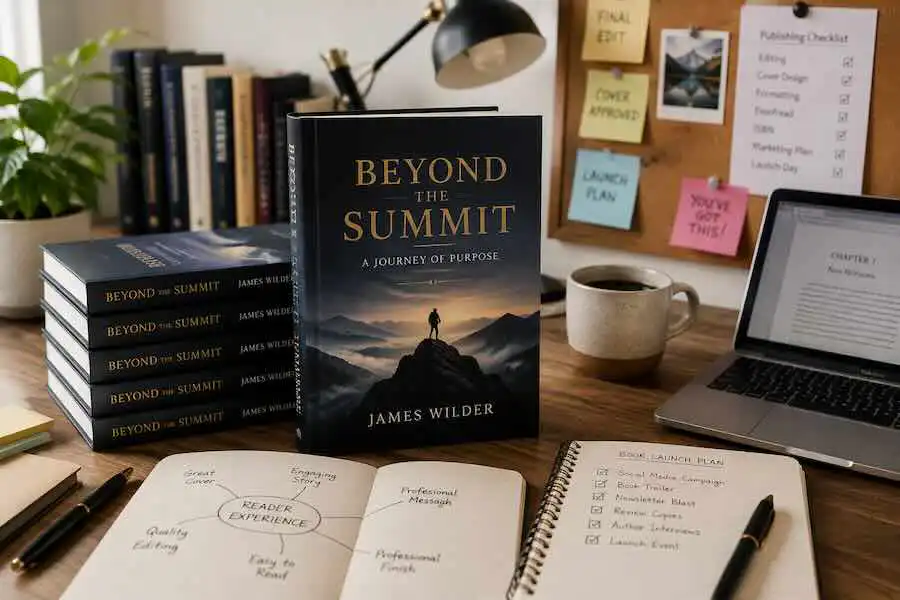
A strong cover is more than an attractive illustration. It is a piece of visual communication built around genre, hierarchy, typography, scale, and reader expectations.
Hiring a designer with specific book-cover experience can therefore be one of the smartest investments in a self-publishing budget. A designer should understand how a cover functions both as a full-size physical object and as a tiny thumbnail on an online bookstore.
Study successful books within your category before commissioning the design. Look at typefaces, imagery, color palettes, composition, and the amount of information placed on the cover. The objective is not imitation. It is understanding the visual language readers already associate with your genre.
Give Editing Its Own Budget
A beautiful cover may earn the click, but clean prose earns trust. Editing should therefore be treated as part of production rather than something squeezed into the final days before publication.
Different manuscripts require different levels of intervention. Developmental editing examines larger questions such as structure, pacing, argument, character, and organization. Copy editing works closer to the sentence level, while proofreading catches remaining errors once the manuscript is approaching its final form. Understanding the different types of editing can help authors decide where professional assistance will have the greatest impact.
Even strong writers can become visually accustomed to their own manuscripts after reading the same pages repeatedly. A fresh set of trained eyes can catch inconsistencies, awkward passages, punctuation problems, and small errors the author no longer notices.
Make the Interior Feel Designed
Professional presentation continues after the cover. Margins, chapter openings, paragraph spacing, running heads, page numbers, type size, and line spacing all influence how comfortable a book feels to read.
Resist the urge to decorate every available surface. For most books, restrained typography and generous breathing room create a stronger impression than elaborate formatting. The interior should support the words rather than compete with them.
Print a physical proof whenever possible. A layout that appears balanced on a laptop can feel surprisingly cramped once bound between two covers.
Use Endorsements With Purpose
Thoughtful endorsements can give an unfamiliar author useful social proof. Reach out to writers, specialists, reviewers, or other relevant voices whose audiences naturally overlap with the book.
Give potential endorsers enough time to read the work rather than asking for immediate praise shortly before publication. An advance reader copy, concise introduction, publication date, and clear request make the process easier for everyone involved.
A specific endorsement is usually more persuasive than generic enthusiasm. One sharp sentence explaining what makes the book distinctive can carry more weight than several vague superlatives.
Pay Attention to Print and Finishing
A physical book is tactile. Readers notice the weight of the paper, the stiffness of the cover, the depth of the spine, the way pages turn, and the surface beneath their fingertips.
Depending on the printing method and budget, details such as matte or gloss lamination, embossing, debossing, spot treatments, or foil can give a cover additional dimension. These effects work best when they reinforce the design rather than simply adding decoration.
Production specifications matter too. Check bleed, image resolution, spine dimensions, barcode placement, color settings, and trim size against the printer’s requirements before approving the final files.
Build a Consistent Author Brand
The book rarely exists in isolation. Its visual identity extends to the author’s website, retailer pages, social profiles, promotional graphics, newsletters, and future titles.
Consistency creates recognition. A restrained palette, repeatable typography system, polished author photograph, and coherent promotional imagery can make a small independent operation feel considered without requiring a large marketing department.
Check the Details Before Publishing
Before release, examine the book as though you had never seen it before. Read the back-cover copy. Inspect the copyright page. Check chapter titles, page numbers, hyperlinks in the ebook, retailer description, author biography, metadata, and every visible element of the cover.
Then order a proof and repeat the process in physical form. Small inconsistencies become much easier to see when the finished object is sitting under real light in your hands.
Conclusion
Professional self-publishing is built from dozens of quiet decisions. A considered cover catches the eye. Careful editing protects the reading experience. Strong typography, thoughtful finishing, and consistent branding complete the object.
Independent publishing gives authors unusual creative control. Use it carefully, and the finished book can feel less like a compromise and more like exactly what it is: a publication made deliberately from cover to final page.
Frequently Asked Questions
Should a self-published author hire a professional cover designer?
It is often worth considering, particularly when the author has limited experience with typography, print production, or commercial cover design. A specialist can design around both genre expectations and technical printing requirements.
What kind of editing does a self-published book need?
That depends on the manuscript. Some books need structural or developmental work first, while polished manuscripts may primarily require copy editing and final proofreading.
Should I order a printed proof before publication?
Yes, if you are releasing a print edition. A physical proof lets you inspect color, margins, typography, paper, image reproduction, and other details that are difficult to judge accurately on a screen.
Do endorsements help self-published books?
Relevant endorsements can provide useful credibility, particularly when they come from people whose expertise or readership connects naturally with the subject or genre.
What makes a self-published book look professional?
Consistency is one of the strongest signals: polished editing, appropriate cover design, clean interior typography, accurate metadata, quality production, and careful proofreading should feel like parts of the same publication.
? Skriv ‘/image’ för att generera den tillhörande utvalda bilden utan text.