




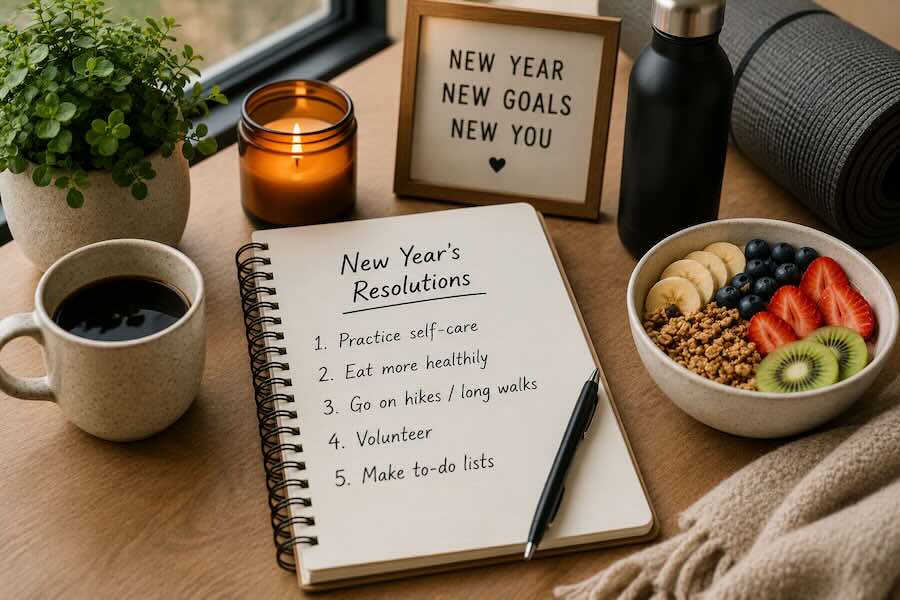
A new year can create the feeling that everything needs to change at once. In practice, the resolutions that tend to matter most are quieter: taking better care of yourself, eating with more intention, moving regularly, contributing to your community, and giving everyday priorities somewhere to land.
For 2026, the aim does not need to be reinvention. Think of January as a reset point instead. Choose habits that fit into ordinary Tuesdays as easily as they fit into an ambitious first week of the year. These five New Year’s resolutions offer a practical place to begin.
1. Build Self-Care Into Your Routine
Self-care works best when it stops being something reserved for difficult days. Sleep, downtime, meaningful social contact, boundaries, and activities you genuinely enjoy can all become part of a sustainable routine.
Start small. Protect an evening without work notifications. Read before bed instead of scrolling. Take a quiet walk after lunch. Schedule time with people who leave you feeling restored rather than depleted.
Self-care can also mean recognizing when everyday strategies are no longer enough. If stress, substance use, anxiety, or another concern is interfering with daily life, seeking qualified professional support can be a meaningful next step. The Substance Abuse and Mental Health Services Administration provides information about finding support in the United States.
2. Make Healthy Eating More Realistic
A healthier relationship with food does not require turning every meal into a nutritional project. Instead of building a resolution around restriction, focus on what you can add to your routine.
Keep fruit within reach. Add vegetables to meals you already enjoy. Learn two or three simple dishes you can prepare when the refrigerator is nearly empty and your energy is low. Treats can still have a place; the goal is to make nourishing choices easier to repeat.
The World Health Organization offers broader guidance on healthy dietary patterns, including fruit, vegetables, whole grains, legumes, nuts, and other nutrient-rich foods.
3. Walk More and Spend Time Outdoors
Not every fitness goal needs a gym membership or complicated training plan. Walking remains one of the simplest ways to introduce more movement into an ordinary week.
Choose a riverside path, wooded trail, city park, or simply a longer route home. Notice the physical details along the way: cold air, changing light, wet pavement, leaves moving above the path. Walking creates a rare pocket of time in which movement and mental space can coexist.
If a long hike feels unrealistic, make the resolution smaller. A regular 20-minute walk is easier to sustain than an ambitious plan that disappears by February.
4. Give Some of Your Time to Others
Volunteering turns a personal resolution outward. Local food organizations, animal shelters, environmental groups, community programs, and charities often need people with very different schedules and skill sets.
The commitment does not have to consume every weekend. A few hours each month can introduce new people and experiences into your routine while supporting work that matters to you.
If you are interested in opportunities farther from home, the existing volunteer program directory is one starting point. Before committing, research the organization, costs, responsibilities, and community impact carefully.
5. Create To-Do Lists You Can Actually Finish
A to-do list should reduce mental clutter, not become another source of pressure. Long lists filled with vague ambitions often create the opposite effect.
Try separating what needs attention today from what can wait. Keep daily priorities short and specific: book the appointment, answer the email, buy groceries, walk for 20 minutes. Larger goals can live on a weekly or monthly list instead.
This distinction matters. Writing “get organized” gives you an aspiration. Writing “sort the desk drawer for 15 minutes” gives you an action.
Make Your Resolutions Smaller
The thread connecting these resolutions is consistency. A dramatic January routine can feel exciting, but a modest habit that survives spring, summer, and autumn is likely to have a greater effect on daily life.
Choose one resolution first. Define the smallest version of it that still counts, decide when it fits naturally into your week, and track whether you actually do it. Once the habit feels ordinary, you can build from there.
Conclusion
A new year does not demand a new personality. It simply offers a useful moment to reconsider how you spend your time and attention. More movement, better food, deliberate rest, community involvement, and clearer priorities may sound simple. That is precisely their strength. Build a year from habits you can live with, rather than promises you cannot maintain.
Frequently Asked Questions
What are good New Year’s resolutions for 2026?
Useful resolutions include developing a regular walking habit, improving everyday meals, making time for rest, volunteering, organizing finances, learning something new, or creating a manageable planning system.
How many New Year’s resolutions should I make?
There is no ideal number. Starting with one or two clearly defined priorities can make it easier to concentrate on changing your routine instead of maintaining a long list of intentions.
How can I make a resolution easier to maintain?
Make it specific and small enough to repeat. Instead of resolving to “exercise more,” for example, decide to take a 20-minute walk on three designated days each week.
Is it too late to start a resolution after January?
No. January is simply a convenient psychological marker. A useful habit can begin on any day of the year.
What should I do if I break my resolution?
Resume the habit rather than treating one missed day as failure. If you repeatedly struggle to maintain it, reduce its frequency or scope until it fits realistically into your life.