




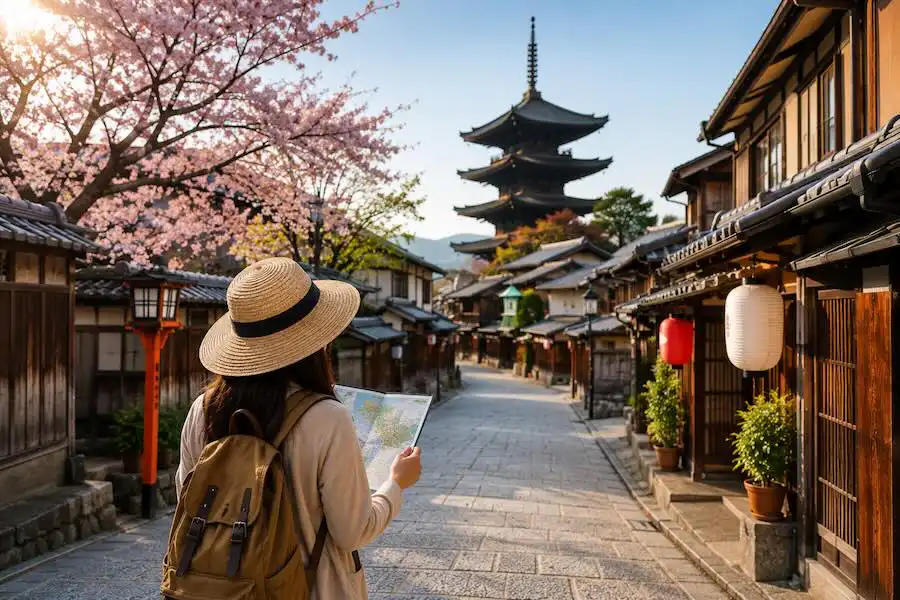
Asia does not come with a single etiquette manual. Step from a quiet Tokyo train into a night market in Taipei, a family dining room in Nepal or a restaurant in Singapore and the social cues can change completely. That is part of the pleasure of traveling across the region: familiar gestures suddenly carry different meanings.
The useful approach in 2026 is curiosity rather than anxiety about getting everything right. Asia contains dozens of countries, languages, religions and local customs, so sweeping rules rarely survive contact with real life. Learn the conventions of the destination you are actually visiting, watch what people around you do and respond politely when someone corrects you.
Travel requirements can change too. Before departure, check official immigration, visa and health information for every country on your itinerary rather than relying on pandemic-era reopening guides or older travel articles.
Shopping in Japan: Convenience Meets Detail
Shopping in Japan can move effortlessly between centuries. One street might hold ceramics, paper goods and regional sweets; a few stations away, department stores and electronics districts glow beneath immaculate displays.
Convenience stores are worth exploring in their own right, while specialty shops can be excellent places to look for stationery, kitchenware, beauty products, character merchandise and gifts that are difficult to find elsewhere.
If your trip is still some distance away, Sugoi Mart sells Japanese snacks, collectibles and other products internationally. In Japan itself, leave some empty suitcase space. It has a habit of disappearing quickly.
Understand Tipping Before You Reach for Your Wallet
Tipping customs vary considerably across Asia, which makes destination-specific research important. Japan is one of the clearest examples: conventional tipping is generally not part of everyday restaurant and service culture, and attempting to leave extra cash can create confusion.
Singapore is more nuanced. Restaurants and hotels may include service charges, while discretionary tipping can depend on the setting. The better rule is therefore not “never tip in Asia,” but “check how service charges and gratuities work where you are.”
When uncertain, look at the bill and ask politely. A thirty-second question is better than assuming that customs from home apply everywhere.
Learn Basic Chopstick Etiquette
Chopsticks carry etiquette beyond simply getting food from plate to mouth. One convention worth remembering in destinations including Taiwan and Japan is to avoid leaving chopsticks standing vertically in a bowl of rice. The arrangement can resemble incense used in funerary or memorial contexts.
Other conventions vary by place and setting. Avoid playing with chopsticks, pointing at people with them or treating them like drumsticks. When communal serving utensils are provided, use them rather than your personal chopsticks.
Nobody expects a visitor to arrive with flawless technique. Calm observation and basic table manners will take you much further than nervous attempts to memorize every possible rule.
Look for Shoes at the Entrance
Removing shoes is common in homes and certain traditional spaces across parts of Asia, but it is not a universal rule for every building or every country.
The entrance usually provides clues. A row of shoes, raised interior flooring, slippers or a request from your host are clear signals. Temples, traditional accommodation and some restaurants may have their own requirements as well.
Wear socks you are comfortable displaying and shoes that can be removed without a complicated five-minute ritual. Small practical decisions become surprisingly valuable after several days of travel.
Public Affection Depends on the Destination
There is no credible rule that public affection is unacceptable in every Asian country. Social expectations differ enormously between Tokyo, Bangkok, Singapore, Kathmandu and dozens of other destinations.
Some societies and settings are more conservative about kissing and overt physical intimacy in public, while holding hands or brief affectionate gestures may attract little attention elsewhere. Religious sites and conservative communities generally call for greater restraint.
Local laws matter as much as etiquette, particularly for LGBTQ+ travelers. Check current government travel advice and destination-specific legislation before traveling rather than assuming that social or legal conditions are uniform across the region.
Keep the Volume Down on Japanese Trains
Japanese trains offer one of the clearest demonstrations of how shared-space etiquette can shape everyday life. Carriages carrying large numbers of people can remain remarkably quiet.
Keep phone conversations to a minimum, use headphones at a considerate volume and avoid blocking seats or aisles with luggage. More detailed train etiquette guidance can help first-time visitors understand the rhythm before boarding.
Food rules also depend on the train. Eating on many urban commuter services is generally avoided, while meals and drinks are a familiar part of longer journeys on services such as the Shinkansen. Context matters.
Understand Communal Dining Before Dinner Arrives
In many parts of Asia, dining can be built around shared dishes rather than individual plates. A table gradually fills with bowls and platters, and dinner becomes something assembled collectively one bite at a time.
Yet dining customs vary dramatically between cultures, restaurants and households. Watch your host. Notice whether serving utensils are provided, whether drinks are poured for others and whether dishes are intended for the whole table.
If you have dietary restrictions or allergies, communicate them clearly before ordering. Shared dishes can contain ingredients that are not obvious once everything reaches the table.
Think Carefully Before Giving Money to Children
Travel can create uncomfortable encounters with poverty, particularly when children ask visitors directly for money. The immediate impulse to give is understandable, but direct donations are not always the most responsible form of assistance.
In Nepal and elsewhere, travelers who want to support children or vulnerable communities can research reputable local organizations, schools and established charities instead. Responsible tourism guidance from organizations such as UNICEF can also provide useful context around children’s welfare.
Be especially cautious with experiences that turn vulnerable children into tourist attractions. Good intentions are not a substitute for understanding where money goes and what incentives it creates.
Respect Religious Spaces
Temples, mosques, shrines and other sacred spaces can be among the most memorable places on an Asian itinerary. They are also active religious environments rather than elaborate sets for travel photography.
Dress requirements, photography policies, shoe rules and acceptable behavior vary. Signs at the entrance should be taken seriously. When information is unclear, ask before photographing people, ceremonies or interiors.
Move quietly and avoid positioning yourself in ways that interfere with worshippers. A photograph can wait. Someone else’s religious practice should not have to.
Learn a Few Local Words
You do not need conversational fluency for a short trip, but a handful of local expressions changes the temperature of an interaction. Learn how to say hello, thank you, excuse me and please where those expressions are appropriate.
Translation apps are useful when conversations become complicated, but beginning with a local greeting signals attention. It also makes travel feel less transactional.
Check Current Rules Before You Travel
Etiquette evolves slowly. Entry requirements can change overnight. Before leaving, check passport validity, visa rules, arrival forms, customs restrictions and any current health requirements using official government or embassy sources.
Do the same for local laws. Medication that is ordinary at home may face restrictions elsewhere, and rules concerning alcohol, vaping, photography, public behavior or controlled substances can differ sharply between neighboring countries.
Save copies of important documents offline and keep emergency contact information somewhere accessible without your phone. Good preparation should disappear into the background once the journey begins.
Conclusion
Travel etiquette in Asia is less about memorizing a continent-sized list of prohibitions and more about paying attention. Notice the shoes beside the doorway. Listen to the volume of the train carriage. Watch how food moves around the table. Ask before assuming.
Most travelers will make small mistakes. What matters is how you respond: with patience, curiosity and respect for the people whose home you have come to experience. Research the specific country before departure, then allow local life to teach you the details once you arrive.
FAQ
Is tipping expected in Asia?
There is no single Asian tipping custom. Tipping is uncommon in some destinations and more familiar in others, while certain restaurants and hotels automatically add service charges. Check destination-specific guidance and your bill before deciding.
Should I remove my shoes when entering a home in Asia?
In many cultures and households, yes, but practices differ. Look for shoes near the entrance, slippers or cues from your host. When uncertain, asking is perfectly appropriate.
Is public affection considered rude in Asian countries?
It depends on the country, community and setting. Some destinations are socially conservative about overt affection, while modest gestures are common elsewhere. Religious spaces generally call for greater restraint, and travelers should also check relevant local laws.
What should tourists avoid doing in Japan?
Avoid creating unnecessary disturbance in shared spaces, particularly on public transport. Pay attention to queues, luggage placement, phone use, smoking restrictions, waste disposal and rules at temples, restaurants and traditional accommodation.
What is the best way to avoid cultural mistakes while traveling?
Research the specific destination before departure, use official sources for laws and entry requirements, and observe local behavior after arrival. When a custom is unclear, a polite question is usually safer than relying on assumptions about an entire country or region.