




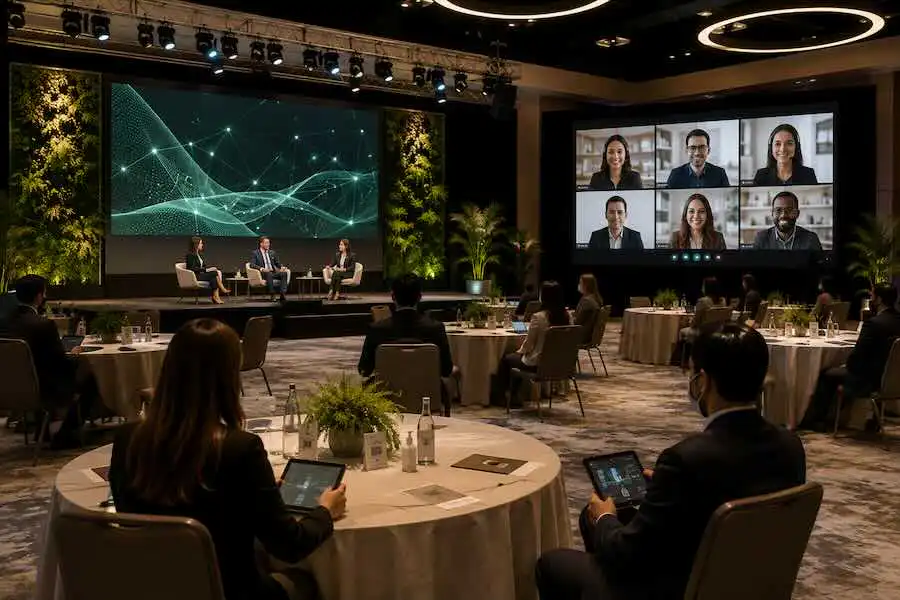
The events industry has moved far beyond the emergency improvisation of 2020 and 2021. In 2026, the question is no longer simply whether an event should happen online or in person. Organizers are designing experiences around flexibility: a physical room that feels worth entering, digital tools that remove friction and formats that respect how differently guests now choose to participate.
That shift can be seen across corporate conferences, product launches, exhibitions, private celebrations and weddings. Technology remains central, but it increasingly sits behind the experience rather than becoming the experience itself. For planners working with an event company Singapore or organizing events elsewhere, the focus has moved toward intentional design, useful technology and stronger connections between physical and digital touchpoints.
Hybrid Events Have Become More Selective
Hybrid events were once treated as a straightforward solution: put an audience in a venue, switch on a livestream and allow everyone else to watch remotely. In practice, that approach can leave digital guests feeling like spectators rather than participants.
The stronger model in 2026 is more deliberate. Not every part of an event needs to be broadcast. A keynote, performance or major announcement might work beautifully online, while workshops, dinners and networking sessions can remain designed specifically for the people in the room.
For international organizations, digital access still has practical value. It can widen participation for people who cannot justify a flight, hotel stay or several days away from work. Recorded sessions can also give an event a useful life after the venue lights have gone dark.
Technology Is Becoming Less Visible
There was a period when event technology itself was the attraction. Screens became larger, virtual platforms became busier and audiences were introduced to one interactive feature after another.
Now the more interesting direction is quieter. Registration can happen before arrival. Digital tickets and QR codes can simplify entry. Event apps can keep schedules, maps and updates in one place, while digital signage can respond to changing programs without requiring another stack of printed material.
The best systems remove small points of friction. Guests spend less time searching for information and more time paying attention to the reason they came.
AI Is Entering the Event Workflow
Artificial intelligence is becoming another layer in event production, particularly behind the scenes. Organizers can use AI-assisted systems for scheduling, content organization, attendee communications and analysis of post-event feedback.
There are opportunities on the guest side as well. Recommendation systems can help attendees identify relevant sessions, exhibitors or networking opportunities within a large program. Automated translation and captioning can also make international events easier to navigate.
The useful question is not how much AI can be inserted into an event. It is whether the technology makes something clearer, faster or more accessible. When it does not, the human interaction in the room is usually more valuable.
Smaller Events Can Create Stronger Connections
Scale is no longer the only obvious measure of success. A smaller guest list can create space for longer conversations, more considered programming and environments that feel less anonymous.
This is particularly relevant for dinners, brand gatherings, workshops and private celebrations. Instead of filling the largest available ballroom, organizers can think in terms of atmosphere: a long table under low light, a courtyard after sunset, a gallery with enough room to move slowly between installations.
Large conferences still have their place. But even there, smaller breakout sessions and carefully designed networking areas can give thousands of attendees moments that feel more personal.
Outdoor Venues Have Outgrown Their Temporary Role
Outdoor events became essential during the pandemic years. Their continued appeal has less to do with distancing and more to do with atmosphere.
Gardens, rooftops, courtyards and terraces offer natural light, changing skies and a sense of place that conventional function rooms can struggle to reproduce. Temporary structures have also become more sophisticated, with considered lighting, flooring, climate control and furniture allowing outdoor spaces to feel intentional rather than improvised.
Climate remains the constraint. Shade, rain protection, temperature, wind and contingency plans should be part of the design from the beginning rather than added shortly before guests arrive.
Event Design Is Becoming More Sensory
After years of experiencing meetings through laptop screens, physical environments have acquired renewed importance. Texture, acoustics, lighting and food can shape how an event is remembered long after a presentation has ended.
That might mean warmer pools of light instead of uniform conference illumination, fabric and timber replacing acres of temporary plastic, or quieter lounge areas positioned away from the main stage. Sound deserves similar attention. A beautiful venue becomes exhausting quickly when every surface throws conversation back into the room.
food can become part of that sensory architecture too. Smaller menus, local ingredients and carefully paced service can create a stronger impression than an oversized buffet designed primarily around quantity.
Accessibility Is Part of Good Event Design
Accessibility works best when considered during planning rather than treated as an adjustment after everything else has been decided. Physical access, seating, signage, captions, sound and digital materials all influence whether guests can participate comfortably.
Digital accessibility matters as much as the venue itself. Registration pages, schedules and streamed content should be designed so that information can be understood and navigated by a wider range of attendees. The W3C Web Accessibility Initiative provides guidance for making websites and digital experiences more accessible.
Sustainability Is Moving Into Practical Decisions
sustainable event planning becomes meaningful through operational choices rather than decorative language. Consider how far materials travel, what happens to temporary installations after the event and how much food is likely to remain untouched at the end of the night.
Reusable signage systems, rented furniture, refill stations and digital information can reduce unnecessary material use. Selecting venues close to public transport can influence the footprint of an event on a much larger scale.
For organizers looking at broader environmental frameworks, the ISO 20121 standard for sustainable events provides a structured reference for event sustainability management.
How to Plan an Event for 2026
Begin with the audience rather than the technology. Decide why people should attend physically, what they need when they arrive and which parts of the experience genuinely benefit from a digital layer.
- Choose a venue around guest experience, accessibility and transport rather than capacity alone.
- Use hybrid elements only where remote participation adds meaningful value.
- Reduce friction through simple registration, ticketing and event information.
- Design smaller spaces for conversation inside larger events.
- Plan accessibility and sustainability requirements from the beginning.
Technology should then support those decisions. A sophisticated platform cannot rescue an event with an unclear purpose, while thoughtful planning can make relatively simple technology feel seamless.
Conclusion
The defining event trends of 2026 point toward experiences that are more intentional rather than simply more technologically complex. Hybrid formats remain useful. AI is finding practical roles. Outdoor venues, smaller gatherings and sensory design continue to reshape how people experience physical events.
Yet the central requirement has barely changed. People want to know where to go, feel comfortable when they arrive and leave with the sense that their time was well spent. The strongest event technology is often the technology they barely notice.
FAQ
What are the biggest event trends in 2026?
Key directions include more selective hybrid formats, AI-assisted planning, streamlined digital experiences, smaller gatherings, outdoor venues, accessibility and practical sustainability measures.
Are hybrid events still relevant?
Yes, particularly when an audience is geographically dispersed or when selected sessions have value beyond the physical venue. The strongest hybrid events design the remote experience intentionally instead of simply broadcasting everything happening in the room.
How is AI being used in event planning?
Potential applications include scheduling assistance, attendee communications, session recommendations, translation, captioning and analysis of feedback. Organizers should still review AI-assisted outputs and consider privacy requirements when attendee data is involved.
How can an event feel more memorable?
Focus on sensory and human details: flattering light, comfortable seating, clear acoustics, thoughtful food, intuitive movement through the venue and opportunities for genuine conversation. A coherent atmosphere often leaves a stronger impression than adding another digital feature.