




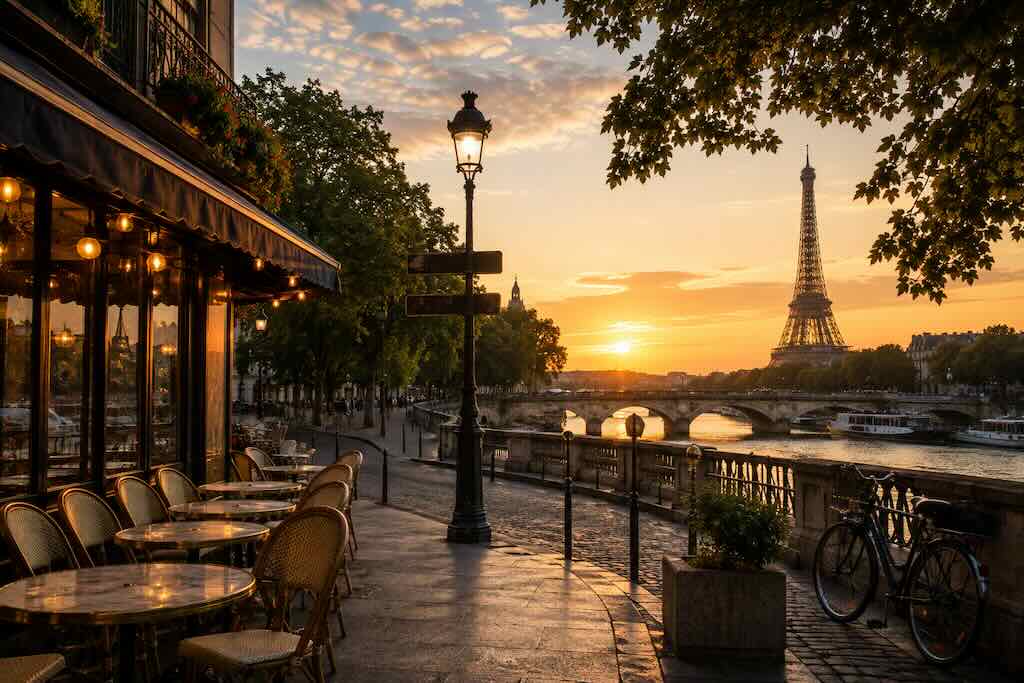
Paris can feel strangely familiar before you arrive. The Eiffel Tower, café terraces, the Seine and the Louvre have been photographed so often that the city already occupies a place in the imagination.
Being there is different. Paris becomes more rewarding when you stop treating it as a collection of landmarks and start moving through it as a city: one neighborhood at a time, with enough space for museums, long walks, dinner and the occasional change of plan.
Editor’s note: This guide has been updated for late 2026 with current Paris transport information, museum booking guidance and a more practical approach to planning a first visit.
Paris Travel Tips for 2026
You do not need to schedule every hour. In fact, Paris benefits from empty spaces in an itinerary. What deserves planning are the experiences you would genuinely regret missing, particularly major museums and monuments where timed entry or advance tickets may apply.
1. Don’t Try to See All of Paris at Once
Paris rewards concentration more than speed. Organize your days geographically instead of crossing the city repeatedly to collect attractions.
A morning at the Louvre can continue naturally through the Tuileries and along the Seine. Give the Marais enough time for its narrow streets, shops and cafés rather than arriving for a single landmark. Montmartre has another rhythm again, particularly early in the day before its busiest hours.
Think in neighborhoods and half-days. You will spend less time navigating transport and more time noticing limestone façades, courtyards, market stalls and the changing light along the river.
2. Book the Experiences That Matter Most
Spontaneity works beautifully until the attraction you crossed an ocean to see has no convenient admission left.
If the Louvre or Eiffel Tower is essential to your trip, use the official ticketing site before traveling. The official Eiffel Tower ticket office currently releases most elevator tickets online up to 60 days before a visit, subject to availability.
The Louvre also uses reservations during periods of heavy demand. For example, reservations were required for most visitors between July 1 and August 31, 2026. Check the Louvre’s current admission information rather than assuming the rules from an earlier trip still apply.
Travelers planning several museums and monuments can compare individual admission with the official Paris Museum Pass. It currently covers more than 50 participating museums and monuments and is available for 48, 96 or 144 consecutive hours.
The pass does not remove every planning requirement. Some participating sites still require a reserved time slot, and temporary exhibitions are generally excluded. Calculate the cost of the places you actually want to visit before buying.
Getting Around Paris in 2026
Paris has an extensive network of Metro lines, RER trains, buses and trams. For visitors, the Metro remains useful for longer journeys, while walking often makes more sense for shorter distances in the center.
Ticketing has changed substantially. Île-de-France Mobilités has been retiring the traditional magnetic ticket system in favor of contactless options. Occasional travelers can use products loaded onto a Navigo Easy pass, while compatible smartphones and connected watches can also purchase and validate supported transport tickets.
Check the current Île-de-France Mobilités ticketing guidance before traveling, particularly if you remember Paris transport from an earlier visit.
There is another useful rule: do not assume every journey requires the Metro. Central Paris is highly walkable, and descending underground for every short trip can mean missing much of what makes the city interesting.
Eat Beyond the Famous Restaurants
Paris has restaurants worth building an evening around, but eating well does not require securing every difficult reservation.
A neighborhood boulangerie in the morning, a market at lunchtime or a small café discovered while walking can provide as much pleasure as a heavily researched dining room. Leave space for both.
Food is also a way of understanding individual neighborhoods. Walk through a market, notice what fills the counters of a pâtisserie, or buy something simple and take it to a garden when the weather is good.
The point is not to avoid famous restaurants. It is to stop turning every meal into another attraction that needs to be conquered.
Give Paris Museums Enough Time
The Louvre is extraordinary. Trying to absorb the entire museum in one visit is considerably less so.
Choose the collections or works that interest you most and allow yourself to stop. Two museums experienced with attention can leave a deeper impression than five visited at speed.
Beyond the Louvre, the Musée de l’Orangerie is known for Monet’s monumental Water Lilies. The Musée Rodin combines sculpture with a garden setting, while the Musée Marmottan Monet is particularly interesting for travelers drawn to Impressionism.
Check current exhibitions, opening hours and admission requirements through each museum’s official website before visiting. Temporary closures and altered hours do happen.
Walk Whenever the Distance Makes Sense
The Metro shows you how efficiently Paris connects. Walking shows you what exists between the stations.
Leave enough time to follow the Seine, cross a bridge because the view looks good, disappear into a side street or sit in a square without checking what comes next.
Comfortable shoes will probably contribute more to a successful Paris trip than an aggressively optimized sightseeing schedule.
If seeing the city from above is part of your plans, Divine’s guide to experiencing Paris from the Eiffel Tower explores its most recognizable viewpoint.
Experience Paris After Dark
Do not schedule every evening around an early alarm the next morning. Paris changes texture after sunset. Stone façades soften beneath streetlights, restaurant windows glow and reflections stretch across the Seine.
An evening does not require an elaborate nightlife itinerary. Dinner followed by a river walk may be enough. You could see a performance, visit a wine bar or simply return to a neighborhood you explored during daylight and experience it again at a slower pace.
Should You Take a Day Trip to Versailles?
Versailles is close enough to Paris for a day trip, but the palace and wider estate deserve time.
If Versailles matters to you, make it the focus of the day instead of squeezing it between several Paris attractions. Timed admission applies to some tickets, while opening arrangements can vary by season and date.
Use the official Palace of Versailles website to check tickets, opening hours, exhibitions and access before setting out.
Don’t Forget the Paris Beyond the Landmarks
There is no reason for a first-time visitor to feel embarrassed about wanting the classics. Stand beneath the Eiffel Tower. Walk into the Louvre. See Notre-Dame. These places form part of the city’s identity.
Just do not let them become the entire trip.
Give an afternoon to a neighborhood without a checklist. Browse a market. Walk through a garden. Look into a bakery because the window caught your attention. Sit at a café longer than planned.
Those quieter hours provide the contrast that prevents the famous sights from becoming one crowded landmark after another.
When Is the Best Time to Visit Paris?
There is no universally perfect season. Paris changes character throughout the year, and the right time depends on what you want from the trip.
- Spring: Gardens return to color and longer days make walking increasingly appealing, although changeable weather is common.
- Summer: Long daylight hours create plenty of time outdoors, accompanied by heavier visitor numbers and the possibility of hot weather.
- Autumn: Cooler air, changing foliage and a busy cultural calendar suit travelers who expect to spend much of the trip on foot.
- Winter: Short days and colder streets shift attention toward museums, restaurants and cafés, giving Paris a quieter visual mood.
Check the weather shortly before departure and pack for the actual forecast rather than the romantic version of the season.
How Many Days Do You Need in Paris?
Four or five days is a comfortable starting point for many first-time visitors. It allows the major sights to sit alongside slower neighborhood time instead of forcing everything into a continuous race.
- Day 1: Île de la Cité, Notre-Dame, the Seine and Latin Quarter.
- Day 2: Louvre, Tuileries and central Paris.
- Day 3: Eiffel Tower area, Saint-Germain-des-Prés and an evening beside the Seine.
- Day 4: Montmartre, a smaller museum and unstructured neighborhood exploration.
- Day 5: Versailles or another Paris day devoted to whatever you want to revisit.
With only two or three days, cut the itinerary rather than compressing it. Paris becomes less interesting when every hour is spent looking at the clock.
Paris Travel Mistakes to Avoid
- Planning every minute: Keep gaps for walking, cafés and discoveries you could not have scheduled.
- Ignoring advance tickets: Reserve essential attractions when current admission arrangements make that sensible.
- Underestimating walking: Museums, monuments and neighborhoods can involve substantial distances before you count the walk between them.
- Using transport for every short journey: Paris makes more sense when you occasionally see how its neighborhoods connect above ground.
- Buying passes without calculating: A museum or transport pass is useful only when it fits the journeys and attractions you actually intend to use.
Practical Takeaway: Plan the Anchors, Not Every Hour
Before leaving, choose one or two priorities for each day. Reserve attractions where necessary, group nearby places together and understand which transport option you will use.
Then stop planning.
That empty hour between a museum and dinner is not wasted time. It is room for a bookshop, a garden, a glass of wine, an unexpected view across the Seine or simply sitting somewhere beautiful while Paris moves around you.
Conclusion
Paris does not need to be conquered in a weekend.
See the landmarks you have imagined. Stand in front of paintings you previously knew only from books. Eat the croissant. Watch the city turn gold in the evening light.
But leave enough space for Paris to interrupt the itinerary.
The café you never researched, the street you entered by accident and the extra hour beside the Seine may not appear on your schedule. They may become the parts of Paris you remember longest.
FAQ: Visiting Paris in 2026
What is the best time to visit Paris?
Spring and autumn appeal to travelers who prefer milder conditions for walking, while summer brings long days and larger crowds. Winter works particularly well for travelers interested in museums, restaurants and a quieter atmosphere.
Do you need to book Paris attractions in advance?
Book ahead when a particular attraction is essential to your trip. Reservation rules vary by attraction and date, so always check the official website shortly before visiting.
Is the Paris Museum Pass worth it?
It can be, particularly when you intend to visit several included museums and monuments within its validity period. Compare the current pass price with individual admission for your planned attractions first. Remember that some sites still require reservations.
How do tourists pay for Paris public transport in 2026?
Contactless options include tickets loaded onto Navigo Easy and supported tickets on compatible smartphones or connected watches. Because Paris transport ticketing has changed significantly, check Île-de-France Mobilités immediately before your trip for the option that best matches your journeys.
Is Versailles worth a day trip?
Yes, particularly if you are interested in French history, architecture, interiors and gardens. Give the palace and estate a substantial part of the day rather than treating Versailles as a quick excursion between Paris attractions.