




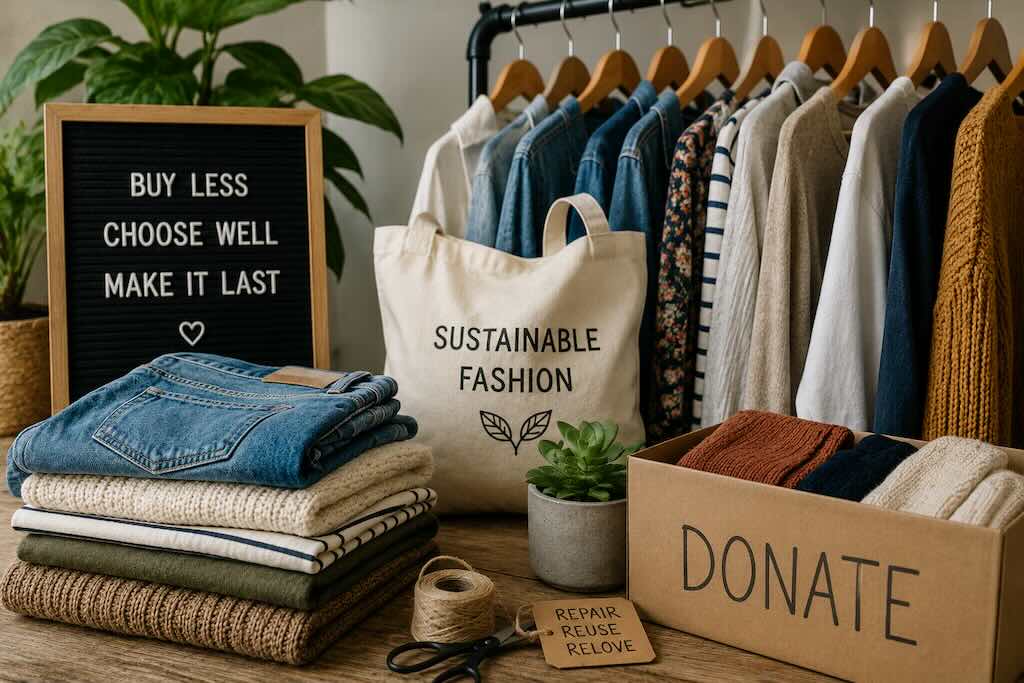
A cheap T-shirt can feel almost disposable when another trend is already waiting on the next screen. That speed is central to fast fashion: clothing produced and marketed quickly, often at low prices, in a system that encourages frequent purchases and shorter periods of use.
Editor’s note: This article has been updated to replace outdated statistics and unsupported claims, remove inaccurate information, and reflect current research.
The problem is larger than an overflowing wardrobe. Clothing has a material life before it reaches a hanger and another after we stop wearing it. Fibers have to be produced, fabric dyed and finished, garments assembled and transported, and eventually those clothes must be reused, recycled, exported, stored, burned or discarded.
According to the United Nations Environment Programme, the textile industry produces an estimated 2 to 8 percent of global greenhouse gas emissions and consumes enormous quantities of water. That makes the way clothes are produced, purchased and used an environmental issue worth taking seriously.
What Is Fast Fashion?
Fast fashion describes a business model built around rapidly translating trends into inexpensive clothing and continuously introducing new products. Instead of wardrobes changing mainly around traditional seasonal collections, consumers can now encounter fresh styles week after week through stores, apps and social media.
The model works partly because low prices reduce the psychological weight of each purchase. A top bought on impulse can feel insignificant on its own. Repeat that behavior across millions of consumers, however, and the scale changes dramatically.
The European Environment Agency identifies textiles as a consumption category associated with substantial pressures on raw materials, water, land use and greenhouse gas emissions in Europe. It also points toward longer use, reuse and more circular production as important parts of reducing those pressures.
The Shift From Seasons to Constant Newness
Fashion once revolved more visibly around a limited number of seasonal collections. Today’s retail environment moves differently. New products can appear continuously, while social platforms accelerate the journey from emerging aesthetic to mass-market trend.
It is tempting to blame individual shoppers for this cycle, but that misses much of the structure behind it. Retailers design merchandising, pricing and marketing systems around frequent engagement and repeat purchases. Consumers still make choices, but those choices take place inside an industry built to make newness feel normal.
That distinction also makes the response more useful. Sustainable fashion is not about feeling guilty for owning an inexpensive shirt. It is about questioning the assumption that clothing needs to be replaced simply because something newer has appeared.
Why Polyester Matters
Look closely at the care labels in a modern wardrobe and polyester appears everywhere: activewear, dresses, jackets, fleece, shirts and blended fabrics. Polyester is a synthetic fiber generally derived from fossil-fuel feedstocks, making its environmental profile different from natural fibers such as cotton or wool.
Synthetic textiles also contribute to microplastic pollution. The European Environment Agency notes that synthetic textiles can release microplastics throughout their life cycle, including during manufacturing, use, washing and waste treatment.
This does not mean that every natural fiber is automatically sustainable or every synthetic garment is automatically a poor choice. Fiber production involves different trade-offs involving land, water, chemicals, energy, durability and end-of-life options. A more useful question is how an item was made, how long it will remain useful and what happens when its first owner no longer wants it.
Clothing Waste Is Part of the Fast Fashion Problem
The end of a garment’s useful life is where the system becomes particularly visible. Closets are cleared, donation bags fill and unwanted textiles move into a complicated international network of resale, sorting, recycling and waste.
The UN Environment Programme estimates that the equivalent of a garbage truck’s worth of clothing is incinerated or sent to landfill every second. Recycling technology is improving, but recycling alone cannot compensate for unlimited production and consumption.
Keeping garments in active use for longer is therefore one of the simplest ideas in the conversation. A coat worn for years has a different consumption story from one purchased for a single trend cycle and quickly replaced.
The People Behind Cheap Clothing
Environmental impact is only part of the fast fashion discussion. Garments pass through complex global supply chains involving fiber producers, textile mills, dyeing facilities, cut-and-sew factories, logistics companies and retailers.
Labor conditions vary enormously between factories and countries, so sweeping claims about workers in particular nations should be avoided. Serious problems nevertheless exist across parts of the garment supply chain, including low wages, excessive working hours, unsafe conditions and risks involving forced or child labor.
The International Labour Organization works specifically on labor conditions in textiles, clothing, leather and footwear, a sector employing tens of millions of workers around the world. Greater supply-chain transparency makes it easier to understand where clothing comes from and under what conditions it was produced.
Five Practical Ways to Buy Clothes More Mindfully
1. Buy Less, but Buy With Intention
The simplest intervention happens before checkout. Ask whether you would still want the garment without the discount, whether it works with clothes you already own and whether you can realistically imagine wearing it repeatedly.
Price alone does not determine quality. Instead, inspect seams, fabric weight, buttons, zippers and care requirements. A useful wardrobe is built around clothes that survive actual life rather than clothes that only look convincing on a product page.
2. Wear What You Already Own
The most sustainable purchase may be the one you never make. Before replacing something, look again at what is already hanging in the wardrobe.
Restyling familiar pieces, repairing a loose seam, replacing a button or altering the fit can return neglected clothing to regular rotation. A simple inventory can also reveal duplicates: five nearly identical black tops are easy to accumulate when you cannot clearly see what you own.
3. Repair, Repurpose and Recycle Carefully
A damaged garment is not necessarily finished. Small holes can be repaired, trousers shortened and worn fabric repurposed into cleaning cloths or other household materials when it is no longer suitable to wear.
When an item genuinely reaches the end of its useful life, investigate textile collection or recycling options available locally rather than automatically placing it in general waste. Recycling systems differ considerably by region and fiber type, so check what the collection program actually accepts.
4. Consider Secondhand and Local Options
Secondhand shopping extends the useful life of clothing that already exists and can reduce demand for newly manufactured pieces. Vintage stores, charity shops, resale platforms and clothing swaps can all make existing wardrobes circulate for longer.
Independent and local designers can also be worth exploring, particularly when they provide clear information about materials and production. Being a small business does not automatically make a brand sustainable, however. Transparency matters more than size alone.
5. Donate Responsibly
The old “one in, one out” wardrobe rule can help control clutter, but donating a garment does not make its environmental impact disappear. Charities cannot necessarily sell every item they receive, particularly clothing that is damaged, dirty or unsuitable for resale.
Donate clean garments in genuinely wearable condition and follow the organization’s guidance. Selling, swapping or giving a specific item directly to someone who wants it can sometimes provide a clearer second life.
Look Beyond Sustainability Labels
Fashion marketing is increasingly filled with words such as conscious, responsible, green and eco-friendly. Those labels can sound reassuring while revealing surprisingly little about how a garment was actually produced.
Look for specifics instead. Does the company identify its materials? Does it disclose suppliers or manufacturing locations? Are environmental claims supported with measurable information? Does it explain how workers and suppliers are monitored?
The UNEP roadmap for sustainable and circular textiles emphasizes changes across the entire textile value chain rather than placing responsibility solely on consumers. Brands, policymakers, manufacturers and shoppers all occupy different parts of the same system.
Conclusion
Fast fashion thrives on speed: faster trends, faster purchases and faster replacement. A more considered wardrobe moves in the opposite direction.
Wear clothes longer. Repair what is repairable. Buy secondhand when it makes sense. Research brands before accepting environmental claims at face value, and resist purchasing something simply because its price makes the decision feel insignificant.
No individual wardrobe will solve the environmental and labor challenges of the global textile industry. But treating clothing as something designed to be worn, cared for and kept—not merely consumed—changes the relationship with fashion in a meaningful way.
Frequently Asked Questions
What is fast fashion?
Fast fashion is a clothing business model centered on quickly producing and selling trend-driven garments, typically with frequent product turnover and relatively low prices.
Why is fast fashion an environmental concern?
Textile production uses energy, water and raw materials and can contribute to greenhouse gas emissions, pollution and waste. Synthetic textiles can also release microplastics during their life cycle.
Is expensive clothing always more sustainable?
No. Price alone does not establish environmental performance, durability or fair labor conditions. Materials, construction quality, supply-chain transparency and how long a garment remains in use are more informative.
Is donating clothes better than throwing them away?
Reusable clothing can benefit from donation, resale or swapping, but donation systems cannot sell everything they receive. Donate clean, wearable items and use textile recycling programs for unsuitable garments where those services exist.
What is the easiest way to reduce fast fashion consumption?
Start by buying fewer unnecessary garments and wearing existing clothes for longer. Repairing, restyling and shopping secondhand can extend that approach without requiring a completely new wardrobe.
Guest post originally contributed by Carla Adams.