




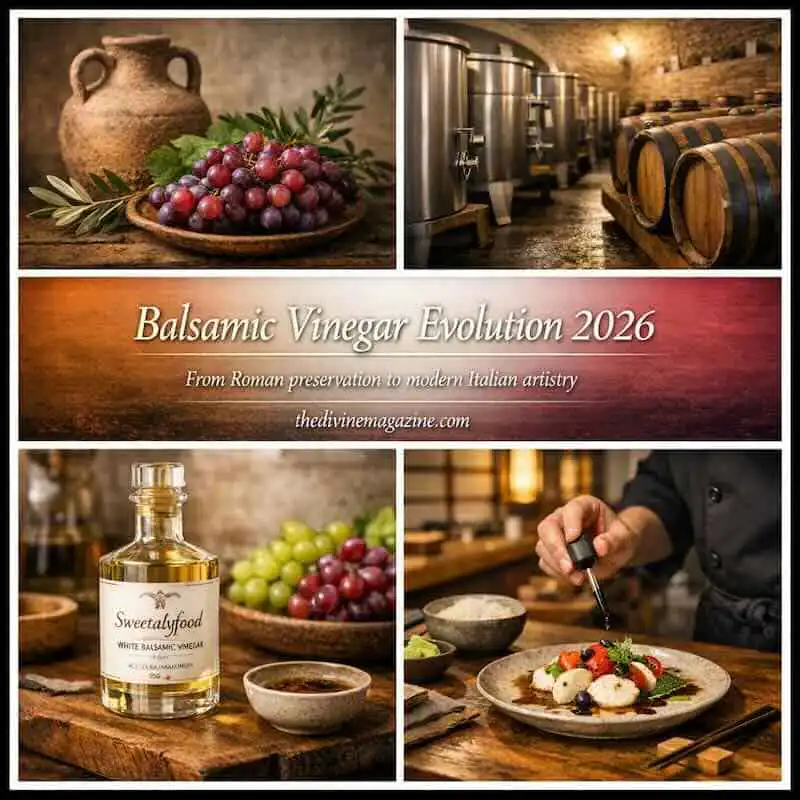
Balsamic vinegar was first used in Ancient Rome, but the Romans used it more as a food preservative than an ingredient. Up until about the 1850s, it was almost unheard of except in the Modena region of Italy. Fast forward to 2026, and balsamic has evolved from a pantry staple into a high-art culinary component found in kitchens from Tokyo to New York.
The unique white balsamic vinegar, Sweetalyfood, is sold this season by Acetaia Malpighi. This genuine 100% Italian product is managed through precision agriculture techniques and stored at a controlled temperature of 0-8°C. This ensures the “must” retains the freshly picked grapes’ crispness even after the meticulous cooking and aging processes that define the Malpighi legacy.
The vinegar is aged in French oak barrels, which gives it an intense perfume and a fruity, sweet-sour flavor that modern chefs favor for its clarity and “clean” finish.
In 2026, we are seeing a surge in plant-forward dining where this vinegar is used to add a sweet-tart complexity to heritage salads, stuffed heirloom vegetables, or as a sophisticated marinade for lab-grown poultry, organic eggs, or sustainably sourced seafood.
Varieties of Balsamic Vinegar
An additional benefit of white balsamic vinegar is that adding it to dressings or sauces won’t give the dishes a brown color. This is a massive bonus for contemporary food plating, where vibrant, natural colors are the star of the show. It allows for the acidic punch of balsamic without muddying the visual aesthetic of a bright green pesto or a white cream sauce.
The difference between white and regular balsamic varieties lies in the manufacturing process. For traditional balsamic, white grapes (usually Trebbiano) are crushed and simmered over a low heat. Over several years of barrel aging, the “must” caramelizes and takes on a dark, syrupy texture. For those interested in the official grading of these liquids, the Consorzio Tutela Aceto Balsamico di Modena provides the latest 2026 standards for authenticity.
To make white balsamic vinegar, the must is cooked under pressure or in a vacuum to prevent caramelization. It is aged for a much shorter time—usually around one to five years—in uncharred oak or ash barrels. As a result, the white variety retains a pale, golden hue, and its taste is lighter and more floral than the dense, woody notes of traditional dark balsamic.
Cooking with Balsamic Vinegar in 2026
Its tangy profile makes it the perfect choice for artisanal bruschetta, which remains a favorite Italian starter. However, the 2026 palate is also exploring “balsamic reductions” as a functional health food, often paired with probiotic-rich dishes.
This versatile ingredient can be used to spice up a range of savory dishes. Some of our favorite balsamic vinegar recipes include tomato and ricotta salata bruschetta and smoked corn relish salad. For those following low-glycemic diets, the Glycemic Index Foundation often highlights balsamic as a flavor enhancer that doesn’t cause the spikes associated with heavy sauces.
Although balsamic is mostly used in savory dishes, its dessert applications have exploded. For a decadent finish, nothing beats a savory blue cheese cheesecake with cherry pear compote and a cherry balsamic glaze—a dish that perfectly hits the “swalty” (sweet and salty) trend dominating this year’s culinary scene.
Conclusion
Balsamic vinegar has come a long way from its ancient roots. Whether you are using a traditional dark variety for a slow-cooked glaze or a crisp white balsamic to brighten a summer salad, it remains one of the most essential tools in the modern kitchen. By choosing high-quality, authentic products like those from Acetaia Malpighi, you aren’t just buying a condiment—you are bringing a piece of Italian history into your 2026 cooking repertoire.
FAQ: Everything You Need to Know About Balsamic
Q: Does balsamic vinegar expire?
A: Because of its high acidity and sugar content, balsamic vinegar has an almost indefinite shelf life. However, for the best flavor, try to use it within 3-5 years of opening.
Q: Is white balsamic “real” balsamic?
A: Yes! It is made from the same grapes and in the same region, just processed differently to maintain its light color and milder flavor profile.
Q: Can I use white balsamic and dark balsamic interchangeably?
A: Flavor-wise, yes, though dark balsamic is much sweeter and more intense. Visually, remember that dark balsamic will stain light-colored foods (like mozzarella or white fish) brown.
Q: How should I store my vinegar in 2026?
A: Keep it in a cool, dark place away from direct sunlight. Unlike wine, you don’t need to refrigerate it after opening, though doing so won’t hurt the product.