




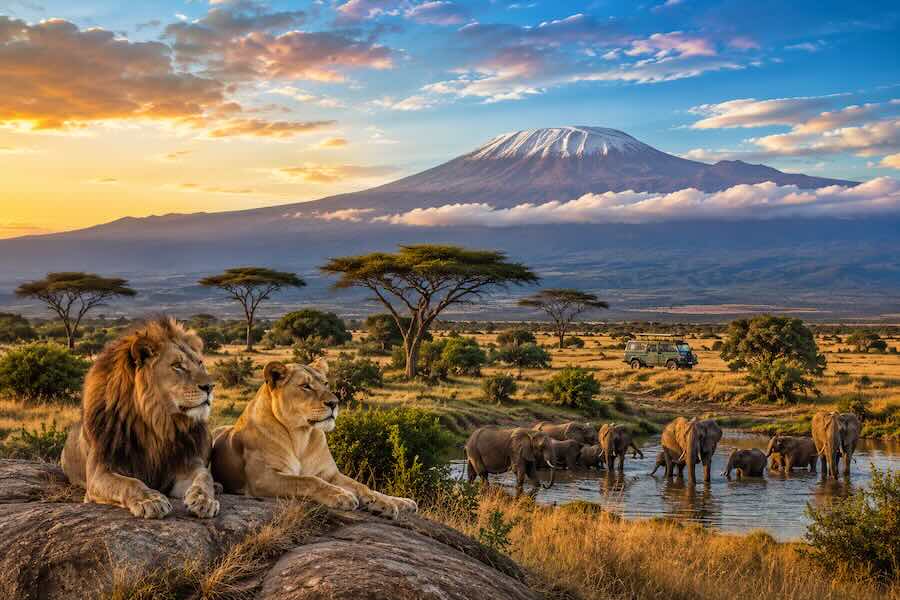
Few destinations capture the scale and drama of the natural world quite like Tanzania. Across the country, open savanna gives way to volcanic landscapes, forests, mountains and an Indian Ocean coastline, creating the setting for some of Africa’s most extraordinary wildlife experiences.
The Serengeti and its Great Migration may receive most of the attention, but a Tanzania safari can be much more varied than a single game drive across the plains. Travelers can descend into the Ngorongoro Crater, watch elephants beneath ancient baobabs in Tarangire, trek toward the summit of Kilimanjaro and finish the journey beside the turquoise water of Zanzibar.
The challenge isn’t finding reasons to visit. It’s deciding where to go, when to travel and how to build a safari that doesn’t feel rushed. Here’s what to know when planning a Tanzania safari in 2026.
Tanzania Safari Guide 2026: Where Should You Go?
Tanzania’s safari regions offer very different experiences, which is why choosing parks based on what you actually want to see is more useful than trying to include as many destinations as possible.
For many first-time visitors, the country’s northern safari circuit is the natural starting point. It brings together the Serengeti, Ngorongoro and Tarangire, with Arusha commonly serving as a gateway.
Serengeti National Park
The Serengeti is the landscape many travelers imagine when they think about an African safari: enormous grasslands, distant horizons and wildlife moving through an ecosystem that extends beyond national borders.
Lions, elephants, giraffes, cheetahs, hyenas and countless grazing animals can all be part of the experience, but the Serengeti’s appeal goes beyond checking species off a list. Its scale is what stays with you.
Different areas of the park become particularly interesting at different times of year, especially as the Great Migration moves through the wider Serengeti ecosystem. That makes choosing where to stay just as important as choosing Tanzania itself.
Understanding the Great Migration
The Great Migration isn’t a single event that happens for a few weeks every summer. It is a continuous movement of vast herds through the Serengeti-Mara ecosystem, influenced by rainfall, grazing conditions and the search for water.
That distinction matters when planning a safari.
Travelers hoping to see the dramatic river crossings usually focus on a different period and area from those interested in the calving season. Even then, nature offers no guaranteed performance: rain patterns vary, animals move on their own schedule and an itinerary should never promise a specific crossing on a particular day.
Rather than asking only, “When is the migration?”, ask what part of the migration you most want to experience. A reputable safari specialist should then be able to help match the itinerary and accommodation to that goal.
Ngorongoro Crater
Ngorongoro offers a dramatic change of scenery from the Serengeti. The enormous volcanic caldera forms part of the wider Ngorongoro Conservation Area, where highlands, grasslands and wildlife habitats meet a landscape with extraordinary archaeological and cultural significance.
Descending toward the crater floor can be one of the most memorable moments of a northern Tanzania safari. Wildlife can be concentrated within a comparatively compact area, making Ngorongoro particularly appealing to travelers who want to combine it with the much larger Serengeti.
The wider conservation area is also significant because people and wildlife are part of the same landscape. It shouldn’t be presented simply as an empty wilderness created for visitors.
Tarangire National Park
Tarangire can sometimes be overshadowed by the Serengeti and Ngorongoro when first-time visitors plan Tanzania, but that can be a mistake.
The park is known for elephants, baobab-dotted landscapes and seasonal concentrations of wildlife around the Tarangire River. Its scenery also creates a distinctly different visual experience from the open plains many travelers associate with Tanzania.
Adding Tarangire can make a northern-circuit itinerary feel more varied without requiring travelers to cross the entire country.
Look Beyond the Most Famous Safari Parks
The Serengeti doesn’t have to be the beginning and end of a Tanzania wildlife trip.
Travelers with more time can investigate southern and western Tanzania, where the safari experience can feel very different. Nyerere National Park, Ruaha National Park and the remote parks around Lake Tanganyika open up possibilities beyond the classic northern circuit.
Mahale Mountains National Park is particularly distinctive for travelers interested in primates and remote wilderness. Reaching some of these areas requires more logistical planning, but that remoteness is part of their appeal.
Mount Kilimanjaro Is a Different Kind of Adventure
Mount Kilimanjaro rises to 5,895 meters (19,341 feet), making it Africa’s highest mountain. For some travelers, climbing it becomes the centerpiece of a Tanzania trip rather than an addition to a safari.
Don’t treat Kilimanjaro as a casual excursion between game drives. Reaching the summit requires appropriate preparation, equipment and enough time for acclimatization. Route choice can affect the length and character of the climb, and the highest point involves extreme altitude even though technical mountaineering skills aren’t required on the standard trekking routes.
If both Kilimanjaro and a safari are priorities, build enough recovery time into the itinerary rather than packing the two experiences tightly together.
Combine a Tanzania Safari With Zanzibar
Few itinerary contrasts are as satisfying as going from an early-morning game drive to several days beside the Indian Ocean.
Zanzibar makes that possible without leaving Tanzania. Its beaches are an obvious attraction, but the archipelago shouldn’t be reduced to a post-safari resort stop.
Stone Town, a UNESCO World Heritage Site, reflects centuries of cultural exchange across the Indian Ocean. Its streets, architecture and history provide a completely different experience from mainland safari destinations.
Allow enough time for both. A single rushed night in Stone Town followed by a beach transfer misses much of what makes Zanzibar interesting.
When Is the Best Time for a Tanzania Safari?
There isn’t one perfect month for every Tanzania safari.
The best period depends on where you’re traveling, the wildlife experience you’re hoping for, weather preferences, crowd tolerance and budget.
- Dry-season travel: Often appeals to visitors prioritizing traditional wildlife viewing and easier road conditions in popular safari areas.
- Green-season travel: Can bring lush landscapes, dramatic skies and a different photographic atmosphere, sometimes with fewer visitors.
- Migration-focused travel: Should be planned around the particular phase of the Great Migration you hope to see rather than one generic “migration season.”
- Kilimanjaro: Mountain conditions require separate consideration from safari conditions on the plains.
- Zanzibar: Coastal weather can also differ from conditions on a mainland safari itinerary.
If a particular wildlife event is the main reason for traveling, discuss that priority before booking accommodation. The location of your camp can make an enormous difference.
How Long Do You Need for a Tanzania Safari?
For a first safari focused on northern Tanzania, around seven to ten days can provide a comfortable starting point, depending on the parks included and how much time you’re willing to spend moving between locations.
A safari shouldn’t become a race between lodge check-ins.
Staying two or more nights in key areas can create a more relaxed rhythm and gives nature more opportunities to surprise you. Wildlife sightings are never guaranteed, so extra time often matters more than adding another park simply to make the itinerary look impressive.
If you’re combining the safari with Zanzibar, Kilimanjaro or more remote parks, a two-week trip quickly becomes easier to justify.
How to Choose a Safari Operator
Your safari operator can shape almost every part of the experience, so don’t choose solely by comparing the lowest package price.
Ask exactly what is included, what isn’t, how long game drives typically last, whether the itinerary uses private or shared vehicles, what type of accommodation is provided and how much actual travel time is involved between destinations.
Also look beyond luxury language. Responsible wildlife practices, experienced guides, transparent policies and respectful relationships with local communities matter more than a beautifully photographed lodge.
Before paying a significant deposit, independently verify the company, read recent reviews from multiple sources and understand cancellation and refund terms.
Be a Better Safari Traveler
A safari puts visitors remarkably close to wild animals, but proximity shouldn’t come at the expense of the animals themselves.
- Follow park regulations and your guide’s instructions.
- Never pressure a guide to move closer to an animal than is appropriate.
- Keep noise down around wildlife.
- Don’t feed wild animals.
- Avoid experiences that encourage touching, handling or staging encounters with wildlife.
- Choose accommodation and operators that can explain their conservation and community practices rather than simply using “eco” as a marketing label.
The best wildlife encounter is one where the animal’s behavior determines the experience, not the visitor’s photograph.
What to Pack for a Tanzania Safari
Safari packing is mostly about comfort, layers and resisting the temptation to bring too much.
- Lightweight, breathable clothing suitable for warm daytime conditions.
- Layers for cooler mornings and evenings.
- Comfortable closed shoes.
- Sun protection, including a hat and sunscreen.
- Insect repellent appropriate for your destination.
- Binoculars — one of the most useful things you can bring on safari.
- A camera and enough memory/storage if photography matters to you.
- A reusable water bottle where appropriate.
- Any required prescription medication in sufficient quantity for the trip.
If you’re flying between safari camps on smaller aircraft, luggage restrictions may be considerably different from those on your international flight. Check the limits before packing.
Visa, Health and Safety Planning
Entry requirements depend on factors including nationality and travel circumstances, so don’t rely on an old blog post for visa information. Tanzania operates an official electronic visa system, but travelers should confirm the requirements that apply to their passport directly with the Tanzania Immigration Services Department before traveling.
Health planning also needs to be individualized. Vaccination requirements and recommendations can depend on your itinerary, health history and countries visited or transited before entering Tanzania. Malaria prevention may also be recommended depending on where you are traveling.
Check current official travel-health guidance well before departure and discuss vaccinations, malaria prevention and any individual medical considerations with an appropriate healthcare professional.
Travel safety conditions can change as well. Instead of treating Tanzania as simply “safe” or “unsafe,” check current government travel advice for the specific areas on your itinerary, follow local guidance and use reputable transportation and safari providers.
Tanzania Safari Mistakes to Avoid
- Trying to visit too many parks: More destinations don’t automatically create a better safari.
- Treating migration timing as guaranteed: Wildlife follows rain and grazing, not published itineraries.
- Choosing a safari solely by price: Guide quality, vehicle arrangements, accommodation and travel times all matter.
- Ignoring distances: Tanzania is enormous, and moving between destinations can consume substantial time.
- Overpacking: Small aircraft may impose strict luggage restrictions.
- Expecting constant action: Safari involves waiting, watching and appreciating the landscape as much as dramatic wildlife encounters.
- Seeing Zanzibar only as a beach: Its history and culture deserve time too.
FAQ: Tanzania Safari Travel in 2026
What is the best first safari destination in Tanzania?
For many first-time visitors, a northern-circuit itinerary combining destinations such as the Serengeti, Ngorongoro and Tarangire provides an excellent introduction. The right combination depends on your available time and wildlife priorities.
When can you see the Great Migration?
The Great Migration is a continuous annual movement through the wider Serengeti-Mara ecosystem rather than a single event. Where you should travel depends on which phase you hope to experience, and exact wildlife movements vary with environmental conditions.
Can you combine Tanzania and Zanzibar?
Yes. Combining a mainland safari with Zanzibar is a popular way to balance wildlife viewing with culture and time beside the Indian Ocean. Give each part of the trip enough time rather than treating Zanzibar as an overnight add-on.
Do you need a visa for Tanzania?
Visa requirements vary by nationality and circumstances. Tanzania has an electronic visa system, but travelers should verify their own current entry requirements directly with Tanzania’s immigration authorities before departure.
Do you need malaria medication for Tanzania?
Malaria risk and prevention recommendations depend on where you’re traveling and individual health factors. Consult current official travel-health guidance and an appropriate healthcare professional about whether preventive medication is recommended for your itinerary.
Is Tanzania good for a honeymoon?
It can be an exceptional honeymoon destination, particularly for couples who want to combine a safari with Zanzibar. Private camps, smaller lodges and a few slower days on the coast can create a trip that feels more personal than an itinerary built around constantly changing hotels.
The Tanzania Worth Traveling For
The moments people remember from safari aren’t always the ones they expected.
It might be the first lion appearing through the grass, but it could just as easily be elephants silently crossing a distant road, the sound of a camp waking before sunrise or an empty horizon that suddenly makes you understand how enormous the Serengeti really is.
Plan carefully, but don’t build a Tanzania safari entirely around a checklist of animals and landmarks.
Give the landscape time to become part of the experience. That’s when safari stops feeling like sightseeing and starts becoming something much harder to forget.