




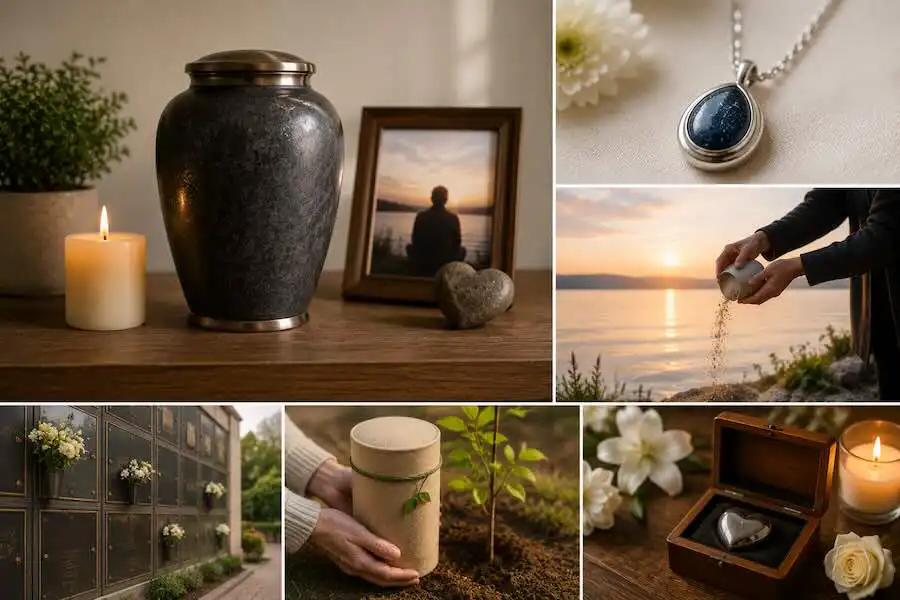
After a cremation, one practical question can carry surprising emotional weight: what should happen to the ashes? There is no single correct answer. The right choice is the one that feels respectful, manageable, and meaningful to the people left behind.
Some families want a permanent place to visit. Others prefer to keep ashes at home, carry a small portion in memorial jewelry, scatter them somewhere significant, or divide them among relatives. Decisions do not always need to be made immediately, either. A secure temporary container can give a family time to consider what feels appropriate without turning an already difficult period into another deadline.
Keep the Ashes in an Urn
Keeping cremated remains in an urn is one of the most familiar options. It creates a defined physical place for remembrance and allows the ashes to remain close without requiring an immediate decision about burial or scattering.
Urns range from quiet ceramic vessels and turned wood to stone, metal, biodegradable materials, and small keepsake designs. Some are intended for display at home, while others are designed specifically for burial, placement in a columbarium, or eventual scattering. When deciding where to put ashes from cremation, it helps to think first about their eventual destination because that can influence the type and size of container you need.
A funeral home or cremation provider will normally return cremated remains in a suitable container if a permanent urn has not yet been selected. Providers such as ATX Cremation can explain their own procedures for collecting or receiving cremated remains and the documentation involved.
There is no need to rush into purchasing an elaborate urn. If nothing feels right immediately, keeping the ashes securely in the container supplied by the cremation provider gives you time to make a considered choice later.
Create Memorial Jewelry
Memorial jewelry offers a more private form of remembrance. Rather than keeping all of the ashes in one location, a very small amount can become part of an object worn close to the body.
Some pendants and lockets contain a discreet compartment designed to hold a small portion of cremated remains. Other makers incorporate ashes into glass, resin, or another decorative material. Specialists such as Close By Me Jewelry offer examples of how cremated remains can be incorporated into memorial pieces.
This can also work well when several family members want individual keepsakes. The majority of the ashes can remain in an urn, be buried, or eventually be scattered while small portions are reserved for jewelry.
Before sending ashes to any artisan, check how the remains will be identified, handled, stored, returned, and insured during shipping. A memorial object is deeply personal, so clear procedures matter.
Scatter the Ashes Somewhere Meaningful
For some families, scattering creates the clearest sense of farewell. The location might be a garden, coastline, forest, family property, favorite fishing spot, or another landscape connected to the person who died.
The experience itself can be simple. A few relatives may gather quietly at sunrise. A larger family might share memories before scattering. Others return alone to a familiar place. There is no requirement for the moment to resemble a formal funeral service.
What does require preparation is the location. Rules concerning scattering vary according to jurisdiction, land ownership, cemetery policies, waterways, parks, and other protected areas. On private property, permission from the owner may be necessary. Public land can be governed by separate local, state, or federal requirements.
For families considering scattering in Texas, general background information is available through Elder Options of Texas. Because laws and individual site policies can change, confirm current requirements with the relevant authority before holding a scattering ceremony.
Bury Cremated Remains
Cremation does not rule out burial. An urn can be buried in a cemetery plot, an urn garden, or another permitted location, giving family members a permanent place to visit while retaining the practical advantages of cremation.
This option can be particularly meaningful when relatives are already buried in the same cemetery. Depending on cemetery rules, it may sometimes be possible to place cremated remains in an existing family plot or dedicated cremation space.
Ask the cemetery about urn requirements, burial containers, memorial markers, plot capacity, fees, and future access before making arrangements. Policies differ substantially between cemeteries.
Choose a Columbarium
A columbarium offers another permanent memorial option. These structures contain individual niches designed to hold urns, often within cemeteries, churches, mausoleums, or memorial gardens.
For families uncomfortable with displaying an urn at home but reluctant to scatter the ashes, a niche can provide a useful middle ground. The remains stay intact and protected while relatives have a specific place to visit.
Divide the Ashes Between Family Members
Families do not necessarily have to choose one destination. Cremated remains can be divided, allowing different relatives to remember the same person in ways that feel natural to them.
One portion might remain in a full-size urn, another could be placed in keepsake urns, and a smaller amount could be used for jewelry or scattering. This can be especially useful when relatives live in different countries or when several people have strong connections to the person who died.
It is worth discussing this carefully before dividing remains. Grief can make apparently practical decisions emotionally charged, and family members may have very different feelings about whether ashes should remain together.
Consider a Living Memorial
Some people are drawn to memorials connected with nature. Depending on local rules and the chosen product or location, this might involve a biodegradable urn, a memorial planting, or another environmentally conscious form of interment.
Marketing around planting ashes directly with trees can make the process sound simpler than it is. Cremated remains have chemical properties that may not support healthy plant growth when used directly in ordinary soil. If a living memorial is important to you, research the method carefully and choose a system specifically designed for that purpose.
Give Yourself Time Before Deciding
One of the most useful options is also the simplest: wait.
There is rarely a need to make every permanent decision immediately after the funeral. Grief can make choices feel urgent even when they are not. Keeping the ashes safely stored while family members talk, visit possible locations, or consider different memorials can prevent a decision made under unnecessary pressure.
Practical questions can help. Did the person leave instructions? Is there a location they loved? Do relatives want somewhere physical to visit? Would keeping an urn at home feel comforting or uncomfortable? Are several family members hoping for keepsakes? The answers gradually narrow the possibilities.
Check the Rules Before Making Permanent Plans
Laws surrounding cremated remains differ between countries, states, municipalities, cemeteries, parks, waterways, and private properties. Air travel and international transport can introduce additional requirements concerning containers and documentation.
Before scattering, burying, shipping, or transporting ashes, confirm current requirements with the authority responsible for the specific location or journey. Funeral directors and cremation providers can often explain the practical steps, but official local rules should guide the final decision.
Conclusion
Deciding what to do with a loved one’s ashes is less about finding the conventional choice than finding one your family can live with. An urn provides closeness. Jewelry creates a private keepsake. Burial and columbarium niches establish a permanent destination. Scattering can return someone symbolically to a landscape that mattered to them.
These options can also coexist. Part of the ashes may stay with family while another portion is scattered or interred. What matters is that the decision respects any wishes left by the person who died, complies with local requirements, and gives the people grieving enough time to choose without pressure.
FAQ: What to Do With Cremated Ashes
Do I have to decide what to do with ashes immediately?
No. Cremated remains can usually be kept securely while you consider permanent arrangements. If you are unsure about storage, ask the cremation provider how the supplied container should be handled.
Can cremated ashes be divided between family members?
Yes, cremated remains can generally be divided into multiple appropriate containers. Families may use keepsake urns or reserve small portions for memorial jewelry while keeping or interring the remainder together.
Can you scatter ashes anywhere?
No universal rule applies everywhere. Permission or specific conditions may apply depending on whether the location is private property, a cemetery, park, waterway, protected landscape, or other managed site. Check the current rules for the exact location before scattering.
Can an urn containing ashes be buried?
Yes. Many cemeteries provide plots or dedicated areas for cremated remains. Requirements concerning urn materials, burial containers, markers, and plot use vary, so contact the cemetery before choosing an urn for burial.
Can you travel with cremated ashes?
Often, yes, but transportation requirements depend on the carrier, departure point, destination, and whether international borders are involved. Check airline or transport-provider rules and relevant government requirements before traveling, and keep any required cremation or death documentation accessible.