




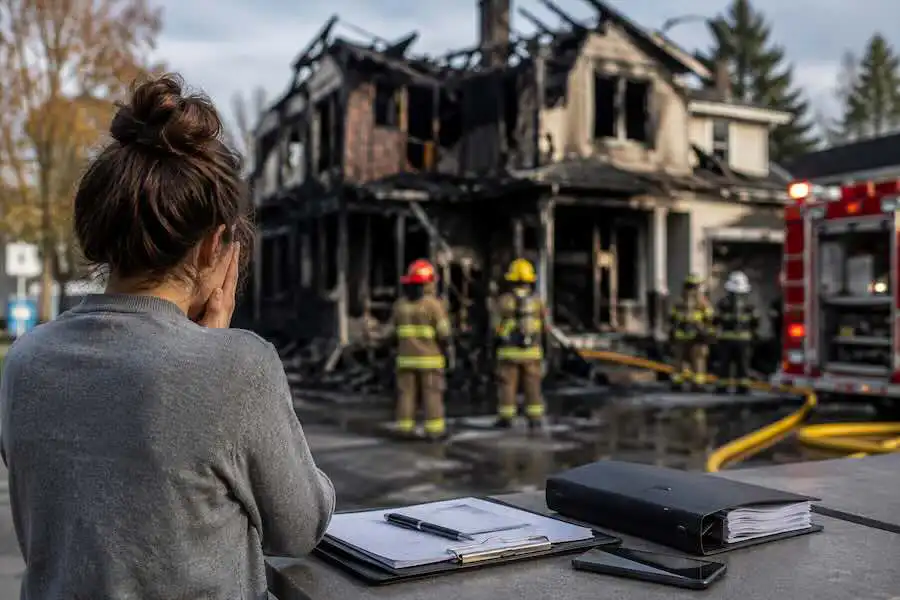
The flames may be out, but the first hours after a house fire can still feel disorienting. There may be water across the floor, broken glass underfoot, smoke hanging in rooms that once felt familiar and firefighters moving through damaged walls or ceilings. At that moment, the priority is not cleaning up. It is keeping everyone safe and establishing what happens next.
A house fire can leave you dealing simultaneously with emergency services, temporary accommodation, insurance, damaged possessions and frightened family members or pets. Having a simple order of operations can make those first decisions more manageable. Safety comes first; documentation and recovery follow.
1. Do Not Go Back Inside Until Authorities Say It Is Safe
A building can remain dangerous after visible flames have disappeared. Structural damage, unstable floors, weakened ceilings, hot spots, contaminated air and damaged electrical or gas systems may not be obvious from outside.
Do not re-enter simply to retrieve a phone, medication, documents or a pet unless emergency personnel specifically tell you it is safe to do so. Follow instructions from the fire department or other responsible authorities about when, and under what conditions, the property can be entered.
The American Red Cross provides additional guidance for the period immediately following a home fire.
2. Make Sure Everyone Has Somewhere Safe to Go
Once immediate danger has passed, account for everyone in the household and establish where you will spend the next several hours or nights. Even relatively limited fire damage can make a home temporarily unsuitable because of smoke, water, electricity or structural concerns.
Contact family members or trusted friends who need to know what happened. A prearranged family contact can be useful during emergencies because one person can update others while you deal with firefighters, accommodation and insurance.
Children may need a quiet environment away from the damaged property and emergency activity. Pets require planning too. Confirm that temporary accommodation accepts animals or arrange a safe alternative with family, friends, a veterinarian, boarding facility or appropriate local organization.
3. Contact Your Insurance Company Promptly
Notify your insurer or insurance representative as soon as reasonably possible and ask what they need from you before cleanup or repairs begin. Procedures vary between policies and jurisdictions, so obtain instructions directly from the company handling your claim.
Ask specifically about temporary accommodation, emergency expenses, securing the property, documenting damaged belongings and whether the insurer needs to inspect the home before anything is moved or discarded.
Keep the claim number and contact details somewhere accessible. Record the date of each conversation, the person you spoke with and any instructions you received. A simple paper folder or cloud-based file can become surprisingly valuable once emails, estimates and receipts begin accumulating.
4. Keep Every Receipt
The days after a fire can generate expenses quickly: hotel rooms, meals, clothing, transportation, pet accommodation, toiletries and replacement essentials. Depending on your insurance coverage, some eligible additional living expenses may be reimbursable.
Keep receipts rather than assuming you will remember individual purchases later. Photographing each receipt and storing the images in a dedicated folder can provide a backup if the paper copies are lost or damaged.
Do not assume a particular expense is covered. Confirm limits, exclusions and documentation requirements with your insurer.
5. Ask How the Property Will Be Secured
Firefighting can leave windows broken, doors damaged and sections of the roof open. Once emergency crews leave, the property may need temporary protection against weather, unauthorized entry and further damage.
Ask your insurer or the relevant authority who is responsible for boarding openings, installing temporary roof protection or arranging other emergency stabilization. Avoid entering unstable areas or attempting structural repairs yourself.
If utilities have been shut off, do not reconnect electricity, gas or other services without authorization from the appropriate professionals or utility provider.
6. Document the Damage Before Cleanup Begins
When authorities permit safe access, photograph and video the affected areas before substantial cleanup begins. Capture wide views of rooms as well as individual damaged items. This can help create a record of the condition of the property for insurance and recovery purposes.
Begin an inventory of damaged or destroyed belongings while memories are fresh. Note what the item was, where it was located and any information you have about its approximate age, purchase price or model.
Do not discard damaged property simply because it appears unsalvageable until your insurer has explained its documentation requirements. Some items may need to be inspected or recorded first.
7. Find Emergency Assistance if You Need It
Insurance is only one potential source of support. If you need immediate help with shelter, clothing, food or other essentials, ask emergency personnel which organizations operate locally.
Depending on where you live and the circumstances of the fire, assistance may be available through the American Red Cross, local government agencies, community organizations, charities or faith-based groups.
During a larger disaster, official emergency-management agencies may publish dedicated information about shelters, financial assistance and recovery services. Use official sources whenever possible, particularly before sharing personal or financial information.
8. Start Replacing Essential Documents
Important documents are easy to overlook until suddenly they are gone. Once immediate accommodation and safety are settled, identify which records were damaged or destroyed.
- Identification and driver’s licenses
- Passports and birth certificates
- Insurance documents
- Vehicle registrations and property records
- Financial and tax records
- Medical and prescription information
- Wills and other legal documents
Replacement procedures depend on the document and issuing authority. Begin with the identification and records you will need most urgently for insurance, banking, travel, medication or temporary housing.
9. Be Careful With Fire-Damage Cleanup
A fire does not leave ordinary household dust behind. Smoke residue, soot, damaged building materials and contaminated water can create hazards that are difficult to assess visually.
Before cleaning walls, furniture, textiles or structural materials, ask your insurer what professional assessment is required. Significant fire and smoke damage may call for specialist restoration rather than household cleaning products.
Food, medicines and cosmetics exposed to heat, smoke, soot, firefighting chemicals or contaminated water may also be unsafe. Follow guidance from appropriate public-health authorities rather than judging safety by appearance or smell alone.
What to Do in the First 24 Hours After a House Fire
The first day is easier to navigate when decisions are reduced to a short sequence. Focus on immediate needs rather than attempting to solve the entire recovery at once.
- Follow the fire department’s safety instructions and remain outside until authorized to enter.
- Arrange safe accommodation for everyone in the household, including pets.
- Notify your insurance company and request clear instructions for the claim.
- Ask how damaged doors, windows and roofing should be secured.
- Keep receipts for emergency expenses.
- Document damage when safe and permitted.
- Contact local emergency-support organizations if you need immediate assistance.
Conclusion
The hours after a house fire are not the time to rush back through the front door or begin throwing damaged belongings away. Secure people first. Follow the fire department’s instructions, arrange somewhere safe to stay and contact your insurer before making significant decisions about the property.
Recovery can take time, but careful documentation makes the administrative side more manageable. Keep photographs, receipts, claim information and important conversations together. The house may look chaotic in those first hours; your next steps do not have to be.
FAQ
Can I go back inside my house after a fire?
Only when the fire department or other responsible authority says it is safe. Fire can weaken structural components and damage electrical, gas and other building systems in ways that may not be visible.
How soon should I contact my insurance company after a fire?
Contact your insurer as soon as reasonably possible once immediate safety needs have been addressed. Ask what documentation is required, whether emergency accommodation may be covered and what you should do before cleanup or repairs begin.
Should I clean up immediately after a house fire?
Not necessarily. Wait until the property is safe to enter and ask your insurer what needs to be documented or inspected before anything is moved, cleaned or discarded. Significant soot, smoke and water damage may require professional restoration.
What should I take with me if I am allowed back inside?
Prioritize essential identification, necessary medications, insurance information and irreplaceable items only if authorities permit safe access. Do not enter restricted areas or remain inside longer than recommended.
Where can I get help after a house fire?
Start with your insurer and local emergency authorities. Depending on your location and circumstances, organizations such as the American Red Cross, government agencies, community groups and local charities may provide temporary shelter or other emergency assistance.