




The workout is done. What happens next matters almost as much. The hour or two after exercise — often called the “anabolic window” — is when the body is primed to absorb nutrients, repair muscle tissue, and rebuild energy stores. Getting this window right shapes recovery, muscle growth, and how the next session feels before it even starts.
Post-workout advice is everywhere, and most of it contradicts itself. Here’s what the science actually supports.
The Core Rule: Protein Plus Carbohydrate
Exercise leaves the body in active repair mode — muscle fiber carrying micro-tears, glycogen reserves running low. Two things address both at once:
- Protein: for muscle repair and growth.
- Carbohydrates: to replenish glycogen and stop further muscle breakdown.
A ratio near 2:1 or 3:1 carbohydrate to protein tends to work best for recovery, especially after something intense or long.
What to Eat After a Workout
- Whey protein shake with banana:
- Why it works: Whey absorbs fast, giving muscle a quick supply of amino acids. Banana is a fast-acting carbohydrate that resets glycogen quickly.
- Portion: 1 scoop whey protein (roughly 20–25g protein) plus 1 medium banana.
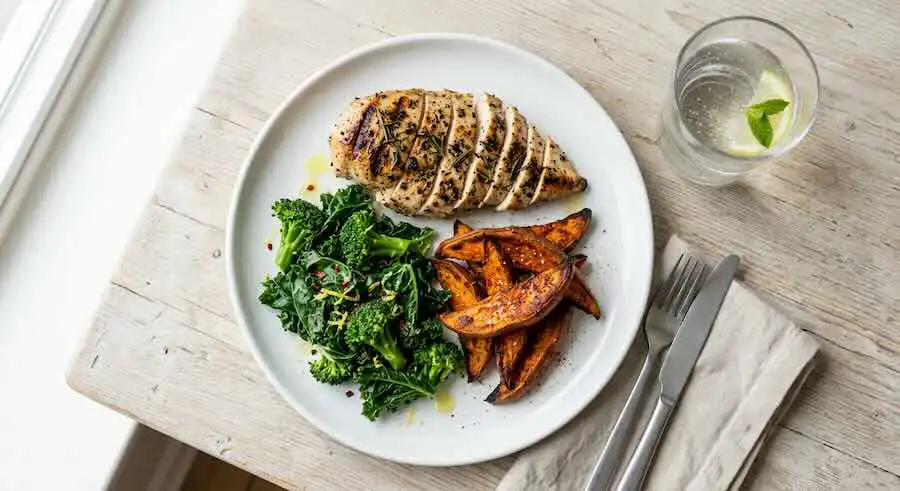
- Chicken or fish with sweet potato and vegetables:
- Why it works: Lean protein delivers essential amino acids; sweet potato brings complex carbohydrate for sustained energy plus real vitamin content.
- Portion: 4–6 oz grilled chicken or fish, 1 medium sweet potato, 1 cup steamed greens.
- Greek yogurt with berries:
- Why it works: Greek yogurt carries both casein and whey. Berries add antioxidant and simple carbohydrate; granola rounds it out with complex carbs.
- Portion: 1 cup Greek yogurt, ½ cup mixed berries, ¼ cup low-sugar granola.
- Tuna or salmon salad on whole-grain bread:
- Why it works: Omega-3s bring anti-inflammatory benefit alongside lean protein; whole-grain bread adds complex carbohydrate.
- Portion: 4 oz tuna or salmon, 2 slices whole-grain bread or a wrap.
- Cottage cheese with pineapple:
- Why it works: Cottage cheese digests slowly, releasing amino acids over time. Pineapple carries bromelain, an enzyme with some support for muscle recovery.
- Portion: 1 cup cottage cheese, ½ cup pineapple chunks.
Don’t Skip Hydration
Food is half the equation. Water carries nutrients where they need to go, regulates temperature, and keeps joints moving the way they should.
- What to do: Drink 16–24 ounces of water for every pound of body weight lost during exercise. Add electrolytes for longer or more intense sessions.
- The American College of Sports Medicine has a solid reference on hydration for exercise if you want more detail.
What to Avoid After a Workout
- High-fat foods: Healthy fat matters generally, but a meal dominated by fat right after a workout slows the digestion of the protein and carbs actually doing the recovery work.
- Skip for now: pizza, fried food, heavy cream sauces.
- Heavy fiber, immediately: Fiber is good — just not in this specific window. High-fiber food right after exercise can cause digestive discomfort and slow the fast absorption the body actually needs.
- Skip for now: large servings of raw broccoli, cauliflower, or beans — save these for later in the day.
- Sugar without substance: Some sugar helps replenish glycogen, but refined sugar without electrolytes or nutrients mostly just leads to a crash.
- Skip for now: soda, candy.
- Alcohol: Dehydrating, disruptive to muscle protein synthesis, and inflammatory — the exact opposite of what recovery needs.
- A study in Nutrients covers how alcohol affects muscle growth in more depth.
FAQ
How soon after a workout should I eat?
Within 30–60 minutes is ideal — that’s when muscle is most receptive to nutrient uptake. Missing that window isn’t a disaster; the body stays reasonably responsive for a few hours after.
Do I need a protein shake if I’m eating a real meal soon after?
Not necessarily. A balanced meal with protein and carbs within the hour covers the same ground — a shake is more about convenience than necessity.
What if I work out late at night — should I still eat?
Yes, recovery still needs fuel regardless of the hour. Lean toward something lighter and easy to digest — a small protein shake with water, or a serving of Greek yogurt.
Conclusion
The post-workout meal isn’t just about hunger — it’s a deliberate move to help the body adapt and recover. Get the protein-to-carb balance right, steer around the usual pitfalls, and the next session starts from a genuinely better place.