



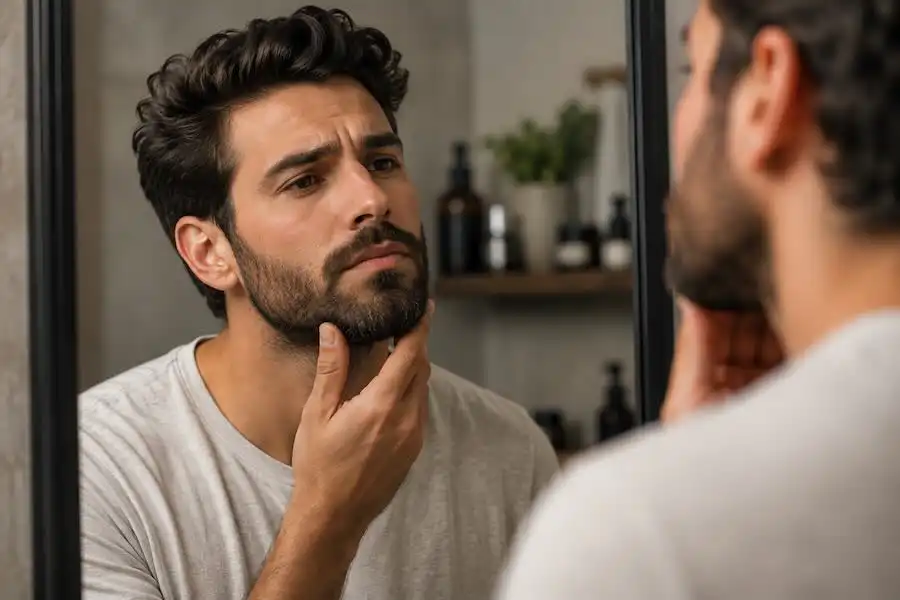
A beard can arrive thick and even in one man, grow slowly across the jaw in another, and remain naturally sparse in someone else. That variation is normal. Facial hair is shaped by genetics, age and the way individual hair follicles respond to androgens, which means beard growth is far less controllable than grooming advertisements sometimes suggest.
That distinction matters because a patchy beard is not automatically evidence of low testosterone, poor health or an inadequate grooming routine. Some men simply have fewer responsive follicles in particular areas of the face. Meanwhile, sudden hair loss or a noticeable change from your usual growth pattern can have a different explanation and may deserve medical attention. :contentReference[oaicite:0]{index=0}
Why Some Men Cannot Grow a Full Beard
Beard development begins with hair follicles and their response to androgen hormones, particularly testosterone and dihydrotestosterone, commonly known as DHT. Yet hormone levels alone do not determine whether someone develops dense facial hair.
Genetics influence the distribution of follicles and their sensitivity to androgen signals. This helps explain why two healthy men of similar ages can have dramatically different facial-hair patterns.
The practical takeaway is simple: having a naturally light beard does not necessarily mean something is medically wrong. It may simply be the beard pattern your biology produces.
Genetics Have a Major Influence
Look through old family photographs and you may notice familiar patterns: dense moustaches, sparse cheeks, strong growth along the jaw or very little facial hair at all. Genetics are an important part of those differences.
Family history can provide clues, but beard inheritance is more complicated than simply looking at your father or grandfather. Multiple genetic factors are involved, so there is no guarantee that your beard will precisely match that of one male relative.
Grooming products can condition the hair and skin you already have, but beard shampoo, conditioner and oil cannot rewrite your genetic potential or manufacture new follicles. A well-conditioned short beard can often look considerably better than trying to force naturally sparse growth into a much longer style.
Hormones Matter, but the Story Is More Complicated
Androgens play an essential role in the development of facial hair during and after puberty. Testosterone can be converted into DHT, and hair follicles respond to these hormonal signals according to their individual sensitivity.
This is why beard density cannot be used as a simple visual test of testosterone levels. A man can have testosterone within a normal range and still grow relatively little facial hair because genetics and follicular sensitivity differ.
Do not use testosterone or other hormone treatments simply to pursue a thicker beard without medical supervision. Hormonal treatment has wider effects on the body and should be prescribed for an appropriate medical reason after professional assessment.
Androgen Receptors Help Explain the Difference
Hormones need receptive follicles to produce their effects. Androgen receptors allow cells to respond to hormones such as testosterone and DHT, and genetic differences in androgen response contribute to variations in facial and body hair.
That helps explain an apparent contradiction: beard growth and scalp hair loss do not necessarily move in the same direction. DHT is associated with the development of facial hair, while genetically susceptible scalp follicles can respond to androgen activity by progressively miniaturizing in androgenetic alopecia.
In other words, a thick beard does not protect someone from male-pattern hair loss, and sparse facial hair does not automatically indicate a hormonal deficiency.
Age Can Change Your Beard
The first facial hairs of puberty are not necessarily the beard you will have several years later. Facial hair can continue changing in density, texture and distribution through early adulthood.
Someone with uneven growth in their late teens may see considerably more coverage later, while another person’s beard may remain naturally sparse. There is no universal age at which every beard reaches its final appearance.
If you are young and otherwise healthy, patience may therefore be more useful than an elaborate collection of products promising rapid growth.
Stress Can Affect Hair, but Beard Oil Is Not a Treatment
Stress can interact with hair growth and shedding, particularly when physical or psychological stress is significant. What it does not mean is that every patchy beard is caused by a stressful week.
Beard oils can soften facial hair and reduce the dry, rough feeling of the skin underneath. Oils such as amla may also work well as grooming products for some people. They should not, however, be presented as established treatments capable of creating new facial-hair follicles or correcting an underlying medical cause of hair loss.
Alopecia Areata Can Cause Distinct Beard Patches
There is an important difference between a beard that has always grown unevenly and one that suddenly develops smooth areas of hair loss.
Alopecia areata is an autoimmune condition that can cause patchy hair loss. When it affects the beard area, clearly defined patches may appear where hair previously grew. It can also affect the scalp and other areas of the body.
The condition is not contagious. A dermatologist can evaluate unexplained patches and discuss treatment options when appropriate. The American Academy of Dermatology provides additional information about alopecia and different forms of hair loss.
Thyroid Problems Can Affect Hair
Thyroid hormones influence numerous processes throughout the body, including hair growth. Hypothyroidism occurs when the thyroid gland does not produce enough thyroid hormone and can be associated with changes in hair alongside symptoms such as fatigue, sensitivity to cold and changes in weight.
Those symptoms are not specific enough to diagnose a thyroid condition yourself. If changes in facial or scalp hair appear alongside broader physical symptoms, speak with a healthcare professional who can determine whether testing is appropriate.
Iron Deficiency and Other Nutritional Problems
Nutrition supports normal hair production, but the relationship between diet and beard density is frequently oversimplified. Iron deficiency can contribute to hair-related changes in some people, particularly when it progresses to iron-deficiency anemia.
Possible symptoms can include fatigue, weakness, pale skin, dizziness or shortness of breath. Hair changes alone are not enough to establish a diagnosis.
Avoid taking high-dose iron or other supplements simply because your beard is sparse. Excess supplementation can cause harm. A clinician can investigate suspected deficiencies and recommend treatment based on the results.
Can You Make Your Beard Grow Faster?
There is no grooming shortcut that reliably overrides genetics. Shaving more frequently does not make hair follicles produce thicker hair, and oils or shampoos cannot create follicles where they do not exist.
What you can control is the environment around the hair you already grow. Gentle cleansing, moisturizing dry skin and trimming the beard into a shape suited to its natural density can improve its appearance considerably.
- Give younger facial hair time to develop naturally.
- Eat a varied diet that supports general nutritional needs.
- Use beard oils and conditioners for grooming rather than expecting them to create new growth.
- Avoid unprescribed hormone treatments and questionable beard-growth supplements.
- Choose a beard length and shape that works with your natural coverage.
When Should You See a Doctor?
A beard that has always been sparse usually carries a different significance from sudden or unexplained hair loss. Consider speaking with a doctor or dermatologist if facial hair begins falling out unexpectedly, distinct bald patches appear or the change occurs alongside other symptoms.
Medical evaluation can help distinguish natural variation from conditions involving the skin, immune system, thyroid, nutrition or hormones. That is a better route than attempting to diagnose the cause from beard density alone.
Conclusion
Some men grow dense facial hair with almost no effort. Others never will. Genetics, age and androgen sensitivity account for much of that variation, and a sparse beard by itself does not prove that your testosterone is low or your health is poor.
Work with the growth you have rather than chasing promises that a bottle of oil can rewrite biology. Keep the skin comfortable, choose a flattering style and give developing facial hair time. When the pattern suddenly changes or comes with other symptoms, that is the moment to move beyond grooming advice and speak with a healthcare professional.
FAQ
Why can’t I grow a full beard?
Genetics, age and the sensitivity of your hair follicles to androgen hormones are major influences. Naturally sparse facial hair does not necessarily indicate a health problem.
Does a patchy beard mean low testosterone?
Not necessarily. Beard growth depends on more than the amount of testosterone in your bloodstream. Genetics and the way follicles respond to androgens also matter. Only appropriate medical testing can determine whether testosterone is actually low.
Does shaving make a beard grow thicker?
No. Shaving cuts hair at the skin’s surface and does not increase the number of follicles or alter the biological growth rate. Newly cut hair can temporarily feel coarser because its end is blunt.
Can beard oil make facial hair grow?
Beard oil can condition existing hair and moisturize the skin beneath it, but ordinary cosmetic beard oils are not proven to create new follicles or overcome genetically sparse facial-hair growth.
Why has my beard suddenly developed bald patches?
Sudden patchy loss can have several causes, including alopecia areata and other medical or dermatological conditions. A doctor or dermatologist can examine the pattern and determine whether further investigation or treatment is needed.