
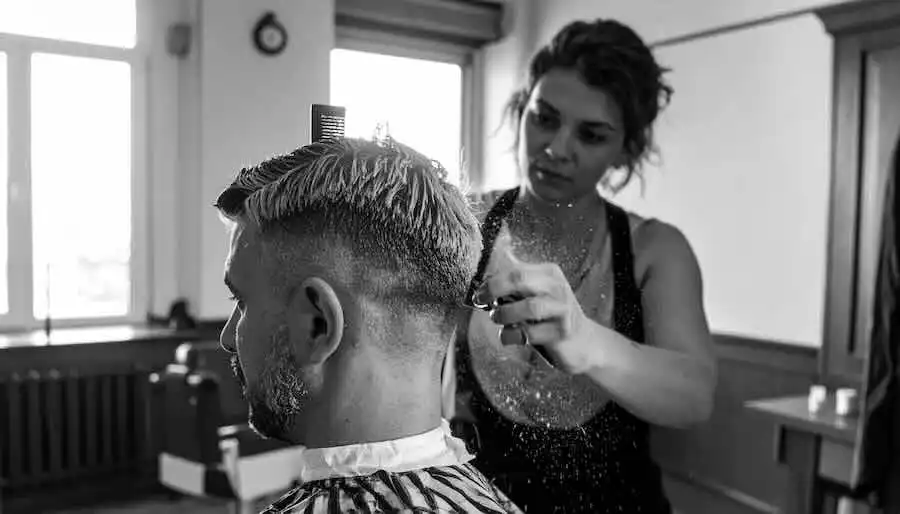
In 2026, men’s hair is all about personality over perfection. There’s a real departure underway — away from stiff, high-shine products, toward matte textures and cuts that embrace natural movement rather than fight it. Whether the direction is a sharp fade or a relaxed “flow,” these are the ten looks actually defining the year.
1. The “Baby” Mullet (The Modern Mullet 2.0)
The aggressive mullet of recent years has matured into the Baby Mullet — short, tidy sides paired with a subtle, soft length at the back that never tips into costume territory.
- Best for: Square, Oval, and Heart-shaped faces.
- Styling: A light texturizing salt spray gives it the right “lived-in” feel.
2. The Overgrown Buzz Cut
Inspired by athletes like Joe Burrow, the 2026 buzz has moved past a straight #1 all over. It’s now an overgrown #3 or #4 on top with a soft taper on the sides — reads as intentional, requires essentially zero morning effort.
- Pro Tip: Pair it with a well-groomed short beard for a rugged, masculine finish.
3. The Textured “Bro Flow”
The “Flow” is the reigning king of medium-length hair this year — pushed back off the face and tucked behind the ears, letting it skim the collarbone.
- Ideal for: Men with natural waves or thick hair.
- Key Product: A lightweight hair cream to manage frizz without adding weight.
4. The Burst Fade
For anyone finding the classic skin fade a bit too “corporate,” the Burst Fade is the 2026 alternative. The fade curves around the ear in a semi-circle rather than a straight line, leaving more length at the neckline.
- Trend Alert: Often paired with a textured mohawk or a curly top for extra contrast.
5. The “Mod” Shag
A genuine tribute to ’70s rock stars, the Mod Shag features a heavy fringe and face-framing layers. It’s “messy on purpose,” and works especially well softening long or sharp face shapes.
6. The 2026 Pompadour (Soft Finish)
The “Elvis” pomp is out; the Soft Pompadour is in. It keeps the height but swaps pomade for matte paste, producing a more natural, airy volume that actually moves when you walk instead of holding rigid.
7. Curly Center Part (The “E-Boy” Evolution)
Gen Z’s favorite center part has evolved. In 2026, it’s showing up with natural, defined curls rather than flat, pressed-down hair.
- Ask your barber for: A “curtain” cut that hits the cheekbones to add real structure to the face.
8. The Textured Crop (French Crop 2.0)
The French Crop remains a staple for good reason — it’s the ultimate receding-hairline savior. The 2026 version leans on even more choppy layers on top to build volume where it’s needed most.
9. The Slick-Back “Flow”
For a professional look that never reads as boring, the Slick-Back Flow blends the “old money” aesthetic with a bit of extra length. Think Cillian Murphy, but with a softer, matte finish instead of high shine.
10. The “Warrior” Cut
A late-’90s revival, this cut features high-contrast layers and choppy tips. It’s bold and edgy — a strong pick for anyone in a creative or tech-forward environment looking to stand out rather than blend in.
Choosing by Face Shape: The 2026 Rulebook
| Face Shape | Recommended 2026 Cut | Why? |
| Oval | Any style (esp. Buzz Cut) | Balanced proportions allow for maximum experimentation. |
| Square | Soft Pompadour | Adds height to balance a strong jawline. |
| Round | Textured Quiff / Burst Fade | Creates verticality to elongate the face. |
| Rectangle | Side Part / Bro Flow | Side volume prevents the face from appearing too long. |
Essential 2026 Grooming Tips
- Texture Powder is King: Ditch the heavy gels. A texture powder provides instant volume and a matte finish that holds up all day without stiffening.
- Scalp Health: In 2026, the scalp gets treated like skin. A gentle exfoliating scrub once a week is the dermatologist-backed sweet spot for most people — enough to clear product buildup and support healthy growth without tipping into irritation from over-exfoliating.
- The “Air Dry” Method: Most 2026 trends look their best air-dried, with a small amount of leave-in product worked through to define the hair’s natural pattern rather than override it.
Conclusion
The throughline across every one of these ten cuts is restraint — matte over shiny, natural movement over rigid hold, texture over perfection. Whatever the starting hair type, there’s a version of this year’s trends built around working with it rather than against it. The right cut, paired with the right face-shape match and a grooming routine that doesn’t overcomplicate things, tends to do more for a look than any single product ever will.
FAQ: 2026 Men’s Hairstyles
Q: How often should these cuts be trimmed to keep their shape? A: Fades and crops need a touch-up every 2–3 weeks to stay sharp. Looser styles like the Flow, the Mod Shag, or the Baby Mullet can stretch to 6–8 weeks between cuts, since some growth actually improves the shape rather than ruining it.
Q: Can fine hair pull off the Soft Pompadour or the Mod Shag? A: Yes, with the right product support — a lightweight volumizing powder or mousse at the root does most of the work for fine hair, since these styles rely more on shape and product than on natural thickness.
Q: What’s the difference between a Burst Fade and a regular skin fade? A: A skin fade tapers in a straight line down to the skin across the whole side. A Burst Fade curves around the ear specifically, in a semi-circle, leaving more length near the neckline — a softer, less uniform look overall.
Q: Is texture powder suitable for all hair types? A: It works best on fine to medium hair that needs volume without added weight. Thicker or coarser hair usually does better with a cream or paste, since powder alone won’t offer enough hold to manage more volume to begin with.