




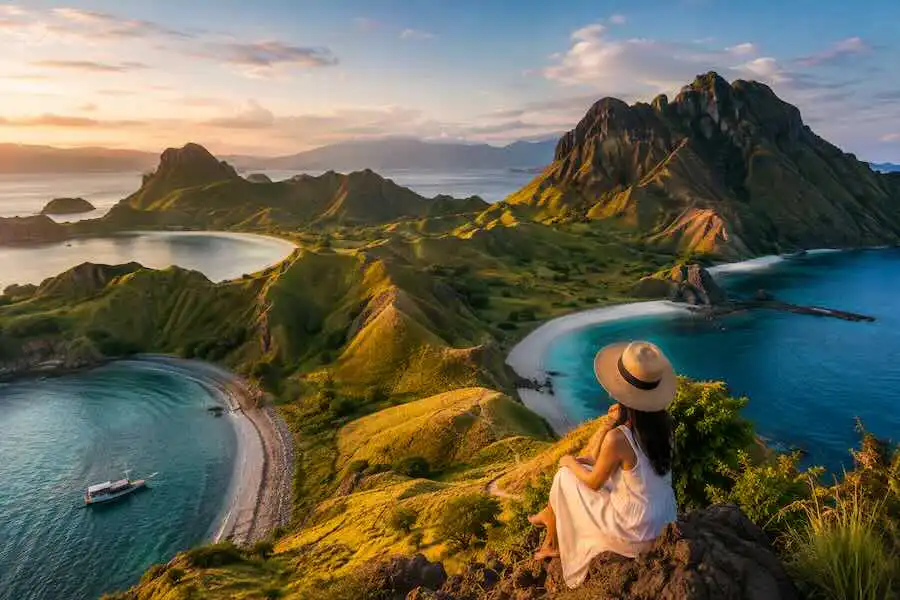
Indonesia rarely reveals itself in a single trip. Beyond Bali’s familiar shoreline lies an archipelago shaped by volcanoes, rainforest, coral gardens, temple complexes and thousands of inhabited islands, each moving to its own rhythm. In 2026, that extraordinary variety remains the country’s strongest argument: Indonesia can feel radically different simply by boarding a ferry or taking a short flight east.
The scale can also make planning intimidating. Rather than trying to collect destinations, build a journey around what draws you there: diving, food, wildlife, surf, hiking, architecture or several slow days beside the sea. Indonesia rewards travelers who leave room between the landmarks.
One Country, Remarkable Variety
Indonesia stretches across thousands of islands, producing an extraordinary mixture of landscapes, languages, traditions and cuisines. Dense cities give way to rice terraces. Volcanic ridges descend toward tropical coastline. Elsewhere, wooden boats move through mangroves and fishing villages sit beside remarkably clear water.
That diversity means there is no definitive Indonesian itinerary. Java can deliver temples, cities and volcanic landscapes; Bali combines beaches with a deeply visible cultural life; Lombok offers surf and mountain terrain; Flores opens the route toward Komodo; while more remote regions reward travelers prepared for longer journeys.
Beaches That Go Far Beyond Bali
Bali remains the country’s best-known beach destination, but Indonesia’s coastline extends far beyond it. Lombok offers long crescents of sand and established surf breaks, while the islands farther east can feel considerably more isolated.
The appeal is not simply lying beside turquoise water. Snorkeling, diving, surfing and sailing allow the landscape to unfold from another perspective. Coral reefs sit beneath the surface, volcanic islands rise sharply from the horizon, and small boats connect places where roads cannot.
Remote Islands Reward Slower Travel
Indonesia becomes particularly compelling once the itinerary moves away from its busiest routes. The Karimunjawa archipelago, Togean Islands and parts of eastern Indonesia offer a different pace, where journeys can involve ferries, small boats and considerably less infrastructure.
Remote does not automatically mean untouched, however. Fragile marine environments and smaller communities can feel tourism’s effects acutely. Choose accommodation and operators carefully, reduce disposable plastic where possible, and treat limited water and waste infrastructure as part of the reality of island travel rather than an inconvenience.
Jakarta Shows Indonesia at Full Volume
Jakarta presents another face entirely. Traffic, towers, food stalls, shopping districts and historic neighborhoods overlap inside a vast metropolitan landscape. It can feel intense after several days on an island, but that contrast is precisely what makes it interesting.
Spend time around Kota Tua for traces of the colonial city, explore museums and contemporary galleries, then follow the food. Jakarta’s dining culture reflects the movement of people from across the archipelago, making the capital an effective introduction to regional Indonesian flavors before traveling farther.
Volcanoes Create Some of the Country’s Most Surreal Landscapes
Indonesia sits within one of the world’s most geologically active regions, and volcanoes are inseparable from its landscape. They shape skylines, agriculture, local histories and some of the country’s most memorable hikes.
On Flores, Kelimutu is known for its remarkable crater lakes. Lombok’s Mount Rinjani offers a far more demanding mountain experience, while Java contains several celebrated volcanic landscapes of its own.
Conditions around active volcanoes can change, so current local guidance matters more than an old itinerary or social-media post. Check access conditions before departure and use reputable local guides where appropriate.
Wildlife Encounters Can Be Extraordinary
Indonesia’s biodiversity extends from rainforest canopy to coral reef. Komodo National Park protects the habitat of the Komodo dragon, while Indonesian Borneo and Sumatra are associated with some of the world’s remaining wild orangutan populations.
Beneath the water, the experience changes again. Manta rays, turtles, reef fish and extraordinary coral ecosystems make parts of Indonesia internationally significant diving destinations.
Wildlife tourism deserves careful scrutiny. Keep appropriate distance, follow park regulations and choose operators that prioritize animal welfare and habitat protection rather than promising unnaturally close encounters.
Centuries of History Remain Visible
Indonesia’s cultural landscape is as layered as its geography. In Central Java, the monumental Buddhist complex of Borobudur sits within a landscape of palms and volcanic peaks. Near Yogyakarta, Prambanan offers another extraordinary encounter with the region’s architectural history.
Yet heritage is not confined to monuments. Batik workshops, dance, music, religious ceremonies, markets and traditional architecture make culture part of daily life. Respectful clothing and behavior are particularly important when entering temples and other sacred spaces.
Food Changes as You Move Between Islands
Smoke rising from a roadside grill, sambal bright with chile, fragrant rice and the caramelized edges of satay can become as memorable as any beach. Indonesian cuisine is intensely regional, so treating nasi goreng as the beginning rather than the definition of the country’s food is worthwhile.
Try rendang, soto, gado-gado, regional sambals and dishes specific to the island you are visiting. Warungs and markets can offer some of the most interesting meals, particularly when you follow places that are busy with local diners.
Festivals Reveal a Different Rhythm
Travel dates can completely alter an Indonesian journey. Religious ceremonies and local festivals may change transport, opening hours and the atmosphere of entire communities.
In Bali, Nyepi is particularly distinctive. The Day of Silence transforms the island’s normal rhythm, with restrictions affecting movement and everyday activity. Travelers should understand local requirements in advance rather than treating the observance simply as a tourist spectacle.
Indonesia Can Work Across Different Budgets
Indonesia can accommodate everything from simple guesthouses and local food stalls to private villas and remote luxury resorts. Your largest costs may depend less on accommodation than on how far you intend to move across the archipelago.
Domestic flights, boat transfers, diving trips and private drivers can accumulate quickly. Staying longer in fewer places can reduce transport costs while creating a more satisfying trip. Divine’s budgeting tips for traveling around Indonesia offer additional planning ideas.

Best Places to Visit in Indonesia
Bali: Culture, Beaches and Wellness
Bali works particularly well for first-time visitors because so many experiences sit within a relatively compact area. Ubud offers rice-field landscapes and a strong arts scene, while southern areas provide beaches, restaurants and nightlife. Travel beyond the busiest districts and the island becomes quieter surprisingly quickly.
Komodo National Park: Dragons and Open Water
Komodo National Park combines stark island landscapes with exceptional marine environments and the chance to see Komodo dragons in their natural habitat. Trips commonly begin around Labuan Bajo on Flores and continue by boat through the national park.
Yogyakarta: Temples, Art and Javanese Culture
Yogyakarta is an excellent base for travelers interested in architecture, art and history. Borobudur and Prambanan are major draws, but the city itself deserves time for batik, food, galleries and traditional performing arts.
Raja Ampat: A Journey Built Around the Sea
Raja Ampat is remote, expensive to reach compared with Indonesia’s mainstream destinations and extraordinary for travelers whose priority is marine life. Limestone islands rise from luminous water, while diving and snorkeling place the region’s biodiversity at the center of the experience.
Lombok: Surf, Sand and Mount Rinjani
Lombok combines beaches and surf with the imposing presence of Mount Rinjani. The island can work as an alternative or complement to Bali, particularly for travelers who want more hiking and quieter coastal areas.
Flores: Volcanic Landscapes and the Road East
Flores rewards overland travel. Kelimutu’s crater lakes, mountain roads, villages and access to the Komodo region make the island particularly appealing to travelers who prefer landscapes and movement over resort-centered holidays.
Kalimantan: Rainforest and Orangutan Country
Indonesian Borneo offers rainforest journeys where wildlife becomes the focus. Tanjung Puting National Park is particularly associated with orangutan conservation and river travel, offering a radically different experience from Indonesia’s beach destinations.
Sumba: Open Landscapes and Strong Traditions
Sumba’s dry hills, traditional villages, beaches and equestrian culture give the island a distinctive visual identity. Its Pasola traditions are culturally significant, so visitors should approach them with respect rather than viewing the event purely as entertainment.
Practical Takeaway: Plan Indonesia in Regions
Trying to cover Bali, Java, Komodo, Sumatra and Raja Ampat in one short holiday can turn an extraordinary destination into a sequence of airports and transfers. Instead, choose a region and build outward.
- For a first trip: combine Bali with Lombok or Java.
- For wildlife: consider Kalimantan or Sumatra.
- For diving: investigate Raja Ampat or the waters around Komodo.
- For culture: give Yogyakarta and Central Java several days rather than treating them as a stopover.
- For slower travel: choose fewer islands and stay longer on each.
Conclusion: Indonesia Is Bigger Than the Bucket List
Indonesia’s appeal lies in contrast. Dawn can arrive through mist above a volcano; another morning begins with bare feet on warm sand. Cities pulse, forests close around rivers, temple stone catches late-afternoon light and reefs disappear into deep blue.
Do not try to see all of it. Indonesia is simply too large for that. Choose a corner, travel thoughtfully and give each place enough time to become more than another pin on a map. The islands left unseen are a good reason to return.
FAQ: Traveling to Indonesia
What is the best time to visit Indonesia?
Weather patterns vary across the archipelago, so there is no single perfect month for every destination. Many popular areas experience comparatively drier conditions during part of the year, but check the climate for the specific islands you plan to visit rather than applying one forecast to the entire country.
Do I need a visa for Indonesia?
Visa requirements depend on nationality, purpose of travel and length of stay and can change. Check Indonesia’s official immigration information before booking and again shortly before departure rather than relying on an older travel article.
Is Indonesia suitable for Solo travelers?
Many established Indonesian destinations are popular with solo travelers, but conditions differ by region. Research transport, local customs, health considerations and current travel advice for each part of your itinerary, particularly when heading into remote areas.
What is the best way to travel between Indonesian islands?
Flights are practical for long distances, while ferries and smaller boats connect many neighboring islands. Journey times and standards vary considerably, so leave flexibility around connections and check current schedules locally.
What should I pack for Indonesia?
Lightweight breathable clothing, sun protection, insect repellent, comfortable footwear and modest clothing for religious or culturally sensitive sites form a useful foundation. Hiking, diving and remote-island itineraries require more specialized preparation.