




Learning a musical instrument rarely follows a clean upward line. One practice session feels effortless; the next can make the same chord, rhythm, or fingering feel strangely unfamiliar. For beginners, that friction is normal. The real danger is allowing small mistakes to settle into habits that make progress slower than it needs to be.
Whether you are learning guitar, piano, drums, banjo, or another instrument, early practice shapes what comes later. Technique matters, but so do expectations, listening habits, practice structure, and the way you spend money on lessons and equipment. A thoughtful start creates stronger foundations and makes learning music considerably more enjoyable.
3 Beginner Mistakes That Can Slow Your Musical Progress
1. Setting Unrealistic Expectations
Watching an accomplished musician perform can make difficult playing look almost weightless. Fingers move instinctively. Timing feels natural. Notes land precisely where they should. What the audience does not see are the hundreds or thousands of hours behind that apparent ease.
Expecting similar results after a few weeks of practice can quickly turn inspiration into frustration. Instead, measure progress against your previous ability rather than someone else’s finished performance.
If you are learning how to play banjo, for example, getting comfortable with basic picking patterns, chord shapes, rhythm, and clean transitions is already meaningful progress. The same principle applies to every instrument.
A more useful goal is specific and achievable: play one chord change cleanly, maintain a steady rhythm for a minute, learn a scale without stopping, or practice for 20 focused minutes each day. Small improvements accumulate.
2. Learning Songs Without Learning the Fundamentals
There is nothing wrong with wanting to play a favorite song. In fact, recognizable music can provide some of the strongest motivation to keep practicing. Problems begin when songs become a substitute for understanding the instrument itself.
Beginners benefit from spending time on fundamentals such as posture, timing, rhythm, finger placement, scales, chords, articulation, and basic music theory. The exact balance depends on the instrument, but these skills become the framework behind everything you eventually play.
For structured learning, resources from MusicTheory.net can help beginners understand notes, intervals, scales, chords, and other theoretical foundations alongside practical playing.
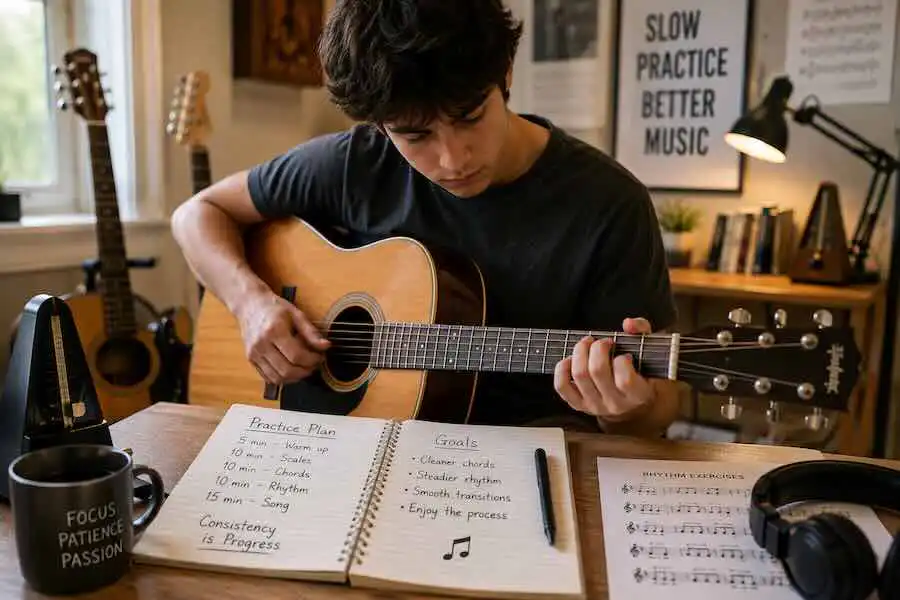
Try separating practice into short sections. Spend a few minutes warming up, another block on technique, some time on rhythm or theory, and finish with a song you actually enjoy. That final section matters. Practice should contain enough pleasure to make you want to return tomorrow.
3. Spending Money Before You Understand What You Need
Musical equipment has an almost magnetic appeal. Instruments, pedals, amplifiers, microphones, accessories, books, apps, subscriptions, and lessons can make it surprisingly easy to spend heavily before your first month of practice is finished.
More equipment does not automatically produce faster progress. A beginner generally needs an instrument that is comfortable, functional, properly set up, and suitable for learning. Beyond that, consistent practice is usually more valuable than another accessory.
The same thinking applies to lessons. Compare instructors, teaching styles, course structures, and costs before committing. A technically brilliant musician is not necessarily the right teacher for every beginner. Look for someone who can explain concepts clearly, identify weaknesses, and adapt lessons to the way you learn.
Build a Practice Routine You Can Actually Maintain
Long, irregular sessions can feel productive, but shorter periods of focused practice are often easier to sustain. Put the instrument somewhere accessible. Remove distractions. Decide what you are going to work on before you begin.
Most importantly, practice slowly enough to notice mistakes. Repeating something incorrectly at full speed simply teaches your hands to reproduce the error more efficiently. A metronome can expose uneven timing, while recording yourself can reveal details that disappear while you are concentrating on playing.
Progress can be quiet. A cleaner note, steadier beat, smoother transition, or relaxed hand position may not feel dramatic in the moment, yet these are precisely the details from which confident musicianship grows.
Conclusion
Learning an instrument takes patience, curiosity, and repetition. There will be awkward chords, missed notes, stubborn rhythms, and days when yesterday’s breakthrough seems to have vanished. Keep going.
Set realistic expectations, build your fundamentals alongside the songs you love, and spend carefully until you understand what genuinely supports your playing. The aim is not to rush toward somebody else’s definition of proficiency. It is to build enough skill that making music gradually begins to feel natural.
Frequently Asked Questions
How long does it take to learn a musical instrument?
The timeline depends on the instrument, your goals, previous musical experience, and practice consistency. Basic songs may become accessible relatively quickly, while advanced musicianship generally develops across years of continued practice.
How often should a beginner practice?
A regular routine is more useful than occasional marathon sessions. Even a short, focused daily session can help establish technique, coordination, and familiarity with the instrument.
Should beginners learn music theory?
Yes, but it does not need to dominate practice. Understanding rhythm, scales, intervals, chords, and basic notation can make songs easier to understand and gives you tools for improvisation and composition later.
Is it better to learn songs or practice exercises?
Use both. Technical exercises develop specific abilities, while songs place those skills into a musical context and keep practice rewarding.
Do I need an expensive instrument as a beginner?
No. Prioritize playability, comfort, tuning stability, and appropriate setup. Once your technique and preferences develop, you will be in a much better position to judge whether an upgrade is worthwhile.