




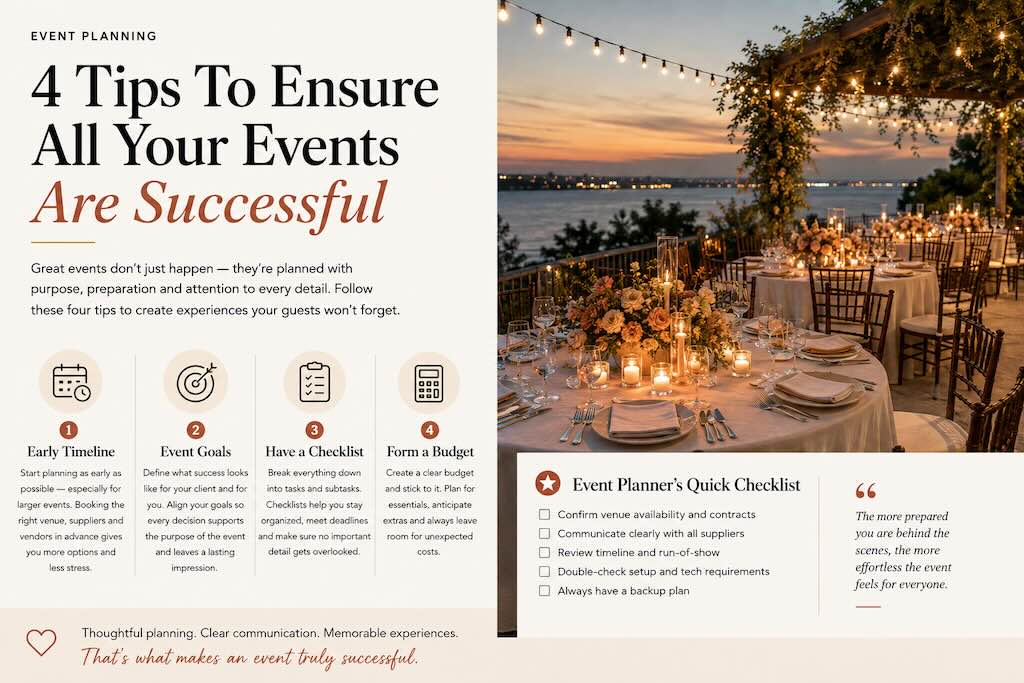
A successful event can look effortless from the outside. Guests arrive, the space looks beautiful, everything happens on time, and nobody sees the dozens of decisions that made it possible. Behind the scenes, however, good events are rarely accidental.
Whether you’re organizing a corporate gathering, launch party, fundraiser, wedding, or community event, the same fundamentals tend to matter: a clear purpose, realistic budget, detailed timeline, and enough preparation for the things that inevitably don’t go according to plan.
1. Start With the Purpose, Not the Decorations
Before booking a venue or thinking about menus, flowers, lighting, or entertainment, establish what the event is actually supposed to achieve.
A product launch designed to generate media attention needs something different from an employee celebration. A fundraiser has different priorities from a networking event. Even two parties with the same number of guests can require completely different planning.
If you’re planning on behalf of a client, discuss their priorities early. Ask what they want guests to remember, which elements matter most, and what would make them consider the event successful.
Once the purpose is clear, individual decisions become much easier. Instead of asking whether something would look impressive, you can ask whether it actually supports the experience you’re trying to create.
2. Build a Realistic Budget Before You Start Booking
An event budget needs to cover considerably more than the venue and catering.
Depending on the event, costs can include staffing, entertainment, equipment rental, transportation, insurance, permits, security, signage, photography, decorations, technology, cleaning, and dozens of smaller expenses that are easy to overlook.
Break the total budget into categories and identify the non-negotiables first. If exceptional food is central to the event, for example, allocate enough money for it before spending heavily on decorative extras.
It’s also smart to leave part of the budget uncommitted. Last-minute expenses have a habit of appearing precisely when there’s no money left to cover them.
3. Start Planning Earlier Than You Think You Need To
The larger or more complicated the event, the more valuable an early start becomes.
Popular venues, photographers, caterers, entertainers, and rental companies can book months in advance. Waiting too long doesn’t simply create stress — it can leave you choosing from whatever happens to remain available rather than what actually fits the event.
Start with the decisions that affect everything else. Date, venue, expected attendance, budget, and event format usually belong near the beginning of the process. Smaller details can follow once those foundations are secure.
An early timeline also creates room for something every event planner eventually needs: Plan B.
4. Turn the Entire Event Into a Timeline
A checklist tells you what needs to happen. A timeline tells you when it needs to happen — and for complicated events, you need both.
Create one master planning document covering important deadlines, supplier confirmations, payments, guest communications, deliveries, setup, and anything else that could affect the event.
Then create a separate run-of-show for the event itself. This should map out what happens from the moment the first supplier arrives until the final guest leaves and cleanup begins.
For larger events, don’t stop at listing what needs to happen. Assign responsibility. Every important task should have someone who knows it’s theirs.
5. Choose the Venue for Logistics as Well as Looks
A beautiful venue can become a terrible event space surprisingly quickly if the practical details don’t work.
Think about capacity, accessibility, parking or transportation, bathrooms, power supply, loading access, sound restrictions, catering policies, Wi-Fi, weather protection, and how guests will actually move through the space.
If the event is outdoors, contingency planning becomes even more important. Rain, extreme heat, cold, wind, sanitation requirements, lighting, and access to power all need consideration before guests arrive.
Visit the venue in person whenever possible. A floor plan can tell you the dimensions of a room; it can’t always tell you that 200 people trying to reach one narrow bar will create a queue across the dance floor.
6. Plan the Guest Journey
One of the easiest ways to improve an event is to experience it mentally from the guest’s perspective.
Where do they park? Is the entrance obvious? What happens when they arrive? Is check-in straightforward? Where do coats and bags go? Can they easily find bathrooms? Are there long periods when nobody knows what’s happening next?
These details aren’t particularly glamorous, but they’re often what separates an event that feels polished from one that feels chaotic.
Good signage, clear communication, sensible scheduling, enough seating, and staff who know what’s happening can improve the experience more than another expensive decorative installation ever will.
7. Have a Backup Plan for the Things That Matter Most
No amount of planning guarantees that everything will happen exactly as expected.
A supplier can arrive late. Technology can fail. The weather can change. A speaker can cancel. Attendance can be higher or lower than expected.
You don’t need an elaborate contingency plan for every imaginable disaster, but identify the failures that would seriously disrupt the event and decide what you’ll do if they happen.
For an outdoor event, that might mean an indoor alternative or sufficient shelter. For a presentation, it could mean keeping copies of important files offline and having backup equipment available. For catering, it means confirming dietary requirements and understanding how unexpected additional guests would be handled.
8. Confirm Everything Before Event Day
Don’t assume that something arranged three months ago will magically happen exactly as discussed.
In the days leading up to the event, reconfirm the important details with suppliers and everyone involved in delivery. Check arrival times, quantities, addresses, contact numbers, payment status, equipment requirements, and who will be responsible for what on site.
Share the final schedule with the people who need it and make sure key contacts can reach one another quickly.
Those final confirmations can feel repetitive, but discovering a misunderstanding three days beforehand is considerably easier to fix than discovering it three hours beforehand.
The Event Planner’s Final 24-Hour Checklist
- Confirm final guest numbers and any dietary or accessibility requirements.
- Reconfirm supplier arrival and setup times.
- Check the final run-of-show with staff and key participants.
- Test microphones, screens, presentations, lighting, and other essential technology.
- Check signage, registration materials, seating plans, and guest information.
- Make sure everyone knows who to contact if something goes wrong.
- Review the backup plan for weather, technology, or other major risks.
- Give yourself enough time to walk through the venue before guests arrive.
Successful Events Feel Effortless Because the Planning Wasn’t
The best events often have one thing in common: guests never notice how much work went into them.
They simply know where to go, what to do, and what happens next. The food arrives when expected. The atmosphere feels right. Problems are handled before they become visible.
That apparent effortlessness comes from preparation. Define the purpose, protect the budget, start early, build a detailed timeline, and plan for the unexpected. Do those things well and you’ll have considerably more freedom to enjoy the event yourself rather than spending the entire day putting out fires.
FAQ: Planning a Successful Event
How far in advance should you start planning an event?
It depends on the size and complexity of the event. A relatively small gathering may need only several weeks of preparation, while large corporate events, weddings, conferences, and events requiring popular venues or suppliers can benefit from planning many months in advance.
What should an event planning checklist include?
At minimum, include the budget, venue, guest list, invitations, catering, suppliers, entertainment, equipment, staffing, accessibility, transportation, setup, cleanup, payments, deadlines, and a detailed event-day schedule.
How much of an event budget should be kept for unexpected costs?
There isn’t one percentage that works for every event, but building a contingency amount into the budget is wise. The more complex the event — particularly one involving multiple suppliers, travel, outdoor elements, or technical production — the more important that financial buffer becomes.
What’s the biggest mistake people make when planning events?
Trying to make decisions before establishing the event’s purpose, budget, and priorities can create problems later. Those three elements should guide everything from the venue and guest experience to catering and entertainment.