



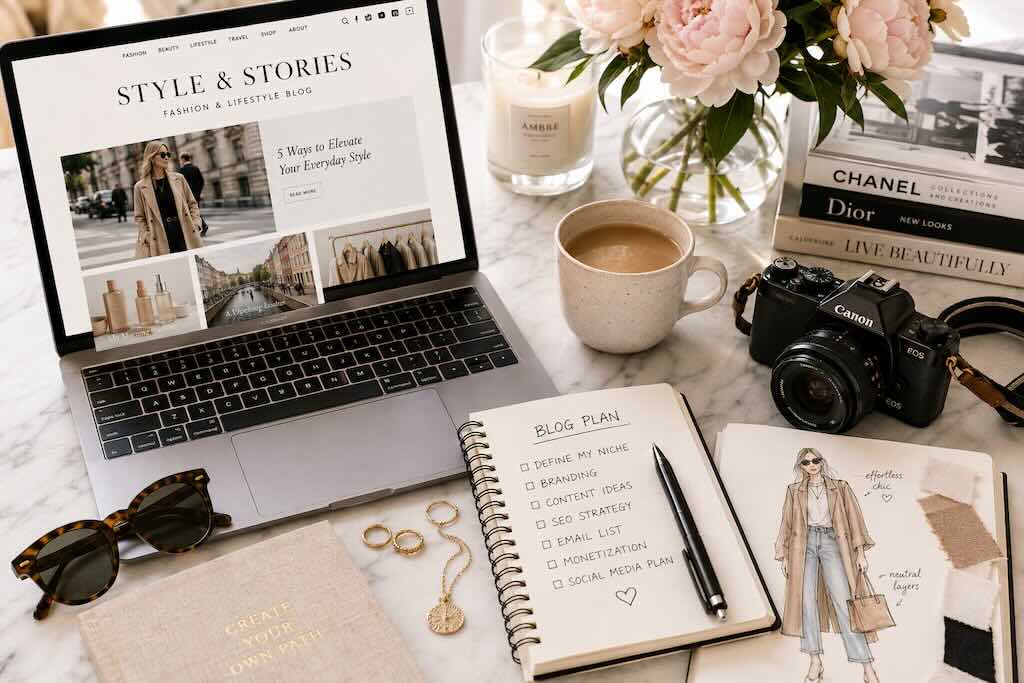
Starting a fashion and lifestyle blog in 2026 looks very different from launching one a few years ago. Instagram, TikTok and Pinterest can put your style in front of thousands of people, while AI can produce generic articles in seconds. That might make starting a traditional blog seem strangely old-fashioned.
It isn’t. A blog gives you something social platforms never fully can: a corner of the internet you actually control. Your articles can appear in Google, attract readers months or years after publication, build an email audience and eventually generate income through affiliate links, advertising, partnerships and your own products or services.
The opportunity is still there. The strategy has simply changed. If you want to turn your interest in fashion, beauty and modern living into something bigger, here’s how to build a fashion and lifestyle blog that makes sense in 2026.
Start With a Point of View, Not Just a Topic
“Fashion and lifestyle” is not really a niche. It’s an enormous category containing everything from designer handbags and skincare to interiors, travel and wellness.
A new blog needs a clearer reason to exist.
Instead of deciding that you’ll write about fashion, think about the person you’re helping and what they’ll consistently get from you.
- Affordable outfits that look more expensive than they are
- Scandinavian-inspired fashion and minimalist living
- Capsule wardrobes for busy professionals
- Vintage fashion and secondhand shopping
- Beauty and style for women over 40
- Fashion, travel and restaurants in one particular city
- Luxury fashion from a realistic consumer perspective
The more clearly readers understand what makes your perspective different, the easier it becomes to decide what belongs on the site — and what doesn’t.
Choose a Name You Can Grow Into
Your domain name becomes part of your identity, so avoid making it so specific that you’re trapped by it later.
If you start writing exclusively about thrift-store fashion but eventually want to cover interiors, beauty and travel, a name built entirely around thrifting could become limiting.
Short, memorable and easy to spell usually wins. Say the name aloud, imagine it as an Instagram handle and make sure someone could type it correctly after hearing it once.
Before committing, check the domain and major social platforms. You don’t necessarily need an identical username everywhere, but keeping your branding reasonably consistent makes you easier to find.
Build Somewhere You Actually Own
One of the biggest mistakes new creators make is building their entire presence on somebody else’s platform.
An Instagram account can grow quickly. So can TikTok. But algorithms change, reach disappears and platforms themselves evolve. Your website and email list provide a more permanent foundation underneath everything else.
For anyone who wants significant control over design, SEO and monetization, self-hosted WordPress remains one of the strongest options. Simpler website builders can make sense if technical maintenance is something you absolutely don’t want to handle.
Whichever platform you choose, make sure you can comfortably publish articles, optimize pages for search, collect email subscribers and add monetization later.
Don’t Spend Three Months Designing the Logo
Fashion blogs need strong visual identities, but branding can become an extremely attractive form of procrastination.
You don’t need a complicated identity system before publishing your first article. Start with a restrained palette, one or two typefaces, a simple logo and consistent photography.
The real brand develops through repetition: the way you photograph outfits, write headlines, edit images, talk about products and interact with readers.
Readers are much more likely to remember a distinctive perspective than the exact shade of beige used in your logo.
Plan Your First 10 Articles Before You Launch
A blog with one introductory post can feel unfinished. Before launching publicly, create a small foundation of genuinely useful content.
Your first articles should demonstrate exactly what the blog promises to deliver. If your niche is affordable personal style, for example, your opening content could include:
- How to Build a Capsule Wardrobe Without Replacing Everything You Own
- 10 Wardrobe Basics I Actually Wear Every Week
- How to Make an Affordable Outfit Look More Expensive
- The Best Places I Shop for Secondhand Fashion
- One Blazer, Five Outfits: How I Style It
- What I Stopped Buying After Tracking My Wardrobe for a Year
- The Shoes That Work With Almost Everything I Own
- My Realistic Seasonal Wardrobe Checklist
- 5 Fashion “Rules” I No Longer Follow
- What I’d Buy If I Had to Rebuild My Wardrobe From Scratch
Notice that these aren’t ten rewrites of “2026 Fashion Trends.” Some are searchable guides, while others contain something only you can provide: your experience, taste and decisions.
Originality Matters More in the Age of AI
Anyone can now generate a competent article explaining how to wear jeans with a blazer. That changes what makes a fashion blog valuable.
Your advantage is everything generic content can’t easily reproduce: clothes you’ve actually worn, products you’ve tested, stores you’ve visited, mistakes you’ve made, photographs you’ve taken and opinions you’re willing to stand behind.
If you’re reviewing a handbag, show how much fits inside it. If you’re recommending walking shoes for a city break, explain how they felt after a full day. If you’re building a capsule wardrobe, photograph the actual combinations.
First-hand experience makes an article more useful to readers and gives your site a reason to exist beyond repeating information already available elsewhere.
Learn SEO — But Write for People First
Search remains valuable because a good article can continue attracting readers long after you’ve published it.
Start with questions people genuinely ask. Instead of writing “My Thoughts on Summer Fashion,” an article such as “What to Wear in Copenhagen in Summer” immediately communicates what problem it solves.
Use descriptive titles, logical headings, useful internal links, optimized images and clear answers. But don’t turn every paragraph into something written purely for a search engine.
Search is changing as AI-generated answers appear alongside traditional results. That makes distinctive content even more important. Original photographs, personal comparisons, firsthand testing and useful expertise are considerably harder to replace with a generic summary.
Think Beyond Google
A modern lifestyle blog shouldn’t depend on one source of traffic.
Pinterest can be particularly valuable for visual evergreen topics including outfits, beauty, interiors, weddings and travel. Short-form video can introduce your personality to people who would never discover you through search.
The trick is not creating completely different content for every platform.
One substantial article can become a Pinterest graphic, Instagram carousel, Reel, TikTok, newsletter section and several smaller social posts.
Use social media for discovery. Use the website to provide depth.
Start an Email List Earlier Than You Think
Waiting until you have thousands of visitors before starting a newsletter wastes one of the best opportunities a new blog has.
A reader who discovers one article through Google may never return. A reader who subscribes gives you an opportunity to build an ongoing relationship.
You don’t need to email every day. A thoughtful weekly or biweekly newsletter containing new articles, recommendations, personal notes or useful finds can be enough.
Unlike a follower count, an email audience isn’t dependent on whether an algorithm decides to show your latest post.
How Fashion and Lifestyle Bloggers Make Money in 2026
A blog can become a business, but monetization usually works best when it follows usefulness rather than becoming the entire purpose of the site from day one.
Affiliate Marketing
Affiliate links allow you to earn a commission when someone purchases something you’ve recommended. Fashion, beauty and home content naturally lend themselves to affiliate marketing because readers are frequently looking for products.
The strongest affiliate content doesn’t simply dump dozens of shopping links onto a page. Explain why something is worth buying, who it suits, what you liked and, when relevant, what you didn’t.
Brand Partnerships
Sponsored articles, social campaigns, product photography and longer-term ambassadorships can become valuable once you’ve built a recognizable audience.
A smaller, clearly defined audience can sometimes be more commercially useful than a huge but unfocused following. A sustainable fashion company, for example, may care far more about reaching 10,000 highly relevant readers than 100,000 random ones.
Display Advertising
Advertising can eventually turn existing traffic into relatively passive revenue, although it usually becomes meaningful only once the site attracts consistent readership.
Don’t destroy the reading experience trying to squeeze advertising revenue out of a tiny audience. Build the content first.
Digital Products
Once you understand what your audience repeatedly asks for, you can package that knowledge into something more substantial: capsule wardrobe planners, styling guides, Lightroom presets, templates, ebooks or courses.
The advantage is that you’re creating something you own rather than earning a percentage of somebody else’s sale.
Services
A blog can also act as a portfolio for personal styling, photography, consulting, freelance writing, social media work or other services connected to your expertise.
For a small site, services can sometimes generate meaningful income much sooner than advertising.
Don’t Recommend Things You Wouldn’t Buy Yourself
Trust is one of the few assets a creator can’t quickly replace.
If every product is “obsessed-worthy,” every hotel is “stunning” and every sponsored skincare launch is suddenly your new favorite, readers eventually notice.
Say when something isn’t worth the price. Mention awkward sizing. Explain when a cheaper alternative works just as well. Clearly disclose commercial relationships and affiliate links.
You may lose the occasional sale by being critical. You’ll build a much stronger publication because of it.
How Often Should You Publish?
There isn’t a magic number.
One genuinely useful article every week is better than five forgettable posts written because a content calendar demanded them.
For a solo blogger, starting with one strong weekly article is realistic. Once the process becomes easier, you can increase that without sacrificing quality.
Consistency matters, but consistency doesn’t mean flooding the internet with content. It means becoming reliably useful to the same kind of reader.
What Most New Bloggers Get Wrong
The biggest mistake isn’t choosing the wrong WordPress theme or forgetting to post on Instagram for a week.
It’s trying to look like an established influencer before becoming useful to anyone.
You don’t need a huge wardrobe, designer handbag collection, professional photographer or luxury travel schedule. Some of the most interesting content comes from constraints: finding great style on a limited budget, repeating clothes creatively or figuring out which purchases weren’t worth the money.
Start with the life you actually have. That’s considerably more difficult to copy.
Can You Still Make Money From a Fashion Blog in 2026?
Yes — but thinking of the blog as nothing more than a collection of articles misses the larger opportunity.
The strongest independent creators are building ecosystems. The website holds searchable evergreen content. Social media introduces that content to new people. Email keeps the relationship alive. Affiliate recommendations, partnerships, advertising, products and services provide different ways to monetize the audience.
None of it needs to happen immediately.
Start by becoming genuinely useful to a specific group of people. Build a recognizable voice. Publish things worth returning for. Monetization becomes considerably easier once readers already trust what you have to say.
FAQ: Starting a Fashion & Lifestyle Blog in 2026
Is it too late to start a fashion blog?
No. What has become harder is succeeding with generic content that could have been published by almost anyone. A focused blog built around firsthand experience, useful advice and a recognizable perspective still has room to grow.
Do I need professional photography?
No. Modern smartphones are capable of producing excellent images in good light. Composition, consistency and originality usually matter more at the beginning than owning expensive camera equipment.
Should I start a blog or an Instagram account?
Ideally, they should serve different purposes rather than compete. Social platforms are excellent for discovery and community, while a website gives you searchable long-form content and an asset you control. Use social media to support the blog rather than allowing one platform to become your entire business.
How long does it take to make money blogging?
There is no reliable universal timeline. A blogger offering a service may earn money with a relatively small audience, while meaningful advertising revenue generally requires much more traffic. Treat the first stage as building content, expertise and audience rather than expecting a particular income by a particular month.
Do I need TikTok and Instagram to become a successful blogger?
No. Choose the channels that genuinely fit your content and the time you have available. A fashion creator may find Instagram and Pinterest particularly useful, while another blogger may build primarily through Google and email. Being consistently good on two channels is usually more sustainable than being barely present on six.
Can I use AI to help write my blog?
AI can be useful for brainstorming, organization and parts of the editing process, but it shouldn’t replace the reason readers came to an independent blog in the first place: your experience and perspective. The strongest content combines useful technology with original reporting, photography, testing, opinions and human judgment.