



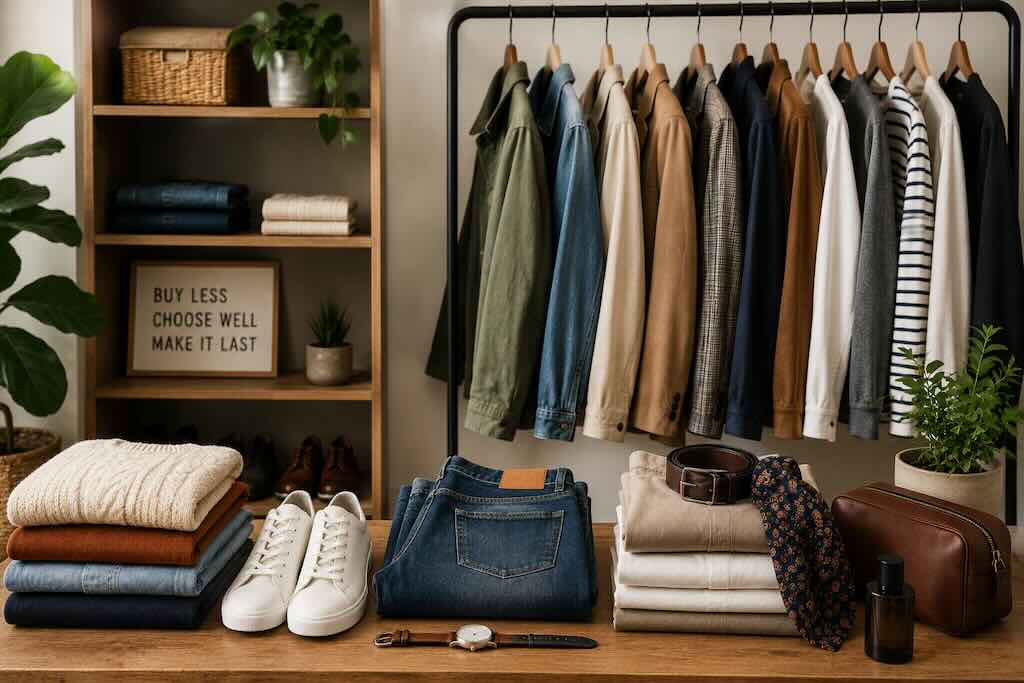
A wardrobe can feel completely different without becoming completely new. Sometimes the shift comes from a jacket pulled out of storage, trousers altered by a few centimeters, or a secondhand piece that changes the way familiar basics sit together. When money is tight, the smartest wardrobe makeover often begins with editing rather than shopping.
Editor’s note: This article has been updated for 2026 to remove outdated shopping links, coupon aggregators and unsupported pricing claims, while adding a more practical approach to secondhand clothing, repairs, wardrobe planning and buying fewer pieces that stay useful for longer.
There is an environmental argument for this approach too. The European Environment Agency reports that average textile consumption in the EU reached 19 kilograms per person in 2022. Its direction for a more circular textile system is straightforward: longer use, reuse, repair and better recycling.
That happens to align neatly with dressing on a budget. Clothes become much less expensive when they remain useful for years rather than weeks.
1. Shop Your Wardrobe Before the Stores
Start with the clothes you already paid for.
Pull everything into view and separate it into practical categories: pieces you wear regularly, pieces that need repair or alteration, clothes you like but struggle to style, and items that genuinely no longer work for you.
The middle categories are where the interesting possibilities live. A shirt may feel wrong because you have only worn it with one pair of trousers. A blazer may need its sleeves shortened. Jeans that disappeared into the back of a drawer might suddenly work with shoes purchased two years later.
Try combinations you have never worn before and photograph the successful ones. A small album of reliable outfits can make getting dressed easier while showing you exactly where the genuine gaps in your wardrobe are.
2. Buy Out of Season, but Only With a Plan
End-of-season sales can be useful because retailers frequently discount inventory as collections change. The trap is assuming that every reduced price represents savings.
A winter coat reduced from $300 to $160 saves money only if you actually needed a coat. Otherwise, you spent $160.
Keep a short wardrobe list on your phone with specific gaps: black wool trousers, waterproof autumn shoes, a lightweight summer shirt. When sales arrive, search that list rather than browsing without direction.
Ignore the percentage printed in red and ask a better question: would I want this at its normal price?
3. Put More Money Into the Pieces You Wear Most
The old advice to “invest in statement pieces” sounds stylish but does not necessarily make financial sense. A spectacular jacket worn twice a year can be poorer value than excellent trousers worn twice a week.
Spend according to use.
If you live in denim, prioritize jeans that fit properly. If you walk everywhere, footwear deserves attention. If work requires tailoring, a versatile jacket and trousers may carry more value than a collection of inexpensive alternatives.
This is essentially cost per wear. A $100 item worn 100 times costs $1 per wear. A $30 impulse purchase worn twice costs $15 per wear. The calculation is simplistic, but the principle is useful: purchase price tells only part of the story.
4. Make Secondhand Your First Search
Secondhand shopping can be particularly effective when you know what you are looking for. Charity shops, vintage stores, consignment boutiques and resale platforms give existing clothes another period of active use rather than requiring another new garment to be manufactured.
The European Environment Agency’s work on circular textiles identifies longer use and reuse as important pathways for reducing textile impacts. Extending product lifespans can reduce demand for new raw materials and the pressures associated with producing replacements.
Approach resale with the same standards you would apply to new clothing. Inspect seams, cuffs, collars, linings and zippers. Check knitwear for holes and leather for cracking. Look at the care label before buying something that requires maintenance you are unlikely to provide.
Measurements matter too. Sizing varies considerably between brands, decades and countries, making actual garment measurements more useful than the number printed on the label when shopping online.
5. Swap Clothes With Friends
A clothing swap can turn several stagnant wardrobes into something more interesting without anyone buying another garment.
Keep it simple. Ask everyone to bring clean pieces in good wearable condition, arrange them by category and make sure anything left at the end has a clear destination. A local charity, textile collection point or the original owner is better than leaving unwanted bags in somebody’s hallway indefinitely.
Swapping works particularly well for scarves, jackets, knitwear, bags and accessories where exact sizing can be less restrictive.
It can also expose you to colors and silhouettes you might never have purchased yourself. Divine’s guide to refreshing your wardrobe and personal style offers more ideas for looking differently at familiar clothes.
6. Repair and Alter Before Replacing
A wardrobe budget stretches considerably further when minor problems stop becoming reasons to buy replacements.
Loose buttons, damaged hems and small tears are often straightforward repairs. Tailoring can rescue trousers that are too long, shirts that carry excess fabric and jackets that are close to fitting properly but need adjustment.
Shoes can have another life too. Depending on their construction and condition, a cobbler may be able to replace heels, soles or other worn components for considerably less than the cost of a comparable new pair.
Repair is also part of the wider shift toward circular textiles. The European Environment Agency identifies extended use, reuse and repair as important parts of reducing the environmental and climate pressures associated with textiles.
7. Shop Beyond the Department Printed on the Sign
A garment does not know which department it came from.
If the cut works, look beyond conventional gender categories when shopping for uncomplicated pieces such as oversized shirts, knitwear, sweatshirts, coats, T-shirts and accessories. Different departments can offer different proportions, colors and fabrics.
Do not assume that another department will automatically be cheaper or better quality. Compare the garments themselves. Check fabric composition, stitching, weight, fit and care requirements rather than relying on the category printed above the rack.
Denim is particularly adaptable in this respect. Divine’s look at denim jeans and their enduring popularity explains why the fabric remains such a flexible wardrobe foundation.
8. Use Accessories to Change Familiar Outfits
A wardrobe makeover does not always require more clothing.
Belts, scarves, jewelry, bags and shoes occupy relatively little physical space but can change the proportions, color balance and formality of clothes you already own.
Take a plain shirt and trousers. Add a narrow belt and loafers and the line becomes sharper. Replace them with sneakers and a canvas bag and the same clothes become more relaxed. Add a scarf or stronger piece of jewelry and the eye moves somewhere new.
This is often a better use of a limited budget than buying another version of a garment already hanging in your wardrobe.
Be Careful With Discount Codes
A coupon can reduce the price of something you intended to buy. It can also persuade you to spend money you intended to keep.
Retail promotions frequently create urgency through countdowns, minimum-spend thresholds and limited-time discounts. Instead of beginning with the code, decide what you need and what you are willing to pay. Search for a legitimate discount only after making that decision.
Be particularly cautious with unfamiliar coupon websites and browser extensions that request extensive permissions or personal information. The small saving is rarely worth weakening your privacy or security.
Build a Wardrobe Around Repeat Wear
The environmental logic and financial logic eventually meet in the same place: use what you own for longer.
Recent EEA textile data points toward longer product lifespans, reuse and repair as parts of a more circular clothing system. Meanwhile, the UN Environment Programme’s textile initiative emphasizes the need to address both overproduction and overconsumption across the fashion system.
For an individual wardrobe, that translates into something refreshingly ordinary. Buy thoughtfully. Wear repeatedly. Maintain properly. Repair when reasonable. Pass useful clothes onward when they no longer belong in your life.
Divine’s eight tips for making your wardrobe feel fresh offers additional ways to change your style without rebuilding everything from scratch.
Conclusion
A wardrobe makeover does not need to begin under fluorescent fitting-room lights with an armful of new clothes.
Begin at home. Open the wardrobe. Repair the trousers you stopped wearing because the hem came loose. Try the forgotten jacket with different shoes. Sell or swap what no longer fits your life, then let the genuine gaps become visible.
When you do buy something, make it earn its space.
A smaller budget can impose useful discipline. Instead of chasing constant newness, it asks a better question: what will I actually wear?
Frequently Asked Questions
How can I update my wardrobe without buying new clothes?
Start by reorganizing what you own, creating new outfit combinations, repairing damaged garments and altering pieces that fit poorly. Accessories and different styling combinations can also change familiar clothes considerably.
How often should I update my wardrobe?
There is no need for a seasonal replacement schedule. Review your wardrobe when your lifestyle, size, climate or clothing condition changes. Replace pieces because they no longer serve a purpose, not simply because another season has arrived.
Is secondhand clothing more sustainable?
Extending the useful life of existing garments can reduce demand for new production and raw materials. The environmental outcome still depends on factors such as transportation, cleaning, how much you buy and how long the garment remains in use.
Are sales the best way to save money on clothes?
Only when the discounted item fills a genuine wardrobe need. Buying unnecessary clothing at 50 percent off still increases your spending. Keep a list of missing pieces and use sales selectively.
Should I buy cheap basics and spend more on statement pieces?
Not necessarily. A better approach is to spend according to frequency of use, construction and fit. An everyday coat, pair of shoes or jeans may justify more of the budget than a dramatic piece worn occasionally.
What should I check when buying secondhand clothes?
Inspect seams, closures, cuffs, collars, linings, fabric condition and care labels. For online purchases, compare actual garment measurements with clothes you already own rather than relying entirely on the stated size.