




The Middle East holds some of the world’s oldest stories in stone — and in 2026, those stories have started talking back. Augmented reality overlays and sustainable preservation work have turned static monuments into something closer to living archives, where the past speaks more clearly than it has in centuries. Each site here carries its own blend of historical weight and present-day reinvention.
Petra, Jordan
The Rose City still earns its name. In 2026, new sustainable pathways and eco-friendly transport protect the fragile sandstone without dulling the experience — a shift toward regenerative tourism that keeps local Bedouin communities as the site’s primary storytellers, not a backdrop to it.
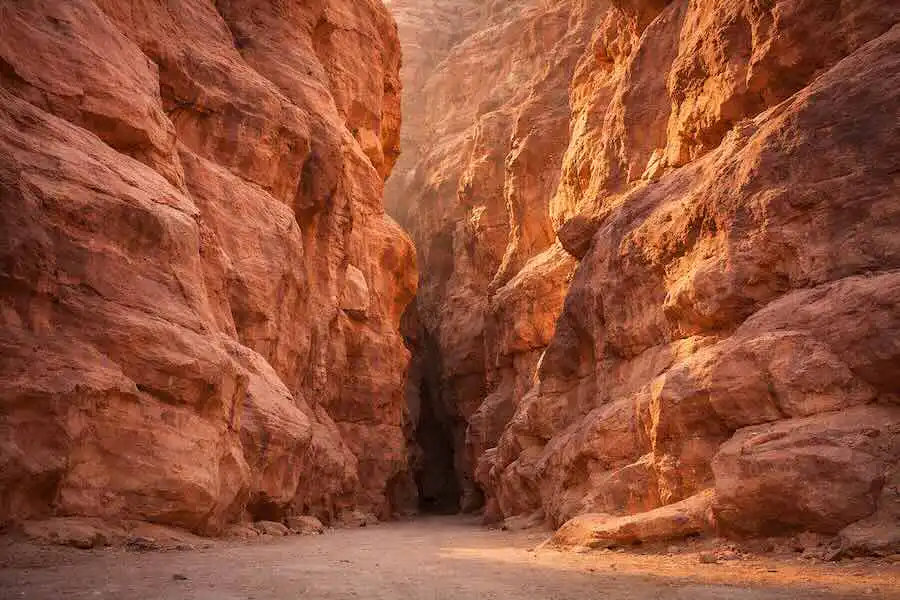
The walk through the Siq is unchanged in its power, but digital guides now let visitors picture the color and market noise that once filled the canyon floor. Emerging from the shadow to face Al-Khazneh — the Treasury — remains one of travel’s genuine peak moments.
The Pyramids of Giza & The Grand Egyptian Museum
Just outside modern Cairo, the Pyramids still rise from the desert exactly as they always have. What’s changed by 2026 is the context around them: the Grand Egyptian Museum, now fully open a short distance from the plateau, houses the complete Tutankhamun collection and gives the monuments outside a fuller story.
Walking among the stone giants means holding two things at once — historical awe and modern conservation, a kind of balance worth traveling for. The Sphinx now sits within a more pedestrian-friendly complex, one built to protect the limestone rather than surround it with sprawl.
AlUla, Saudi Arabia: The Living Museum
AlUla has become the most ambitious living museum anywhere — Hegra’s ancient Nabataean tombs sitting alongside the contemporary art of Desert X AlUla. The “Journey Through Time” masterplan is now fully in motion, five districts connected by a low-carbon tramway.
From the mud-brick maze of the Old Town to the mirrored surface of Maraya, AlUla is built for sensory immersion. Local artisans don’t just display craft here — they teach the geometry behind it, the chemistry of ancient incense, passed to a new generation of visitors willing to slow down and learn it.
Persepolis, Iran
Darius the Great built Persepolis to last, and it has. Recent non-invasive laser scanning has revealed new detail in the pigments that once colored its bas-reliefs. At the Apadana Palace and the Gate of All Nations, smartphone AR now reconstructs the empire in something close to its original color.
Baalbek, Lebanon
Baalbek — the City of the Sun — holds the most imposing Roman ruins anywhere. The Temple of Jupiter and the remarkably intact Temple of Bacchus are giants of Rome’s imperial building program. Despite regional hardship, Baalbek remains a resilient marker of Lebanese cultural depth, still hosting festivals that set operatic grandeur against ancient stone.
Conclusion
These sites aren’t relics anymore — in 2026, they’re active ground for sustainable cultural preservation. Visiting them isn’t a bucket-list checkbox; it’s a small act of witness to how civilizations endure past their own collapse. Empires fall. What they leave behind keeps teaching the world something about balance.
FAQ
What’s the best time of year to visit Middle Eastern heritage sites?
The shoulder seasons — spring (March to May) and autumn (September to November) — offer the most comfortable temperatures for exploring outdoor archaeological sites.
Are these sites accessible for travelers with mobility issues?
Significant progress has been made by 2026. AlUla and the Giza Plateau now offer accessible pathways and specialized transport, though Petra’s rugged terrain still presents challenges in parts of the site.
Do I need a guide to visit Persepolis or Baalbek?
Independent exploration is possible, but a certified local guide is worth it — the historical and political context at both sites runs deep, and a guide fills in what the stone alone can’t.