




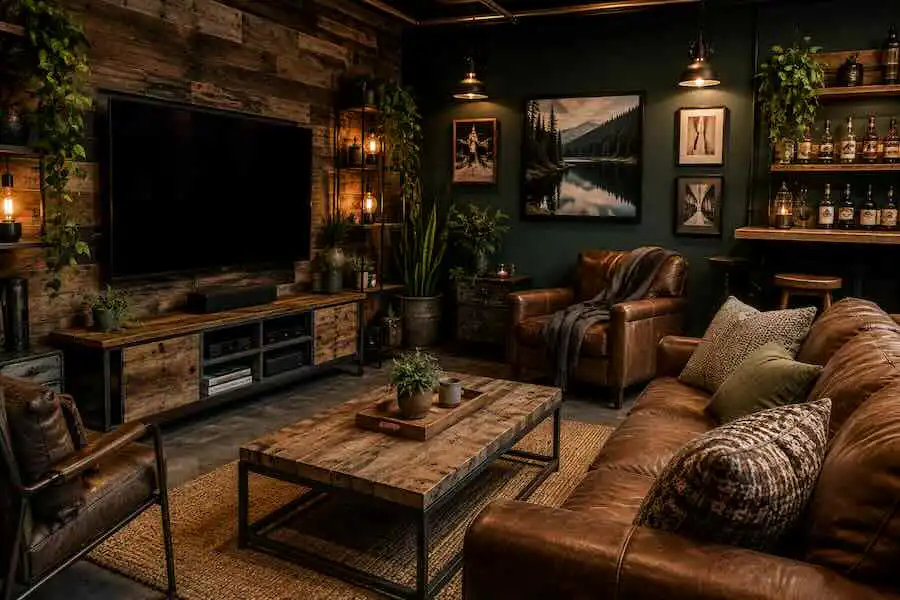
A personal retreat at home does not need to be packed with new furniture, oversized screens and energy-hungry gadgets. The more interesting approach is quieter: reclaimed timber under your hands, warm pools of efficient light, natural texture beneath your feet and a room that consumes less energy when nobody is using it. An eco-friendly man cave can still feel distinctly personal while making smarter use of the materials and resources already around you.
The goal is not to create a perfectly “green” room overnight. It is to make deliberate choices where they matter: energy, furniture, finishes, insulation and longevity. Whether you are converting a basement, spare bedroom, garage or garden room, these five ideas can turn an overlooked space into a comfortable retreat with a lighter environmental footprint.
1. Start by Cutting Unnecessary Energy Use
Entertainment spaces can quietly become some of the most electricity-intensive rooms in a home. Televisions, gaming systems, speakers, computers, chargers and ambient lighting may continue drawing power even when the room is empty.
Start with the equipment you actually use. Energy-efficient electronics are useful, but so is avoiding unnecessary equipment in the first place. Smart plugs and switched power strips can make it easier to shut down groups of devices rather than leaving them permanently on standby.
Lighting is another straightforward upgrade. Replacing older incandescent bulbs with LEDs can significantly reduce electricity consumption while giving you greater control over brightness and color temperature. Divine’s guide to using LED lighting at home offers further inspiration.
For a retreat, warmer light generally creates a softer atmosphere than stark overhead illumination. Think low lamps beside a leather chair, concealed LED strips beneath shelving and one focused pool of light above a desk or games table.
2. Reuse Before You Buy New
The most sustainable piece of furniture can be the one that already exists.
Before filling the room with new purchases, look through the house, local secondhand stores, architectural salvage yards and vintage marketplaces. A worn timber cabinet can become media storage. Old scaffolding boards can become shelving. A solid sideboard might need nothing more than cleaning and new hardware.
Reclaimed materials also bring visual depth that mass-produced furniture often struggles to reproduce. Scratches, grain, oxidized metal and aged timber give a room texture without requiring decorative clutter.
If you enjoy DIY projects, reclaimed wood can work particularly well for shelving, a coffee table or wall detailing. Check salvaged materials carefully before bringing them indoors, particularly for structural damage, moisture, pests and unknown old coatings.
3. Choose Furniture for Longevity, Not Just the Look
Sustainable interiors are partly about materials, but durability matters just as much. A sofa that survives years of use is usually a better proposition than inexpensive furniture that needs replacing after a few seasons.
Look for solid construction, repairable components and upholstery that suits how the room will actually be used. Natural and recycled materials can work beautifully, but environmental claims should be considered alongside manufacturing, transport, durability and eventual disposal.
Texture can do much of the decorative work. Linen curtains, wool throws, timber surfaces and a jute rug can soften a room dominated by screens and hard surfaces.
The result does not need to look rustic. Natural materials sit equally well inside contemporary interiors: pale oak against charcoal walls, woven fibers beneath black metal furniture, or warm walnut beside clean architectural lighting.
4. Pay Attention to Paint and Interior Finishes
Color changes the character of a small retreat quickly. Deep olive, clay, charcoal, muted navy and warm off-white can all create intimacy without turning the room into the familiar dark-leather-and-neon stereotype.
When repainting, look for products clearly labeled low-VOC or zero-VOC and check the manufacturer’s specifications rather than relying on broad environmental marketing. VOCs, or volatile organic compounds, can be emitted by paints and other household products, particularly during and after application.
The U.S. Environmental Protection Agency provides further information about VOCs and indoor air quality.
Ventilation still matters during decorating, including when lower-emission products are being used. Open windows where practical and follow the paint manufacturer’s instructions for application, drying and ventilation.
5. Improve the Room Before Adding More Technology
A beautifully decorated room that leaks heat through every surface is difficult to call efficient. Before spending heavily on entertainment equipment, consider the building envelope.
Drafts around windows and doors, insufficient insulation and poorly performing glazing can make a room uncomfortable while increasing heating or cooling demand. This becomes particularly important when converting garages, sheds, basements or other spaces that were not originally designed for extended occupation.
Insulation requirements depend on the building, climate and local regulations, so substantial upgrades are worth discussing with an appropriate building professional. The principle is simple: reduce unwanted heat transfer first, then use mechanical heating or cooling more efficiently.
Build the Room Around How You Actually Relax
There is no requirement for a man cave to contain a bar, pool table and enormous television. If your version of switching off means vinyl records and a reading chair, design for that. If it means gaming, build around comfortable ergonomics and sensible cable management. If you paint, play guitar or restore watches, give the activity proper light and storage.
This is also where good interior design prevents waste. Understanding how the room will function before purchasing furniture reduces impulse buys and awkward pieces that eventually end up elsewhere. Divine’s interior design ideas can help when developing the broader visual direction.
Practical Takeaway
- Switch older lighting to efficient LEDs and reduce unnecessary standby power.
- Shop your own home and secondhand sources before buying new furniture.
- Choose durable, repairable pieces rather than short-lived trend furniture.
- Consider low-VOC or zero-VOC finishes and ventilate properly while decorating.
- Address drafts, insulation and glazing where appropriate before increasing heating or cooling.
- Design around activities you genuinely enjoy instead of following a generic man-cave formula.
Conclusion: A Better Retreat Uses Less and Feels More Personal
An eco-friendly man cave does not need to advertise its environmental credentials. The evidence can be quieter: an old cabinet given another decade of life, efficient lighting glowing against reclaimed timber, a properly insulated room and furniture chosen because it will still look good years from now.
That restraint can make the room better. Buy less. Keep what works. Repair what can be saved, and invest carefully where improvements genuinely affect comfort or energy use. The finished space will feel less like a themed room and more like what a private retreat should be: distinctly yours.
FAQ: Eco-Friendly Man Cave Design
What is the easiest way to make a man cave more eco-friendly?
Start with simple changes: use LED lighting, switch electronics off when they are not needed, reuse existing furniture and buy secondhand where practical. These changes require considerably less work than rebuilding the room.
Is reclaimed wood suitable for indoor furniture?
It can be, provided the material is suitable for the intended use and has been checked for moisture, pests, structural problems and potentially hazardous old finishes. Structural applications may require professional assessment.
Should I use zero-VOC paint?
Low-VOC and zero-VOC products can reduce emissions associated with some conventional paints, but labels and formulations vary. Check product specifications and follow the manufacturer’s ventilation and application instructions.
Does double glazing make a room more energy-efficient?
Efficient glazing can reduce heat transfer compared with poorly performing windows, but the benefit depends on the existing windows, climate, installation and the rest of the building envelope. Sealing drafts and improving insulation may also deserve attention.
Can a small room work as a man cave?
Yes. A compact room can actually encourage better editing. Use wall-mounted storage, appropriately scaled furniture and layered lighting, then prioritize one or two activities instead of trying to fit every entertainment feature into the space.