




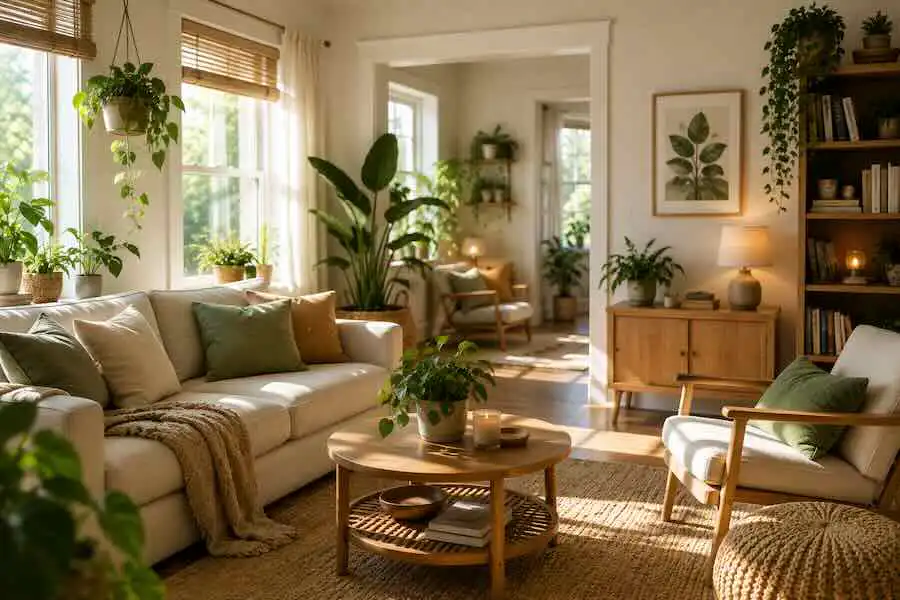
A home can look beautiful and still leave you feeling slightly unsettled. Wellness at home is less about chasing an immaculate interior and more about shaping everyday surroundings that support rest, focus, movement, and a sense of ease. Light through a window. A clear surface. Green leaves beside a favorite chair. Small details can quietly change how a room feels.
They say the grass is always greener on the other side. But perhaps the better question is whether your own side gives you what you need. You may not always be satisfied with your current situation, but creating a healthier living space does not require a new house or a complete redesign. Start with the environment you already have.
Add a Present Touch of Nature
Happy homes often borrow something from the outdoors. A vase of fresh-cut flowers, a leafy plant beside the sofa, natural wood, stone, linen, or simply an unobstructed view of trees can soften the hard lines of an interior.
Houseplants are particularly good at changing the atmosphere of a room. Their irregular shapes and deep greens introduce visual texture while making sterile corners feel more alive. The effect does not need to be dramatic. One carefully positioned plant can sometimes do more for a room than filling every available shelf with greenery.
There is also evidence that interacting with indoor plants may have psychological benefits, including helping people feel calmer, although claims about ordinary houseplants dramatically purifying indoor air are often overstated. The U.S. Environmental Protection Agency offers broader guidance on maintaining healthy indoor air quality through measures such as ventilation and controlling pollutants at their source.
Let There Be Gorgeous Natural Light
Too many interiors treat daylight as an afterthought. Yet morning light moving across a wall, the changing tone of an overcast afternoon, or the last warm glow before sunset gives a room something artificial illumination cannot quite reproduce.
Open curtains and blinds during the day when privacy and temperature allow. Move bulky furniture away from windows. Position a desk or reading chair where daylight can reach it without creating uncomfortable glare. Mirrors and lighter surfaces can also help carry available light deeper into darker rooms.
Natural light also plays a role in the body’s daily rhythms. The National Heart, Lung, and Blood Institute notes the importance of light exposure in relation to the body’s sleep-wake cycle. At night, reverse the mood: softer, warmer lighting can help the home transition from daytime activity toward rest.
Be Smart About Design
Wellness-focused living requires thought, but it does not require turning your home into a minimalist showroom. Your space should support the way you actually live rather than forcing you to perform someone else’s idea of an ideal lifestyle.
Create areas with clear purposes where space permits. A particular chair can become the place where you read without your phone. A corner near a window might become a morning coffee spot. If you work from home, even a small visual boundary between the desk and relaxation areas can help distinguish working hours from personal time.
Know how to choose furniture that complements your lifestyle rather than simply following whatever silhouette happens to be fashionable. Comfortable circulation, useful storage, accessible surfaces, and furniture scaled correctly to the room can make daily routines feel noticeably easier.
reduce visual noise Without Removing Personality
Clutter is personal. One person’s cozy collection is another person’s visual overload, so there is little value in imposing rigid rules about how much should be visible. Instead, pay attention to the areas that repeatedly irritate you.
The stack of unopened mail on the counter. Shoes blocking the hallway. Charging cables spilling across a bedside table. Give frequently used objects a logical home and concentrate on the surfaces you see most often. You can keep books, art, photographs, records, ceramics, and all the objects that make a home yours while removing the accidental mess surrounding them.
Create Space for Quiet
Modern homes contain an extraordinary amount of stimulation. Televisions glow, phones vibrate, speakers play, appliances hum, and laptops make work available long after the working day should have ended.
A wellness-oriented home needs somewhere quieter. It does not have to be an entire room. A bedroom without a television, a reading corner, a balcony, or simply one chair where screens are discouraged can create a small physical cue to slow down.
Make Wellness Practical, Not Perfect
The most useful changes are usually the ones you can maintain. There is little point creating an elaborate wellness corner if it becomes another area that requires constant tidying. Look instead for small adjustments that remove friction from everyday life.
- Let daylight into the rooms you use during the morning.
- Introduce plants or natural materials where they genuinely suit the space.
- Keep frequently used pathways and surfaces reasonably clear.
- Create at least one comfortable place intended for rest rather than productivity.
- Use softer lighting as evening approaches.
- Choose furniture around your routines rather than trends alone.
Conclusion
A healthier home does not need to resemble a spa. It needs to feel supportive. Nature, daylight, thoughtful furniture placement, quieter corners, and less visual noise can subtly reshape the way you experience familiar rooms.
Start with whatever feels most uncomfortable in your space and change one thing. Move the chair toward the window. Clear the table. Bring home a plant. Switch off the overhead light tonight and turn on a warm lamp instead. Wellness at home can begin with something that simple.
FAQ: Creating a Wellness-Focused Living Space
How can I make my home feel more relaxing?
Start by reducing obvious sources of visual and sensory stress. Clear frequently used surfaces, introduce softer evening lighting, improve access to daylight, and create a comfortable area where you can sit without needing to work or look at a screen.
Do I need to redecorate to create a healthier home?
No. Rearranging furniture, opening curtains, organizing clutter, improving lighting, and introducing a few natural elements can alter the atmosphere without a major renovation or decorating budget.
Do houseplants really improve indoor air quality?
Houseplants can make interiors feel calmer and more connected to nature, but ordinary quantities of plants should not replace proper ventilation or other established indoor-air-quality measures.
What is the easiest wellness improvement to make today?
Choose the room where you spend the most time and remove one recurring irritation. Clear a cluttered surface, reposition furniture to make movement easier, open the window coverings for daylight, or create one comfortable screen-free corner.