




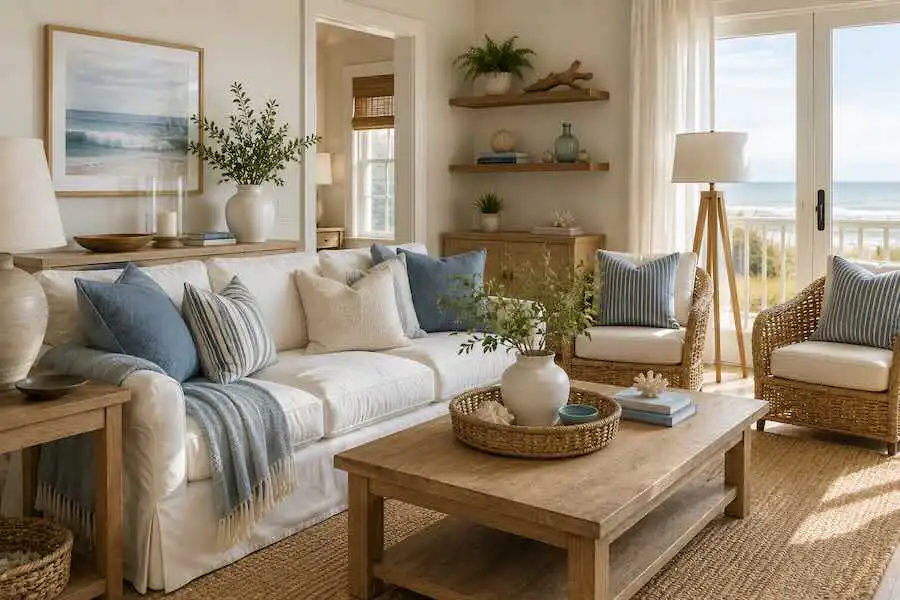
Coastal interiors work best when they suggest the shoreline rather than recreate it. Think pale timber warmed by afternoon light, linen moving beside an open window, woven fibers under your fingertips and restrained notes of blue against chalky neutrals. The effect is relaxed, but never themed.
That subtlety also makes coastal decorating unusually adaptable. You do not need a beach house or a complete redesign. A contemporary apartment, rustic home or mid-century room can absorb coastal details through material, color and texture while keeping its original character intact.
Start with light and space
Before buying anything, look at the room itself. Coastal design draws much of its atmosphere from brightness and visual breathing room. Heavy window treatments, crowded surfaces and too many competing colors can work against that feeling.
Use daylight where possible. Lightweight curtains in linen or cotton can soften a window without making it feel closed, while warm whites, sand, oatmeal, stone and muted gray create a quiet foundation.
The goal is not a perfectly white room. Layers of subtle neutrals create more depth, particularly when the materials have visible grain, weave or irregularity.
Mix in lighter woods
Light timber is one of the simplest ways to introduce coastal character. Oak, ash and other pale finishes can recall sun-faded boardwalks and weathered seaside architecture without becoming overly literal.
If your home already contains dark wooden furniture, keep it. Contrast can make the room more interesting. A dark dining table might sit comfortably beside pale timber chairs, while a heavier cabinet can be balanced by a lighter coffee table or simple wooden accessories.
A shared neutral palette helps different wood tones coexist. Rather than attempting to match every finish, repeat one or two colors across textiles, walls and accessories so the room feels connected.
Bring in woven texture
Rattan, wicker, jute, seagrass and rope bring the tactile quality that makes restrained coastal rooms feel warm rather than sterile. Their uneven fibers catch sunlight differently from polished surfaces, adding movement even when the palette remains quiet.
You do not need an entire rattan furniture set. One woven chair, pendant shade, basket or side table may be enough. The strongest rooms mix these textures with smoother materials such as glass, ceramic, stone and painted timber.
Natural materials also connect coastal decorating with broader biophilic design principles. The Royal Institute of British Architects offers additional context on biophilic design and the relationship between interiors, natural materials and our connection with nature.
Use blue with restraint
Blue remains closely associated with coastal interiors, but it does not need to dominate the room. Small amounts often work better.
A faded indigo cushion, dusty blue chair or narrow stripe can introduce the suggestion of water without turning the space into a nautical set. Softer shades generally sit more naturally beside warm whites, sand tones and pale timber than highly saturated marine blue.
If stripes appeal to you, keep their scale considered. Fine blue-and-white stripes can add pattern to cushions or upholstery, while broader stripes make a stronger graphic statement. Either approach can work; repetition is what gives the choice intention.
Avoid turning coastal into nautical
This is where many coastal rooms lose their calm. Anchors, model boats, nets, shells and maritime signs can quickly turn atmosphere into theme.
Instead, borrow qualities from the coast: weathered texture, softened color, natural fibers, open space and imperfect surfaces. A hand-thrown ceramic bowl can evoke sea-worn stone without resembling anything found on a souvenir shelf.
If you have genuine objects collected from meaningful travels, display them selectively. One personal piece has more visual weight than a shelf crowded with manufactured references to the beach.
Try relaxed linen and cotton upholstery
Coastal rooms rarely look rigid. Linen and cotton introduce softness through creases, folds and slightly relaxed silhouettes, particularly in seating and window treatments.
Slipcovers remain a practical way to change existing furniture without replacing it. Cream, flax, warm white and pale gray can lighten a substantial sofa or dining chair while allowing the underlying furniture to return when you want a different look.
Fit matters. A little movement feels natural; excessive fabric can make furniture look shapeless. Washable fabrics are particularly useful in living rooms where the intention is comfortable rather than precious.
Layer materials instead of decorations
A sophisticated coastal interior gets its depth from surfaces. Imagine a linen sofa beside an oak table, a rough ceramic lamp above a woven rug and a smooth glass vase catching light nearby. Nothing needs to announce the theme.
This material-first approach also makes the style easier to combine with existing interiors. Mid-century furniture can gain softness from linen and rattan. Contemporary spaces benefit from warmer organic textures. Rustic rooms can be brightened with pale fabrics and cleaner lines.
Add greenery rather than beach ornaments
Plants can provide the fresh note people often try to create with decorative coastal objects. Their organic shapes soften furniture and bring another natural texture into the room.
Choose plants according to the actual light and humidity conditions in your home rather than their aesthetic alone. A large leafy plant can anchor an empty corner, while smaller plants work well against pale ceramics, timber and woven baskets.
Keep the palette warm
Pure white and bright blue can feel crisp, but they can also become cold. Contemporary coastal rooms often feel richer when white shifts toward ivory, sand or chalk and blue becomes smoky, gray or slightly green.
Terracotta, muted olive and weathered brown can also sit comfortably within the palette. These earthier notes recall cliffs, dunes and vegetation rather than focusing exclusively on sea and sky.
A simple coastal refresh without redecorating
If you want the mood without committing to a full renovation, work with what you already own. Remove a few visually heavy accessories first. Then introduce coastal texture gradually.
- Replace one heavy textile with linen or cotton.
- Add a woven basket or natural-fiber rug.
- Introduce one pale wooden element.
- Use muted blue through a cushion, throw or small upholstered piece.
- Add a ceramic or glass object with an organic shape.
- Bring in greenery suited to the room’s natural light.
- Leave some surfaces intentionally empty.
The final point is easy to overlook. Empty space is part of the composition. Coastal decorating feels convincing when the room has enough room to breathe.
Conclusion
Adding coastal touches to your interior design does not require seashells, anchors or a house overlooking the water. The character comes from something quieter: pale wood, natural fibers, softened blues, relaxed fabrics and light moving across uncluttered surfaces.
Choose a few elements rather than every coastal reference at once. When texture and material carry the idea, the room feels less like a theme and more like a place where summer has simply stayed a little longer.
Frequently asked questions
What colors work best for coastal interior design?
Warm whites, sand, beige, pale gray and muted blues provide a flexible foundation. Small amounts of terracotta, weathered brown or soft green can add warmth and prevent the palette from feeling overly cool.
Can coastal design work without blue?
Yes. Coastal character can come entirely from materials and light. Warm white walls, pale timber, linen, woven fibers and natural stone can create the atmosphere without using blue at all.
What is the difference between coastal and nautical decor?
Coastal design generally draws from the colors, materials, light and relaxed atmosphere associated with the shoreline. Nautical decorating uses more literal maritime references such as anchors, boats, ropes and marine motifs.
Can you mix coastal decor with modern furniture?
Yes. Clean contemporary furniture can pair particularly well with coastal materials. Woven textures, linen upholstery, pale wood and organic ceramics can soften modern lines without changing the underlying design style.
How can I make coastal decor look sophisticated?
Use fewer literal seaside objects and concentrate on material quality, proportion and restraint. Natural fibers, subtle color variation, handmade ceramics and uncluttered surfaces tend to age better than heavily themed accessories.