




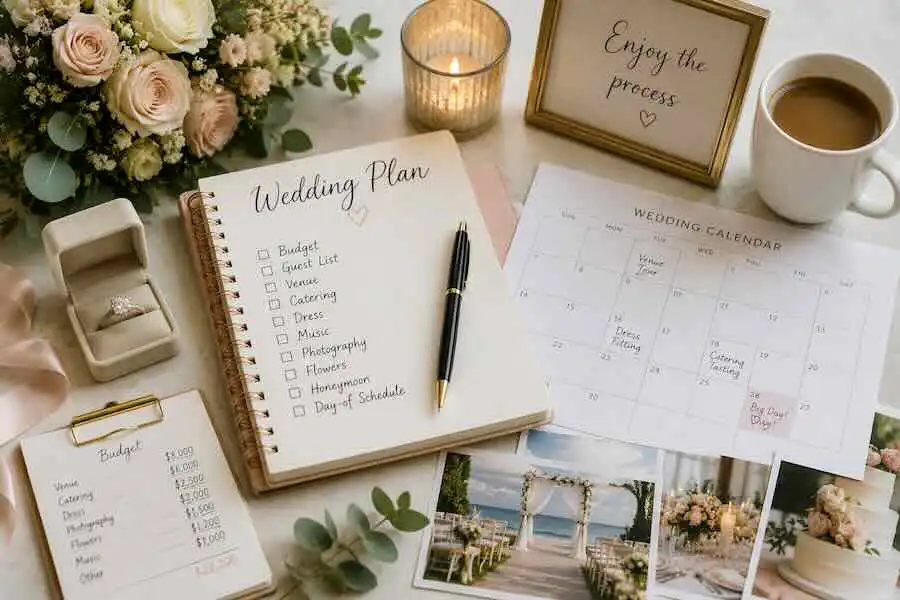
A wedding can be deeply personal and beautifully simple at the same time. The difficulty is everything surrounding it: guest counts, deposits, menus, music, weather plans, family expectations, and a budget that can disappear remarkably quickly.
Planning becomes easier when decisions follow a clear order. Decide what matters most to you as a couple, establish what you can comfortably spend, and let those two boundaries shape everything that follows. A wedding does not need every tradition, every upgrade, or every possible guest. It needs to feel recognizably yours.
Start With the Wedding You Actually Want
Before touring venues or saving photographs of floral installations, sit down together and define the experience. Do you picture a candlelit dinner with 30 people, a crowded dance floor with 150, a garden ceremony, a city celebration, or a weekend somewhere away from home?
Choose three priorities each. Perhaps food matters enormously, while elaborate flowers do not. Maybe photography is essential but wedding favors are irrelevant. You might want a live band more than an expensive venue.
Those priorities become useful whenever the budget starts pulling in several directions. Spend where the experience matters to you and simplify the areas that do not.
Set the Budget Before the Guest List Grows
A realistic budget is one of the strongest stress-control tools available. Establish the total amount you are comfortable spending before committing to major suppliers, then reserve part of that amount for expenses that appear later.
Track deposits, payment deadlines, taxes, service charges, gratuities where applicable, delivery costs, alterations, rentals, transportation, and other less glamorous expenses alongside the obvious categories. The advertised price is not always the final price.
If family members are contributing financially, clarify the amount and any expectations attached to it early. Ambiguity around money can create considerably more tension than the spreadsheet itself.
Decide How Big the Wedding Should Be
Guest count influences almost every major cost. More people can mean a larger venue, more food and drinks, additional tables and chairs, more stationery, larger transportation requirements, and a different staffing plan.
There is nothing inherently better about a large or small wedding. The useful question is whether the guest list reflects the celebration you want and the amount you can reasonably spend.
Start with the people whose presence genuinely matters. If parents or relatives want to add guests, discuss numbers and budget implications rather than allowing the list to expand indefinitely. A smaller wedding can create more room for better food, a stronger venue, a longer honeymoon, or simply less financial pressure afterward.
Choose a Venue by Total Cost, Not Rental Price
A venue with a low hire fee can become expensive once everything missing from the space has been rented separately. Another venue may look costly at first but include tables, chairs, linens, staffing, lighting, tableware, setup, cleanup, and catering infrastructure.
Ask for a detailed list of inclusions before comparing locations. Find out about capacity, accessibility, parking, public transportation, noise restrictions, curfews, catering requirements, alcohol policies, decoration rules, setup time, cleanup, and cancellation terms.
For outdoor ceremonies, establish the rain plan before signing. A beautiful lawn is less appealing if bad weather leaves 100 guests with nowhere comfortable to go.
Think About the Calendar
The date itself can affect both cost and availability. Popular Saturdays during peak wedding season tend to create more competition for venues and suppliers. Depending on your location, a Friday, Sunday, weekday, or quieter seasonal date may provide more flexibility.
That does not automatically make an off-peak wedding inexpensive, so compare actual quotes. Also consider what the date means for guests. Travel costs, accommodation availability, school schedules, holidays, climate, and daylight hours can change the practical experience considerably.
Build a Menu Around Your Guests
Food is one of the places where hospitality becomes tangible. It does not have to be formal, but it should be plentiful, thoughtfully served, and appropriate for the people attending.
Plated dinners, buffets, family-style service, food stations, cocktail receptions, brunches, and restaurant celebrations can all work. Rather than following whichever format appears fashionable, ask how each option affects staffing, timing, dietary requirements, atmosphere, and total cost.
Collect dietary information during the RSVP process and discuss allergies separately with the caterer. Vegetarian and vegan guests deserve intentional options rather than a collection of side dishes. For inspiration, resources such as Cookie and Kate’s vegetarian recipes can help illustrate how substantial meat-free food can be.
A potluck can suit a very informal wedding where the community aspect is genuinely part of the celebration, but it requires careful thought. Food safety, allergens, refrigeration, transportation, serving equipment, cleanup, and venue restrictions can make it less simple than it initially appears.
Choose Music Based on Atmosphere
Music changes the temperature of a wedding almost immediately. A live band brings physical energy and interaction. A professional DJ can read the room, manage transitions, make announcements, and adapt the playlist as the evening develops.
Specialists such as DJ Leonardo Aquino illustrate the professional DJ option, while couples considering a more independent setup can investigate equipment suppliers such as Live Productions for audio-system requirements.
A self-managed playlist can reduce entertainment costs, but it needs more preparation than connecting a phone to a speaker. Someone must manage ceremony cues, microphones, speeches, volume, transitions, announcements, charging, connectivity, and technical problems. Download essential music for offline playback and have backup equipment or a contingency plan.
Create a Wedding Day Timeline
A timeline reduces the number of decisions that have to be made in real time. Work backward from the ceremony and include hair and makeup, photography, supplier arrivals, setup, transportation, family photographs, cocktail hour, dinner, speeches, cake, dancing, and the venue’s closing time.
Build breathing room into it. Weddings rarely move with mechanical precision, and a schedule with no buffer can make a ten-minute delay feel like an emergency.
Give key suppliers the final version and appoint someone other than the couple to answer routine questions on the day. You should not be directing delivery drivers while getting dressed.
Know What You Can DIY
Doing things yourself can save money, but it can also transfer cost into time and stress. Invitations, simple signage, playlists, favors, and uncomplicated decorative details are manageable for many couples. Large floral installations, catering, electrical work, complicated lighting, and day-of logistics are different propositions.
Before choosing DIY, calculate materials, equipment, transportation, setup, cleanup, storage, and the hours required. If a project needs to be completed during the final 48 hours before the wedding, consider whether the savings are worth the pressure.
Prepare for Things to Go Wrong
Weather changes. Suppliers can become unavailable. Guests get sick. Clothing tears. Equipment fails. The goal is not to predict every possible problem but to make the expensive ones less frightening.
Read every supplier contract before paying deposits and understand cancellation, postponement, refund, liability, and force majeure provisions. Keep copies of agreements and payment records somewhere both partners can access.
Depending on the event, venue, jurisdiction, and existing insurance coverage, wedding insurance may also be worth investigating. Providers such as Eventsured offer wedding-related coverage in applicable markets, but policies differ. Review exclusions, limits, deductibles, cancellation protection, and liability coverage carefully before purchasing.
Protect the Honeymoon Budget
The reception lasts hours. The financial consequences can last considerably longer.
If the honeymoon matters to you, treat it as a separate budget category from the beginning rather than hoping there will be money left after the wedding. Flights, accommodation, insurance, meals, transportation, activities, and spending money should all be considered before wedding upgrades begin consuming the remaining funds.
More importantly, think about the months after both events. Beginning married life with avoidable financial strain can make the most elaborate wedding details feel surprisingly insignificant in retrospect.
A Practical Way to Reduce Wedding Stress
Keep one central planning system containing the budget, supplier contacts, contracts, payment dates, guest list, RSVP information, seating arrangements, timeline, and outstanding decisions. Whether that system is digital or printed matters less than having one reliable source of information.
Set specific planning sessions instead of allowing the wedding to occupy every evening. Divide responsibilities clearly between partners, and make decisions by priority rather than trying to perfect every detail.
Then stop adding things. Once the venue works, the guests are fed, the ceremony reflects you, and the evening has the atmosphere you wanted, another decorative element is unlikely to transform the day.
Conclusion
A less stressful wedding begins with boundaries: a realistic budget, a deliberate guest list, clear priorities, and enough confidence to ignore traditions that do not matter to you.
Spend on the parts you will genuinely experience. Understand what your venue includes. Feed people well, create a sensible timeline, prepare for weather and logistical problems, and protect some money for the life waiting after the celebration. When the planning becomes noisy, return to the simplest version of the day: two people choosing each other, surrounded by the people they wanted there.
FAQ: Planning a Wedding With Less Stress
What should you plan first for a wedding?
Start with your total budget, approximate guest count, priorities, and preferred date range. Those decisions determine which venues are realistic and influence almost every major booking that follows.
How can you reduce wedding costs without making the day feel cheap?
Reduce costs in areas that matter least to you rather than cutting everything equally. A smaller guest list, simpler flowers, digital communication, fewer decorative extras, an alternative date, or a streamlined menu can free money for priorities such as photography, food, music, or the honeymoon.
Is a buffet cheaper than a plated wedding dinner?
Not necessarily. Pricing depends on the caterer, menu, staffing, equipment, service style, guest count, and venue. Compare complete quotes rather than assuming one format will automatically cost less.
Is a DJ better than a wedding band?
Neither is universally better. Bands create live energy, while DJs typically offer a broader catalog and can change direction quickly according to the room. A playlist can work for simpler celebrations if reliable sound equipment and someone responsible for managing it are available.
Is wedding insurance worth considering?
It can be, particularly when significant deposits, venue requirements, or liability exposure are involved. Coverage varies considerably, so check what a policy actually protects against, what it excludes, and whether any protection already exists through your venue, suppliers, credit card, or other insurance.
How do you stop wedding planning from becoming overwhelming?
Use one planning system, divide responsibilities, schedule dedicated planning time, and make decisions according to your agreed priorities. Avoid reopening choices that have already been made unless circumstances genuinely change.