




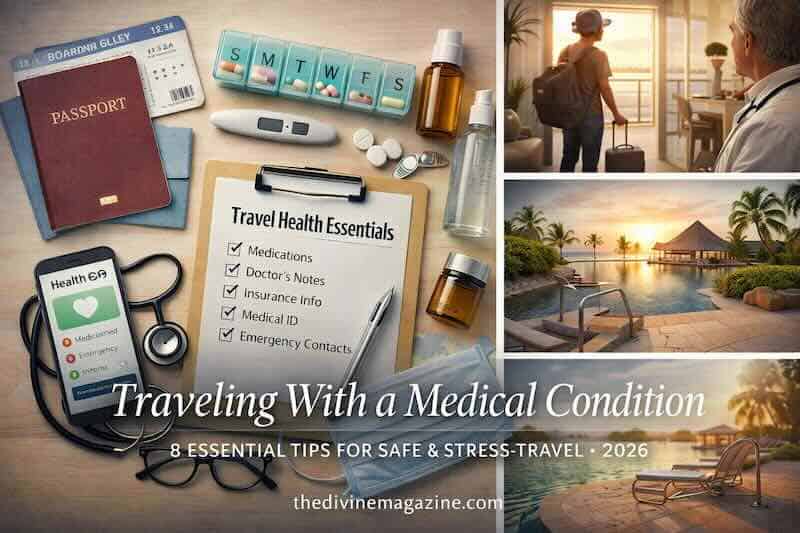
In 2026, traveling with a medical condition is easier than ever thanks to better accessibility, smarter planning tools, and global health awareness. Still, it requires thoughtful preparation to ensure your trip remains safe, comfortable, and enjoyable. With the right precautions, anyone can experience a relaxing holiday without turning it into a stressful ordeal.
Speak with your doctor first
Before booking your dream getaway, consult your doctor. Share details about your destination, travel duration, and companions. Your doctor can assess whether the trip is safe and advise on precautions, vaccinations, and medications. They can also guide you on whether it’s safe for you to fly and what to pack for emergencies. If your doctor advises against a specific destination, ask for alternatives that better suit your health needs. For additional guidance, explore CDC’s travel health tips for chronic conditions.
Pick a suitable destination
Choose a destination that supports your health and comfort. Traveling should relax and rejuvenate you, not strain your body. For example, if you have a heart condition, avoid hot and humid climates that may worsen symptoms. Consider proximity to hospitals — ideally within six miles — and ensure wheelchair accessibility if needed. You can check local medical infrastructure through WHO’s Global Health Observatory or TravelHealthPro for country-specific medical advice.
Carry more medication and supplies than you may need
Always pack extra medication and supplies. Delays, lost luggage, or unexpected changes can happen. Keep all medications in their original labeled packaging and store them in your carry-on. Some drugs may have different names abroad or require prescriptions. For international medication regulations, visit IATA’s medication travel guidelines. Also, carry a printed list of your prescriptions and dosages for customs or emergencies.
Research your accommodation for medical equipment
Not all airlines or hotels accommodate medical devices equally. Check airline policies for oxygen tanks or mobility aids before booking. Once at your destination, confirm that your accommodation can meet your medical needs. If you require dialysis, websites like BookDialysis.com simplify scheduling treatments abroad. You can also consult Accessible Travel Online for verified accessible stays and medical-friendly resorts.
Carry all your medical information
Keep digital and physical copies of your medical records, prescriptions, and doctor’s contact details. Store them on a flash drive or secure cloud folder. A medical alert bracelet or card can help emergency responders identify your condition quickly. For digital safety, consider apps like Apple Health or MyChart to store and share health data securely while traveling.
Book your holiday with a specialized travel agency
Specialized travel agencies can make planning effortless for travelers with medical conditions. They understand accessibility requirements and can tailor itineraries around your needs. Agencies like Disabled Holidays and Sage Traveling offer curated experiences for travelers with disabilities or chronic illnesses, ensuring comfort and safety throughout your journey.
Consider an all-inclusive resort
All-inclusive resorts are ideal for travelers with medical conditions. They often provide on-site medical staff, accessible facilities, and customizable meal plans. Remember, traveling should enhance your well-being, not add stress. Resorts like Club Med and Accessible Resorts specialize in inclusive experiences for all guests.
Make sure your travel insurance covers medical costs
Review your travel insurance carefully. Some policies only cover cancellations or lost luggage, not medical emergencies. Ensure your plan includes medical evacuation, hospitalization, and specialist care. Compare providers through InsureMyTrip or Squaremouth to find policies that fit your condition. Also, note the generic names of your medications — drug names vary internationally.
Conclusion
Traveling with a medical condition in 2026 is about preparation, not limitation. With modern accessibility tools, specialized agencies, and global health awareness, you can explore the world safely and confidently. Plan ahead, communicate with your doctor, and choose destinations that support your well-being. The goal is simple — return home refreshed, not fatigued.
FAQ: Traveling With a Medical Condition in 2026
1. Can I fly with oxygen, mobility aids, or other medical devices?
Yes — but each airline has its own rules. Always notify the airline at least 48–72 hours before departure. Many carriers require medical clearance forms for oxygen or battery‑powered devices. For updated regulations, check the IATA Medical Manual.
2. How do I find destinations that are safe for my condition?
Use verified resources like TravelHealthPro and the WHO Global Health Observatory to check climate, hospital access, and health risks. Specialized platforms such as Accessible Travel Online list destinations with reliable medical infrastructure.
3. What should I do if I lose my medication abroad?
Go to a local hospital or licensed pharmacy immediately. Having digital copies of your prescriptions and your doctor’s contact information will speed up replacements. Some countries may require a local doctor to re‑issue a prescription.
4. Is travel insurance with medical coverage really necessary?
Absolutely. Standard travel insurance often excludes medical emergencies. Choose a policy that covers hospitalization, specialist care, pre‑existing conditions, and medical evacuation. Comparison tools like Squaremouth and InsureMyTrip help you filter for medical‑specific plans.
5. How can I manage dietary restrictions while traveling?
Choose accommodations that offer customizable meal plans or medical diets. Bring translated dietary cards if traveling abroad. Organizations like FARE provide printable allergy and dietary travel resources.
6. What if I need dialysis or regular treatments during my trip?
Book treatments in advance through services like BookDialysis.com. Many major cities now offer traveler‑friendly medical centers that coordinate directly with your home clinic.
7. Should I carry physical or digital medical records?
Both. Keep printed copies of prescriptions and a USB or cloud folder with your medical history. Apps like MyChart or your phone’s built‑in health app allow secure access to your records anywhere.
8. How far should my accommodation be from a hospital?
Ideally within six miles (10 km). Survival rates for many conditions improve significantly when emergency care is nearby. Always map the nearest hospital before booking.