




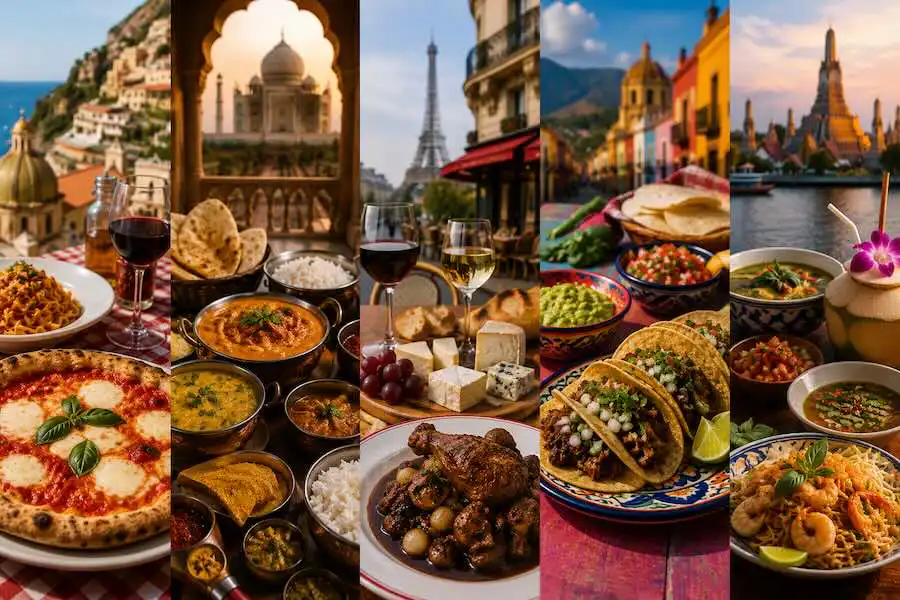
Some places are understood first through architecture or landscape. Others arrive on a plate: warm bread torn at the table, smoke rising from a night market grill, citrus cut into seafood, or a sauce whose recipe has moved quietly through generations.
Culinary travel turns eating into a way of reading a destination. Markets reveal what is in season. Regional dishes trace migration, agriculture, religion, trade, and family tradition. A cooking class can explain techniques that a restaurant meal alone cannot. That is why the best countries for culinary tours offer more than famous dishes; they give travelers a deeper sense of place.
Italy: Regional Cooking at Its Most Distinctive
Italy rewards travelers who stop thinking about Italian food as a single cuisine. Cross a regional border and ingredients, pasta shapes, cheeses, wines, and cooking traditions can change noticeably.
Emilia-Romagna is closely associated with foods such as Parmigiano Reggiano, Prosciutto di Parma, tortellini, and traditional balsamic vinegar. Tuscany offers another rhythm: rustic breads, beans, olive oil, grilled meats, and wines woven into a landscape of vineyards and stone villages. Travel south and Campania brings pizza, tomatoes, mozzarella, seafood, and the vivid food culture of Naples into focus.
A culinary itinerary might combine market visits with pasta-making, vineyard tastings, olive oil producers, bakeries, cheese makers, and long lunches that make time feel pleasantly irrelevant. The official Italia tourism guide to food and wine is a useful starting point for exploring regional specialties.
India: A Culinary Journey Across Regions
India is less a single culinary destination than a vast collection of regional food cultures. Climate, agriculture, faith, history, and local ingredients have produced extraordinary variation, making the country particularly suited to travelers who want food to shape the route itself.
In parts of southern India, rice, coconut, tamarind, lentils, curry leaves, and fermented batters appear in countless forms. Northern traditions can bring breads from the tandoor, dairy, pulses, kebabs, rich gravies, and aromatic rice dishes to the table. Western and eastern regions introduce still more identities, from coastal seafood to vegetarian cooking and intricate sweets.
street food adds another layer. The hiss of a hot griddle, metal cups of chai, stacks of breads, fragrant spices, and vendors specializing in one dish create a sensory map that conventional sightseeing rarely reproduces.
For trip planning, Incredible India provides official destination information that can help travelers connect regional food interests with specific cities and states.
France: Markets, Wine and Culinary Technique
France remains compelling because food is closely tied to geography. Butter, cheese, bread, seafood, charcuterie, pastry, wine, and seasonal produce shift in character as the landscape changes.
Paris offers markets, pâtisseries, cheese shops, neighborhood bistros, and serious fine dining within a relatively compact area. Burgundy draws travelers toward vineyards and a cuisine shaped by wine, beef, mustard, and regional produce. Provence changes the palette again with olive oil, herbs, tomatoes, garlic, vegetables, and Mediterranean light.
Then there is Champagne. Visiting the region places the famous sparkling wine within its actual landscape, where vineyards stretch across rolling slopes and cellars run beneath historic towns. France’s official tourism platform, Explore France, offers further inspiration for combining gastronomy with regional travel.
Cooking classes are particularly natural additions to a French itinerary. Learning pastry technique, sauce preparation, bread making, or regional home cooking gives travelers something unusually valuable to bring back: a skill rather than another souvenir.
Mexico: Centuries of Flavor Beyond the Familiar
Mexico deserves to be experienced far beyond the abbreviated version of Mexican cuisine found internationally. Corn, beans, chiles, tomatoes, cacao, herbs, fruits, and indigenous cooking techniques form part of an immensely varied culinary landscape.
Oaxaca is particularly attractive for food-focused travel, with its moles, corn preparations, chocolate, cheeses, markets, and mezcal culture. Mexico City provides another kind of intensity. Street stalls, neighborhood restaurants, bakeries, markets, contemporary kitchens, and tasting menus coexist across one enormous metropolis.
Yucatán cooking shifts the experience again, bringing ingredients and techniques shaped by Maya traditions, citrus, achiote, local chiles, and slow-cooked meats. The result is a reminder that ordering tacos alone barely scratches the surface.
The cultural significance runs deep. UNESCO recognizes traditional Mexican cuisine as Intangible Cultural Heritage, highlighting the agricultural practices, rituals, techniques, and community customs surrounding it.
Thailand: Street Food With Extraordinary Range
Thailand can turn an ordinary evening walk into a progressive dinner. Smoke curls above grills. Woks flash over flames. Herbs are crushed, noodles tossed, fruit sliced, and bowls assembled within minutes under fluorescent market lights.
Thai cooking frequently works with contrasting sensations: sweetness against acidity, chile heat against fresh herbs, rich coconut beside lime, or crisp textures against soft noodles and rice. Yet, as with Italy, India, and Mexico, reducing the country’s food to a handful of globally famous dishes misses its regional depth.
Bangkok is an obvious starting point for street-food exploration and contemporary dining. Northern Thailand introduces dishes and traditions distinct from those found in the capital, while southern cooking draws strongly on seafood, spices, coconut, and the ingredients of a tropical coastline.
Travelers can use the Tourism Authority of Thailand to research destinations before building market visits, cooking experiences, and restaurant stops into a wider itinerary.
How to Choose a Culinary Tour
The strongest food tours create context rather than simply moving guests between tastings. Look for itineraries that introduce local producers, markets, family-run businesses, regional ingredients, and the history behind what you are eating.
Group size matters too. Smaller groups can move through markets more naturally and create more space for conversation with guides and producers. Check how much walking is involved, whether transportation is included, how dietary requirements are handled, and exactly what is covered by the tour price.
Cooking classes can be especially rewarding when they begin at a market or farm. Selecting ingredients before entering the kitchen connects the finished dish to the place where it originates.
Leave Space for Unplanned Meals
A culinary itinerary should never become so tightly scheduled that curiosity disappears. Reserve an afternoon for the bakery spotted from a train window. Follow the queue outside a small lunch counter. Ask a local guide where they eat when they are off duty.
Some of the most memorable travel meals are remarkably simple: fruit from a market, bread still warm from an oven, noodles eaten on a plastic stool, or cheese and wine carried back to a quiet terrace. Food travel works because it makes ordinary details significant.
Conclusion
Italy, India, France, Mexico, and Thailand each offer enough culinary variety to build an entire journey around the table. What separates them is not a competition over which country has the best food, but the distinct relationship each destination has with ingredients, geography, technique, and tradition.
Travel slowly enough and those differences become tangible. You begin to recognize what grows nearby, why a particular dish belongs to a particular region, and how recipes carry pieces of history forward. Then, months after returning home, one familiar aroma can suddenly place you back at that table.
FAQ: Culinary Tours Around the World
What is a culinary tour?
A culinary tour is a travel experience centered on local food and drink. Depending on the itinerary, it can include restaurants, cooking classes, and guided tastings alongside cultural and historical context.
Which country is best for a first culinary trip?
Italy is an accessible starting point because regional food traditions are easy to combine. Thailand and Mexico are particularly attractive for travelers interested in markets and street food, while France suits those interested in wine, pastry, technique, and regional dining. India offers exceptional variety for travelers prepared to explore several distinct regional cuisines.
Are food tours suitable for vegetarians?
Many are, but suitability varies significantly by destination and operator. India can be particularly rewarding for vegetarian travelers because of its extensive regional vegetarian traditions. Always tell the tour provider about dietary requirements before booking rather than assuming substitutions will be available.
Should I book a private or group food tour?
Group tours are usually more economical and can add a social element to the experience. Private tours offer greater flexibility around pacing, dietary needs, neighborhoods, and specific culinary interests. For serious food travelers, that ability to customize the route can justify the additional cost.
How can I find authentic food experiences while traveling?
Start with markets, regional specialties, independent producers, and guides with strong local knowledge. Look beyond restaurants designed exclusively for visitors, ask where ingredients originate, and leave room in the itinerary for spontaneous discoveries.