




Boho interiors celebrate freedom, warmth, and individuality. They’re not about perfection — they’re about personality. Think tactile fabrics, earthy tones, and eclectic details that make your space feel like a story unfolding. True bohemian design encourages you to shed rigid styling rules in favor of curating pieces that spark joy and tell a story about where you’ve been and what you love. Below are ten expanded ideas to help you design a living room that feels effortlessly relaxed, deeply personal, and visually rich.
Related: Apartment Therapy – Boho Living Room Ideas · ELLE Decor – Boho Living Rooms
1. Focus on Organic Shapes
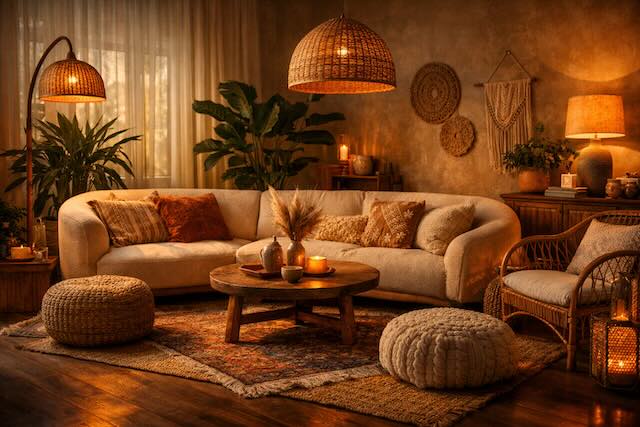
Boho design thrives on softness and flow. Curved sofas, rounded coffee tables, and arched lamps create a sense of movement and comfort that instantly puts visitors at ease. Avoid rigid, boxy lines — instead, let your furniture feel sculptural, inviting, and organic. When you eliminate sharp corners, the eye glides naturally across the room, fostering a fluid layout that feels open and welcoming. The result is a space that breaks away from formal structure and invites you to sink in and stay awhile.
Design tip: Pair a curved sofa with a round jute rug and a rattan pendant light for instant harmony. Organic shapes help balance the layered textures typical of boho interiors, preventing heavy textiles from feeling visually dense.
2. Layer Patterns and Textures
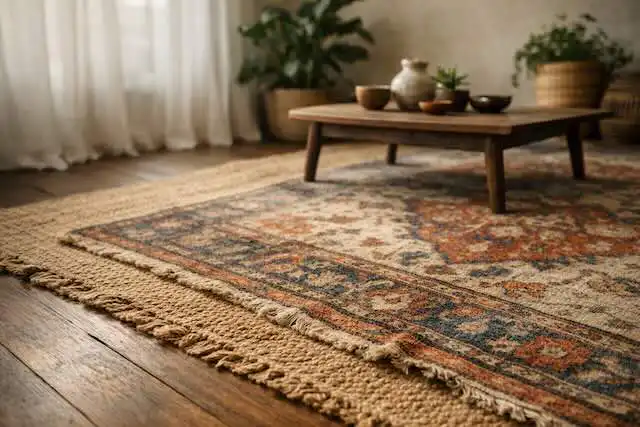
Texture is the absolute soul of boho design. Combine woven rugs, embroidered cushions, velvet pillows, and chunky knitted throws to build tactile depth throughout the room. Don’t be afraid to mix patterns — tribal, floral, geometric, and ikat prints can coexist beautifully when linked by a shared accent color. The secret is varying the scale of the patterns: pair a large-scale motif on a rug with smaller, intricate patterns on throw pillows. The goal is visual rhythm and cozy complexity, not chaos.
Try this: Layer a vintage Moroccan rug over a larger flat-weave jute base, add a soft bouclé throw across the sofa, and finish with patterned pillows in rust, cream, and deep olive tones.
3. Mix in Local and Global Influences
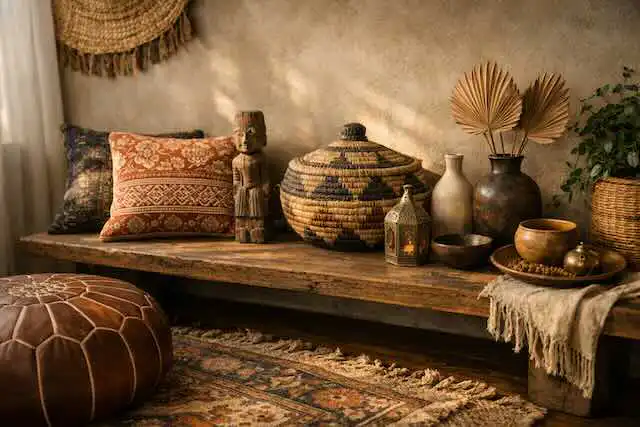
Boho spaces feel collected over time, not bought straight off a showroom floor. Blend pieces from different cultures and eras — leather Moroccan poufs, Indian block-print curtains, Turkish kilims, and Scandinavian ceramics — to tell your personal journey. Source items from flea markets, local artisan markets, or your own travels to bring authentic warmth into the space. Each item should feel like a cherished memory or a artistic find, not a fleeting social media trend.
Explore: World Market – Global Decor · Etsy – Boho Home Finds
4. Go Heavy on Greenery
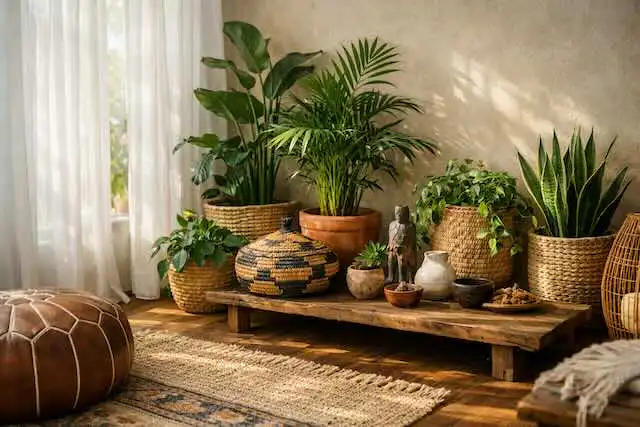
Plants are the vibrant heartbeat of boho interiors. They soften empty corners, add dynamic texture, purify the air, and seamlessly connect your indoor living space to nature. Aim for a mix of scales and leaf shapes: mix tall statement plants like fiddle-leaf figs or monstera with trailing pothos spilling off high shelves and small, textured succulents grouped on coffee tables. The lush green tones also act as a natural, calming neutral against warm textile palettes.
Tip: Use hand-woven seagrass baskets, macramé plant hangers, and aged terracotta pots to keep the look earthy and cohesive. Group plants in odd numbers at varying heights to create a natural, jungle-inspired composition.
5. Embrace Rattan, Cane, and Natural Fibers
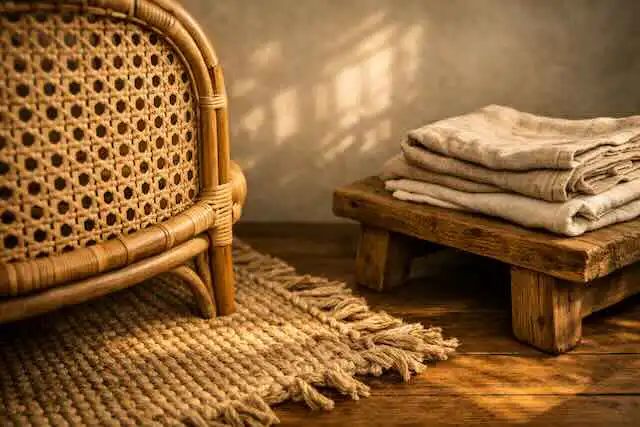
Natural materials bring grounded warmth, organic texture, and tactile authenticity to a room. Rattan accent chairs, cane-front sideboards, bamboo blinds, and jute rugs create rich visual contrast against plush, soft fabrics like linen and velvet. Because these materials carry natural variations in grain and tone, they introduce an artisan quality that factory-finished furniture simply can’t match. They also age beautifully, developing a rich patina that adds character over time.
Shop: Anthropologie – Boho Furniture · IKEA – Rattan Pieces
6. Create a Cozy, Low-Slung Seating Zone
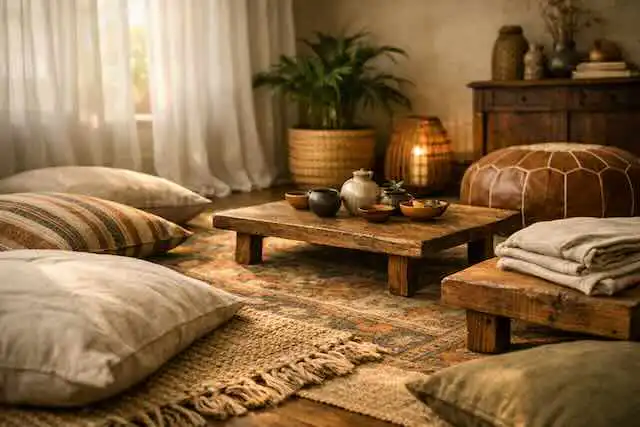
Boho living rooms are fundamentally designed for slow living, conversation, and lounging. Arrange seating options close to the floor — think floor poufs, low-profile daybeds, floor pillows, and oversized plush cushions — to shatter formal posture expectations and encourage total relaxation. This grounded seating arrangement opens up sightlines, making ceilings feel higher and rooms feel larger. Add layered plush rugs underneath to define the zone, warm up hardwood floors, and soften room acoustics.
Idea: Mix a classic low sofa with leather floor poufs and stacked floor cushions. This creates flexible, informal seating that can easily be moved around for casual gatherings that feel intimate and inviting.
7. Use Warm, Earthy Color Palettes
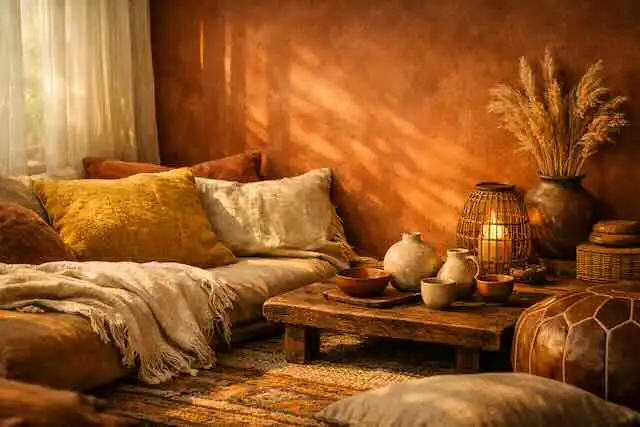
Color sets the emotional foundation for your entire space. Rich tones like terracotta, burnt ochre, warm mustard, and muted olive evoke a sense of grounding, warmth, and sanctuary. Layer these rich hues over creamy neutral backdrops — like warm beige, oatmeal, or soft alabaster — to keep the room feeling bright yet anchored. Avoid stark, cold whites or cool grays, as they can feel too sterile and clinical for boho’s relaxed, inviting atmosphere.
Resource: Benjamin Moore – Bohemian Color Palettes
8. Layer Art, Mirrors, and Wall Hangings
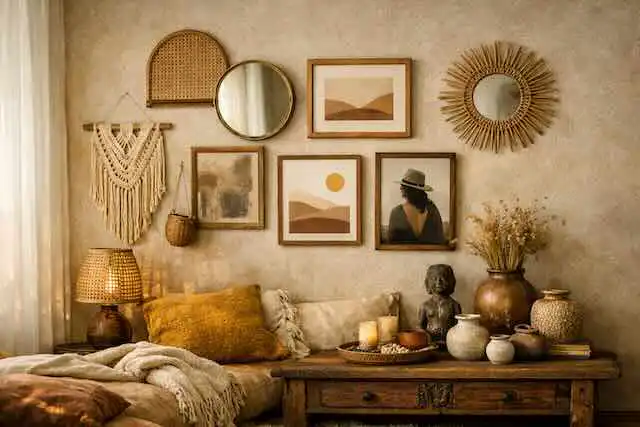
Boho walls are dynamic canvases for self-expression. Move beyond standard framed prints by combining oil paintings, woven macramé tapestries, rattan mirrors, line drawings, and hanging fiber art into a curated gallery wall. Mix frame finishes, artwork sizes, and tactile textures without worrying about strict symmetry. The intention is to create an artistic display that feels like it grew organically over time rather than being installed in a single afternoon.
Tip: Include handmade ceramics, brass wall sconces, or thrifted frames to add depth and soul. Hanging a soft woven wall hanging beside a vintage gilded mirror creates a striking contrast between raw, rustic craft and polished elegance.
9. Add Soft, Ambient Lighting
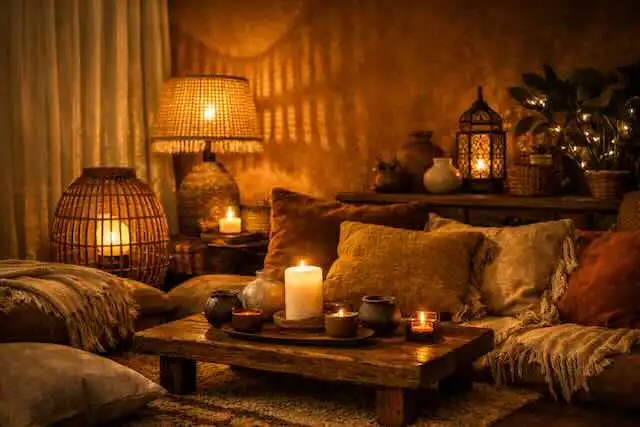
Lighting defines mood and transforms the mood of a room as night falls. Replace harsh, bright overhead fixtures with multiple layers of soft light sources placed at different heights — ceramic table lamps, bamboo floor lamps, metal lanterns, cluster candles, and warm string lights. Choose warm-toned LED bulbs (around 2700K) and pair them with woven wicker or paper lampshades that filter and diffuse light, casting enchanting shadows and a welcoming golden glow across the space.
Explore: Lumens – Boho Lighting
10. Let the Room Feel Imperfect and Lived-In
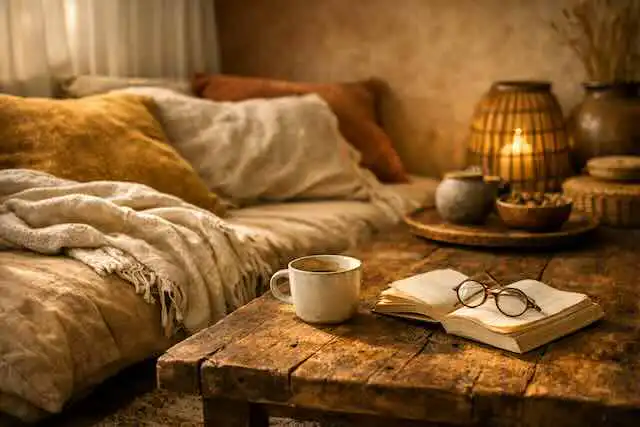
Boho design is fundamentally about genuine living, not rigid staging. A softly draped throw blanket, an artful stack of design books on the floor, or a woven basket overflowing with extra cushions all contribute to an unpretentious, welcoming vibe. Allow your living room to reflect real daily life — display loved belongings, embrace wabi-sabi principles where age and wear add charm, and let go of the pressure to maintain pristine minimalism.
Remember: The ultimate goal is to design a home that feels comfortably lived-in, not like a static showroom waiting for a photoshoot. Embrace natural patinas, soft lived-in fabrics, and the warmth of a beautiful, gentle mess.
Conclusion: Boho Is a Feeling, Not a Formula
A boho living room is less about adhering to strict interior design rules and more about nurturing a space that feels soulful, comforting, and uniquely tailored to your spirit. By laying a foundation of natural textures, vibrant greenery, and grounded earth tones, you build a versatile backdrop that easily evolves alongside your tastes.
As you collect vintage finds, travel keepsakes, and favorite books over the years, your living space transforms into a living, visual diary. It becomes a reflection of your personality and experiences — a cozy retreat where personal expression thrives and comfort always comes first.
FAQ
How do I start decorating a boho living room?
Begin with a warm neutral base for major pieces (a comfortable sofa, a textured area rug), then layer in depth through textiles, indoor plants, and natural accents like rattan or carved wood. Build your collection slowly over time so the space feels naturally gathered rather than rushed or staged.
Do I need bright colors for boho style?
Not at all. While bohemian style can incorporate jewel tones, a muted palette of earthy neutrals like clay, cream, sage, and sand works wonderfully. The defining characteristic is texture and material layering rather than vivid color.
Can boho work in a small living room?
Absolutely. Choose low-profile furniture to maintain ceiling height, utilize vertical space with wall sconces and hanging plant planters, and choose leggy rattan pieces that let light pass through to keep small rooms feeling airy and spacious.
How do I avoid boho looking cluttered?
Curate intentionally rather than piling items up. Stick to a cohesive color palette to tie different elements together, leave some breathing room on shelves and surfaces, and use hidden storage like woven baskets to tuck away everyday clutter.
Can I mix boho with other styles?
Yes, boho is exceptionally versatile. It effortlessly complements Scandinavian minimalism, mid-century modern, industrial, and coastal design. Use bohemian textiles, plants, and organic materials as a softening layer over your primary architectural style.