




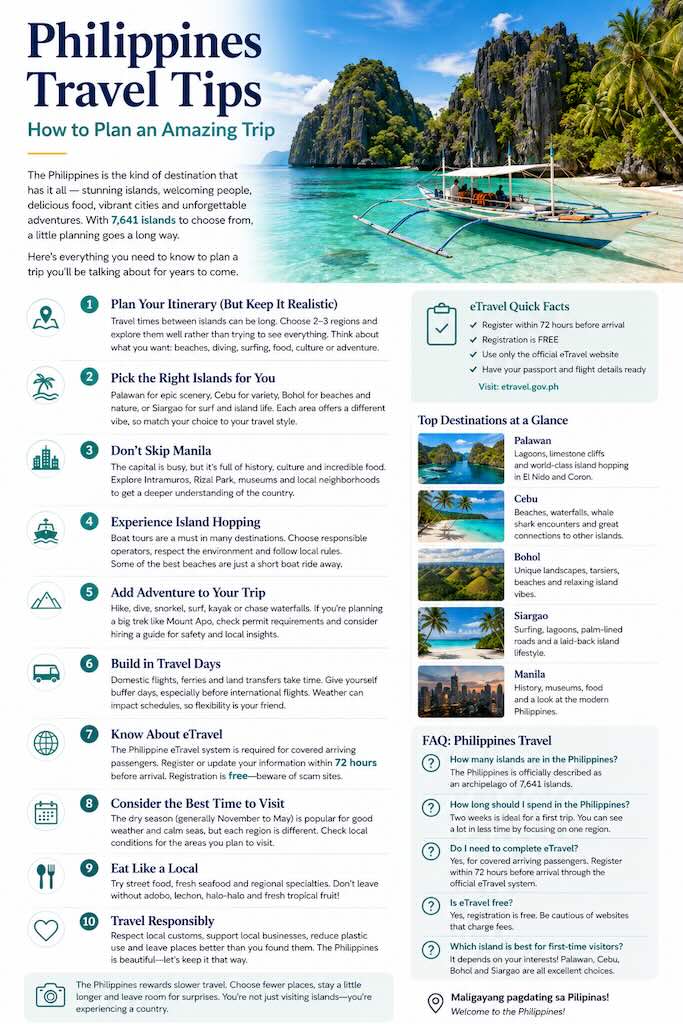
The Philippines is the kind of destination that makes choosing an itinerary surprisingly difficult. Across 7,641 islands, you’ll find white-sand beaches, turquoise lagoons, surf towns, tropical mountains, historic cities, coral reefs and communities with their own distinctive food and culture.
That variety is precisely what makes a trip here so exciting — and why a little planning matters. Trying to see too much can leave you spending more time in airports, ferries and vans than actually enjoying the places you traveled so far to experience.
Whether you’re dreaming about Palawan’s dramatic scenery, island life in Siargao, beaches around Cebu and Bohol or a few fascinating days in Manila, here’s how to plan a Philippines vacation that feels like an adventure rather than a race.
Editor’s note: This article from Divine Magazine’s earlier archive has been substantially rewritten and updated with current travel information. Entry requirements, transportation schedules and local access rules can change, so always verify official information before traveling.
Start by Accepting That You Can’t See Everything
The first rule of planning a Philippines itinerary is simple: resist the temptation to collect islands.
Distances can be deceptive when you’re looking at a map. Traveling between destinations may involve domestic flights, ferries, buses, vans, tricycles and transfers between ports and airports. A journey that appears short geographically can consume much of a day.
For a first trip, choosing two or three main areas and exploring them properly will usually create a more enjoyable vacation than trying to squeeze six destinations into the same itinerary.
Think about what you actually want from the trip. Beaches? Diving? Surfing? Food? Hiking? Culture? Nightlife? A little of everything? Once you’ve answered that question, choosing destinations becomes considerably easier.
Choose the Right Islands for Your Travel Style
There isn’t one definitive Philippines itinerary because different parts of the country deliver very different experiences.
Palawan for Extraordinary Scenery
If those photographs of limestone cliffs rising from impossibly clear water are what first made you consider the Philippines, Palawan will probably be high on your list.
El Nido is famous for lagoons, island-hopping trips and dramatic karst landscapes, while Coron combines spectacular scenery with diving and snorkeling opportunities.
These are popular destinations rather than undiscovered islands, so expect other travelers. Starting early, choosing responsible operators and allowing enough time to experience the area beyond a single boat trip can make the experience considerably more rewarding.
Cebu for an Easy Mix of Experiences
Cebu can work particularly well for first-time visitors because it combines urban life, beaches and access to outdoor adventures.
Cebu City provides history, restaurants and transportation connections, while journeys beyond the city open up very different landscapes and coastal experiences.
It can also serve as a useful base for combining several destinations in the Central Visayas rather than repeatedly flying across the country.
Bohol for Beaches and Nature
Bohol combines tropical beaches with some of the Philippines’ most recognizable inland scenery.
The Chocolate Hills are the obvious landmark, while the island is also associated with the tiny Philippine tarsier. Panglao, connected to Bohol, adds beaches, resorts and access to marine activities.
It’s a useful choice if you want a trip that isn’t entirely built around lying beside the sea.
Siargao for Surf and Island Life
Siargao may be famous for surfing, but you don’t need to arrive carrying a board.
The island’s appeal also comes from its palm-filled landscapes, lagoons, island-hopping possibilities, cafés and relaxed social atmosphere. Surfers can chase waves while everyone else explores by road or water.
If your idea of a tropical trip includes slow mornings and fewer rigid sightseeing schedules, Siargao deserves consideration.
Don’t Automatically Skip Manila
Manila is very different from the dreamy island imagery used to sell the Philippines — and that’s part of the reason it can be worth experiencing.
The capital region is busy, sprawling and sometimes overwhelming, but it also provides a window into Filipino history, food and contemporary urban life that you’ll never get from a beach resort.
Intramuros is one of the most interesting places to begin. The historic walled district preserves important reminders of Manila’s colonial past and makes a natural addition to a first visit.
Rizal Park and Manila’s museums can add further context, while neighborhoods and business districts elsewhere in Metro Manila reveal a much more modern side of the capital.
You don’t necessarily need a week here. Even a day or two can make the wider Philippines trip feel more complete.
Leave Space for Island Hopping
With 7,641 islands, traveling by boat is naturally part of the Philippines experience.
Island-hopping excursions can take you between lagoons, beaches, snorkeling areas and smaller islands that aren’t practical to reach independently. They’re particularly associated with destinations such as El Nido and Coron, but you’ll find boat experiences throughout the archipelago.
Look beyond price when choosing an operator. Group size, safety practices, environmental responsibility and what’s actually included in the trip can matter more than saving a small amount of money.
And remember that beautiful places are also people’s homes. Follow local rules, avoid leaving waste behind and treat coral, wildlife and marine environments as something to observe rather than touch or collect.
Add Adventure — but Plan It Properly
The Philippines offers far more than beaches.
Depending on where you travel, you can hike, surf, dive, snorkel, kayak, explore waterfalls or head into mountainous landscapes.
Mount Apo, the country’s highest mountain, is one of the destinations associated with more serious trekking. Unlike the advice that appeared in the original version of this article, don’t assume a major mountain can simply be climbed independently because you’re an experienced hiker.
Permits, access restrictions, guide requirements and temporary closures can apply to protected areas and trekking routes. Check current requirements with the relevant local authorities or accredited operators before planning any major climb.
The same principle applies to water activities. Weather and sea conditions can change quickly, so local safety advice should always take priority over an itinerary.
Build Travel Days Into Your Itinerary
One of the easiest mistakes to make in the Philippines is assuming every transfer will be quick.
Domestic flights can cover major distances, while ferries connect many islands. Once you add journeys to airports and ports, waiting time and local transportation at the other end, however, changing destinations can take much longer than expected.
Avoid scheduling an important international connection immediately after a ferry journey or a complicated chain of island transfers. Weather can affect transportation, particularly in an archipelago where boats and small aircraft play such an important role.
A spare night near your international departure airport may feel less exciting than squeezing in one final island, but it can also make the end of your vacation considerably less stressful.
Know About eTravel Before You Fly
International visitors should check current Philippine entry requirements well before departure because passport, visa and other requirements depend on nationality and individual circumstances.
The Philippines also operates the official eTravel system for passenger registration. Covered arriving passengers are required to register or update their information within 72 hours before arrival.
Registration through the official eTravel system is free. Be cautious of unofficial websites that attempt to charge travelers for completing the process.
Because immigration and entry rules can change, verify the requirements that apply to your passport directly through official Philippine government sources before traveling rather than relying on an old travel article or social media post.
When Is the Best Time to Visit the Philippines?
The answer depends partly on where you’re going. The Philippines covers a large geographic area, and weather patterns aren’t identical everywhere.
Broadly, many travelers favor the drier months for beach vacations and island hopping, but that doesn’t mean every destination follows exactly the same pattern or that rain disappears entirely.
If diving, surfing, hiking or a particular island is the main purpose of your trip, research conditions for that specific destination rather than choosing dates based solely on a generic nationwide weather guide.
It’s also worth remembering that tropical weather can disrupt ferries, boat tours and flights. A little flexibility in your schedule can be more valuable than planning every hour.
Don’t Travel Only for the Beaches
The beaches may get you to the Philippines. The rest of the country is what can make the trip memorable.
Make time for Filipino food. Explore a local market. Learn a few words and phrases. Visit historic sites. Spend money with locally owned businesses where possible. Ask questions rather than treating every destination as another backdrop for photographs.
And don’t expect every island to feel the same. That’s the beauty of traveling through an archipelago this large.
A Simple First-Time Philippines Itinerary
If you’re overwhelmed by the possibilities, a two-week first trip could look something like this:
- Days 1–2: Manila and Intramuros
- Days 3–7: Palawan for island hopping, beaches and lagoons
- Days 8–12: Cebu and Bohol for beaches, nature and a different island atmosphere
- Days 13–14: Return toward your international departure point with enough buffer for onward travel
That’s only one possibility. Siargao could replace Palawan if surfing and slower island life appeal more, while travelers with additional time could explore entirely different regions.
The goal isn’t to create the longest list of destinations. It’s to return home feeling as though you actually experienced the places you chose.
The Philippines Rewards Slower Travel
It’s easy to look at the Philippines and immediately start counting islands. Try not to.
Choose fewer places. Leave room for weather and transportation delays. Spend an extra afternoon on a beach you love instead of racing toward another airport. Stay long enough to discover what a destination feels like after the day-trippers have gone.
With thousands of islands to choose from, you’re never going to see the entire Philippines in one vacation.
That’s not a problem. It’s a reason to come back.
FAQ: Planning a Philippines Vacation
How many islands are there in the Philippines?
The Philippines is officially described as an archipelago of 7,641 islands. You obviously won’t visit anywhere close to all of them, which is why choosing a few regions is important when planning an itinerary.
How long should I spend in the Philippines?
Two weeks gives first-time visitors enough time to combine several destinations without making every few days a travel day. A shorter trip can still work well if you concentrate on one region rather than trying to cross the country.
Do travelers need to complete eTravel?
Covered arriving passengers are required to register or update their information through the Philippine government’s eTravel system within 72 hours before arrival. Requirements can change, so verify the current rules before departure.
Is eTravel free?
Yes. The Philippine government’s official eTravel registration is free. Travelers should be cautious of unofficial websites requesting payment.
Which Philippine island is best for first-time visitors?
There isn’t one best island. Palawan is an excellent choice for dramatic scenery and island hopping, Cebu offers varied experiences and useful connections, Bohol combines beaches with inland attractions, and Siargao appeals to travelers interested in surfing and relaxed island life.