




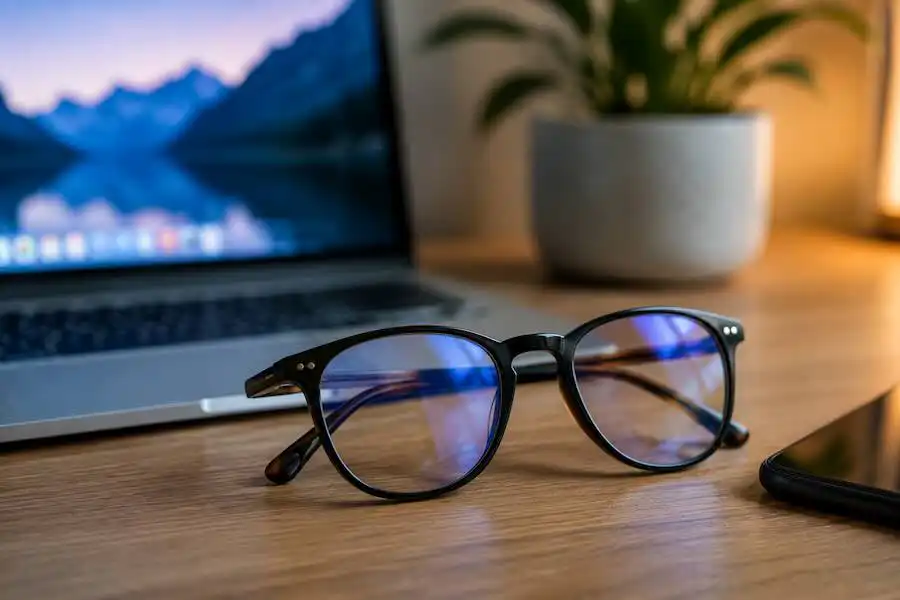
Blue light glasses have had quite the image change. The heavy amber lenses once associated with late-night television ads have been replaced by slim tortoiseshell frames, translucent acetate and barely noticeable lens coatings.
The marketing has changed too. Blue light filtering glasses are now sold as an answer to tired eyes, long days at a laptop and restless nights spent scrolling beneath the covers. The frames look better. The scientific case, however, is considerably more nuanced.
What is blue light?
Blue light is part of the visible light spectrum. The sun is our dominant natural source, while LED lighting and digital screens—including smartphones, tablets, televisions and computers—also produce it.
Blue light itself is not inherently harmful. Daytime exposure plays a role in alertness and helps synchronize the body’s circadian rhythm, or internal sleep-wake clock. The more relevant question is how artificial light interacts with our bodies at night.
Does screen blue light damage your eyes?
This is where some of the strongest claims surrounding blue light glasses begin to unravel. There is not good clinical evidence showing that ordinary exposure to blue light from computer and smartphone screens damages the retina.
A major Cochrane review of blue-light filtering spectacle lenses examined 17 randomized controlled trials involving 619 participants. The researchers found no evidence from the included trials that allowed them to determine whether blue-light filtering glasses protect macular health.
There is another useful piece of perspective. Cochrane researchers noted that the amount of blue light reaching our eyes from artificial sources such as computer screens is roughly one-thousandth of what we receive from natural daylight.
That does not mean a day behind a screen always feels comfortable. Dryness, blurred vision, headaches and tired eyes can accompany prolonged computer use. But blaming blue light alone oversimplifies what is happening.
Do blue light glasses reduce digital eye strain?
Probably not by much, based on the best evidence currently available.
The same Cochrane review found that blue-light filtering lenses may provide no short-term advantage over regular lenses for reducing visual fatigue associated with computer use. The available research is imperfect, with relatively small studies and short follow-up periods, but it does not support treating blue light glasses as a proven fix for screen-related eye strain.
In practice, tired eyes may have more to do with how we use screens: staring for extended periods, blinking less frequently and focusing at the same distance hour after hour.
What about blue light and sleep?
Here, the relationship becomes more interesting. Light helps regulate our circadian rhythm, and exposure to light at night can suppress melatonin, a hormone involved in the body’s sleep-wake cycle. Blue wavelengths appear particularly effective at influencing this system.
Harvard Health’s overview of blue light and sleep notes that blue wavelengths are useful during daylight hours because they support attention and alertness, but exposure at night can interfere with the biological signals associated with sleep.
That still does not mean an ordinary pair of clear blue light glasses will reliably solve insomnia. Research specifically examining blue-light filtering spectacles and sleep remains uncertain. In the Cochrane review, six randomized trials produced mixed results, leaving researchers unable to determine whether these glasses meaningfully improve sleep quality.
So, do blue light blocking glasses actually work?
It depends on what you expect them to do.
If you like the lenses and find them comfortable, there is nothing inherently wrong with wearing them. But current evidence does not establish standard blue-light filtering glasses as a reliable way to prevent retinal damage, and they may make little or no difference to short-term computer eye strain.
The evidence surrounding sleep is less settled. Some individual studies have reported benefits, while others have found no meaningful difference. Another complication is that commercially available lenses vary in how much blue light they filter, making the words “blue light blocking” less precise than they appear on a product page.
Harvard Health’s examination of blue-light glasses and sleep makes a similar distinction: the timing and intensity of evening light exposure matter, while commercially available filtering lenses are not standardized.
What helps if screens are tiring your eyes?
Start with the environment rather than another accessory. Give your eyes regular opportunities to focus farther away, blink deliberately when they feel dry and adjust your screen so you are not leaning forward or squinting at small text. Reduce glare and match screen brightness more closely to the room around you.
If eye discomfort, persistent headaches, blurred vision or other symptoms continue, an eye examination makes more sense than assuming blue light is responsible. An outdated prescription, dry eye or another vision issue may be contributing.
For better sleep, change the light around you
If sleep is the concern, the simplest intervention costs nothing. Put some distance between yourself and the glowing rectangle before bed.
Dim bright household lighting in the evening and reduce screen exposure during the hours before sleep. Night modes can also make displays warmer and less visually harsh. Harvard Health recommends avoiding bright screens beginning roughly two to three hours before bedtime when possible.
The bedroom matters too. Cool air, darkness and fewer notifications create a much clearer signal that the day has ended than another pair of glasses sitting on the nightstand.
The bottom line on blue light glasses
Blue light glasses have become more stylish, but their health claims deserve restraint. Current evidence does not show a clear benefit for preventing retinal damage or relieving short-term digital eye strain, while evidence for improving sleep remains uncertain.
If you enjoy wearing them, fine. Just think of them as an optional layer rather than protective armor for your eyes. Breaks from screens, comfortable lighting and quieter evenings carry far less marketing gloss—and considerably more practical value.
FAQ about blue light glasses
Can blue light glasses prevent eye damage?
There is currently insufficient evidence that blue-light filtering spectacle lenses protect the retina or macula from damage associated with ordinary digital screen use.
Do blue light glasses help with eye strain?
Current research suggests they may provide little or no short-term benefit for digital eye strain compared with lenses that do not filter blue light.
Can blue light glasses help you sleep?
Possibly, but the evidence is inconsistent. Evening light can affect circadian rhythms and melatonin, yet studies specifically testing blue-light filtering glasses have not established a clear sleep benefit.
Should you stop using screens before bed?
Reducing exposure to bright screens and other bright light before bedtime is a practical way to support the body’s natural transition toward sleep. Dimming the room and stepping away from devices can also remove the stimulation that comes with late-night scrolling, messages and video.
Are blue light glasses worth buying?
They may be worth it if you simply like wearing them or prefer the lens treatment, but the current evidence does not justify buying them solely on promises that they will prevent screen-related eye damage or reliably eliminate eye strain.