



Streetwear has moved well beyond its old boundaries. What once sat between skate culture, hip-hop and sportswear now shares wardrobe space with technical outerwear, heritage denim and quietly expensive basics. The interesting part is no longer whether streetwear is fashionable. It is how differently the strongest brands interpret it.
Some labels build around a single perfect sweatshirt. Others bring mountain equipment onto city pavements or turn a pair of jeans into something you can wear for a decade. If you are refining your casual wardrobe, these five names offer very different places to start.
Levi’s: denim without an expiry date
There is something reassuring about denim that does not need explaining. Levi Strauss & Co. traces its history to 1853, while the blue jean arrived two decades later when Levi Strauss and Jacob Davis received their patent for riveted work pants.
That heritage still gives Levi’s an unusually natural position in contemporary streetwear. A faded trucker jacket, straight denim and a clean T-shirt can sit beside newer pieces without looking like an attempt to recreate another decade.
The familiar 501 is an obvious entry point, but silhouette matters more than the number stitched onto the label. Straight and relaxed cuts create a different line from slim denim, particularly when worn with substantial sneakers, boots or an oversized jacket.
It is also worth thinking beyond jeans. Denim jackets, workwear-influenced shirts and simple tees make Levi’s useful when you want to make the right impression without making the outfit feel overly considered.
Champion: the sweatshirt is still the point
A grey sweatshirt can be almost invisible, which is precisely why a good one works so hard. Champion occupies that uncomplicated section of streetwear particularly well.
The brand’s history reaches back to 1919, and its Reverse Weave construction became one of its defining ideas: sweatshirt fabric engineered to resist vertical shrinkage. Today, Champion spans hoodies, sweatshirts, T-shirts, sweatpants and athletic pieces while retaining that collegiate, slightly nostalgic character.
This is less about building an outfit around a conspicuous logo and more about texture and proportion. Try a heavyweight sweatshirt under a structured coat, or pair relaxed sweatpants with a crisp jacket and restrained sneakers. The contrast keeps comfortable clothing from looking careless.
Reigning Champ: when the fabric does the talking
At first glance, a Reigning Champ hoodie can look almost aggressively simple. Then you notice the weight of the fabric, the seams, the ribbing and the way the garment sits.
Founded in Vancouver, Reigning Champ has built its identity around premium athletic staples and fabric-led design. The absence of visual noise is part of the attraction.
That makes the label particularly useful for a wardrobe built around repetition. A well-cut sweatshirt in black, heather grey or navy can move between denim, tailored trousers, technical jackets and simple training clothes without demanding a completely different aesthetic each time.
The price sits above mass-market sportswear, so this is a category where touching the fabric and considering how often you will actually wear the piece makes sense. One excellent sweatshirt worn constantly can be more useful than five trend-driven alternatives.
Patagonia brings the outdoors into the city
Streetwear has spent years borrowing from climbing, hiking and technical clothing. Patagonia never needed to manufacture that connection.
Founded by climber Yvon Chouinard, Patagonia remains rooted in outdoor equipment and clothing. Its fleeces, shell jackets, insulated layers and practical bags have also become familiar far from trails and mountains.
A textured fleece against dark denim creates warmth without much styling effort. A lightweight shell over a sweatshirt introduces a cleaner technical edge. Muted greens, stone, rust, navy and black are particularly easy to integrate into an everyday wardrobe.
There is another reason the label remains distinctive. Patagonia has made environmental activism, repair and extending the useful life of clothing unusually visible parts of its identity. Its Worn Wear program reflects an approach to clothing that feels increasingly relevant: buy thoughtfully, repair what you own and keep it moving for longer.
Nike still owns the sneaker conversation
Then there are the shoes.
Few brands have shaped the relationship between sportswear and street culture as visibly as Nike. Running technology, basketball history and sneaker collecting have repeatedly crossed into everyday fashion, giving the company a reach that extends far beyond the gym.
The easiest way to wear Nike now is often the least complicated. Let one sneaker silhouette carry the outfit and keep the surrounding pieces quieter. Straight denim and a sweatshirt work. So do relaxed trousers and a technical jacket. A monochrome tracksuit can work too, particularly when proportion and footwear are doing more of the visual work than oversized branding.
If you prefer the full sportswear silhouette, sneakers can also anchor full tracksuits and hoodies without requiring much additional styling.
Do not buy the brand. Buy the piece.
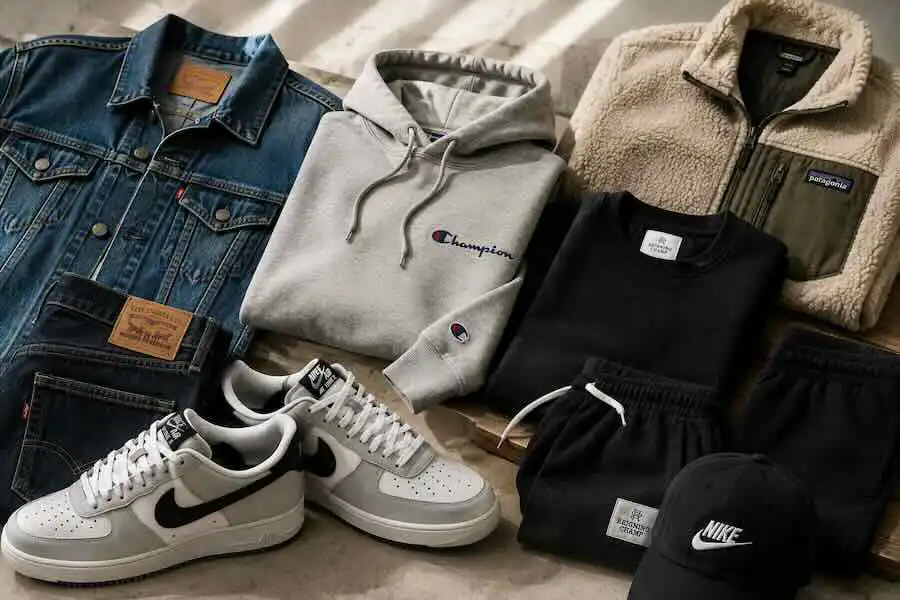
The strongest wardrobe here could contain something from all five labels and still feel coherent. Levi’s supplies the denim. Champion handles accessible athletic basics. Reigning Champ offers heavier, quieter staples. Patagonia introduces texture and technical outerwear. Nike takes care of the footwear and sport-driven edge.
But a logo is not a reason to buy anything.
Look at fabric, construction, fit and how naturally a piece connects with what is already hanging in your wardrobe. Try to imagine wearing it on an ordinary Wednesday rather than in the perfectly styled product photograph. If you can immediately see three combinations, you are probably looking at something useful.
Streetwear works better when it stops chasing streetwear
The category is most interesting when the boundaries become slightly blurred: workwear denim beneath a technical shell, an athletic sweatshirt against tailored trousers, an old pair of sneakers beside a beautifully made coat.
That also makes building a wardrobe easier. You do not need to replace everything when fashion shifts direction. Start with pieces that feel good against the skin, fit properly and become better through repeated wear. Trends can move around them.
Streetwear FAQ
What pieces should I buy first for a streetwear wardrobe?
Start with good denim or relaxed trousers, a heavyweight T-shirt, a sweatshirt or hoodie, versatile sneakers and one practical outer layer. Those pieces provide enough variation to build several outfits before adding statement items.
Is streetwear only about oversized clothing?
No. Relaxed proportions remain important, but successful streetwear depends on balance rather than simply buying everything several sizes larger. A wider trouser can work with a shorter jacket, while an oversized sweatshirt can be grounded by cleaner trousers.
Are expensive streetwear brands worth it?
Sometimes. Higher prices can reflect better fabrics, construction or manufacturing, but price and quality are not automatically connected. Judge individual garments by material, stitching, fit and expected cost per wear.
Can Patagonia be considered streetwear?
Patagonia is primarily an outdoor brand, but outdoor and technical clothing have become deeply integrated into contemporary casual style. Its fleeces and shells can therefore sit naturally within a streetwear wardrobe without losing their functional roots.