




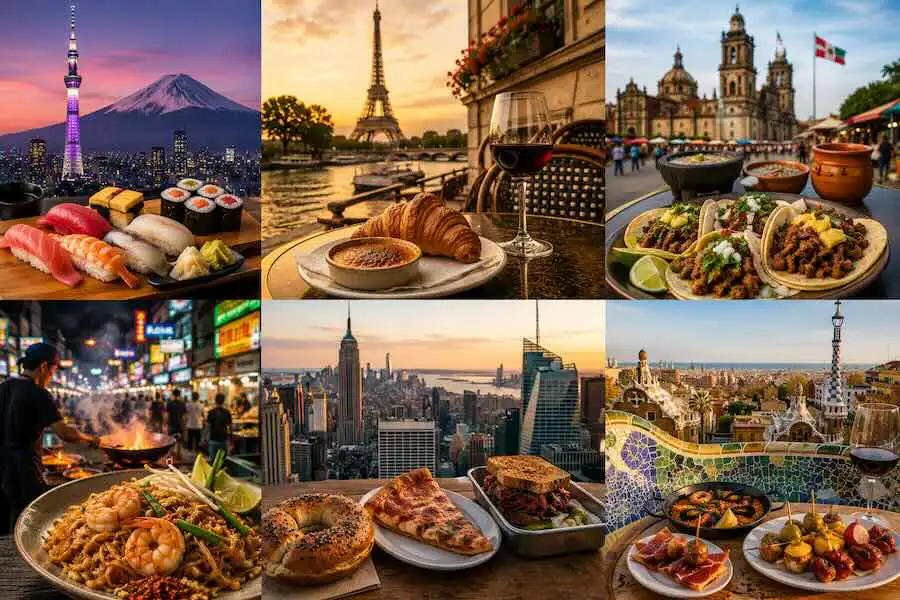
Some cities reveal themselves through architecture. Others arrive through scent: charcoal smoke curling above a night market, butter warming inside a Paris bakery, citrus cut across a counter, or broth rising from a narrow Tokyo ramen shop. For food travelers, the table is often the clearest route into a place.
In 2026, culinary travel is less about chasing a single famous reservation and more about understanding the food culture around it. Michelin-starred dining still matters, but so do neighborhood bakeries, markets, family-run restaurants, street stalls, regional ingredients, and the rituals that shape how a city eats.
From Tokyo’s meticulous counters to Mexico City’s restless street-food scene, these culinary capitals offer very different ways to experience a destination through taste.
The Culinary Capitals Worth Traveling For
Tokyo, Japan: Precision at Every Scale
Tokyo can make an extraordinary meal feel almost quiet. Behind a small counter, a chef slices fish with controlled movements while rice is shaped moments before serving. Elsewhere, steam clouds the windows of a ramen shop and yakitori cooks over glowing charcoal.
The city’s strength lies in specialization. Restaurants can devote themselves to sushi, tempura, soba, yakitori, tonkatsu or a single regional style, refining details across years of repetition. Fine dining sits naturally beside inexpensive neighborhood institutions, making Tokyo rewarding at almost any budget. The official GO TOKYO tourism guide is a useful starting point for exploring the city’s neighborhoods and food culture.
Paris, France: Tradition Without Standing Still
Paris still understands the pleasure of ritual. Coffee at a pavement table. A warm baguette carried home beneath one arm. Butter-rich pastry in the morning, followed hours later by a long dinner under low amber light.
Classic bistros, pâtisseries and neighborhood markets remain part of the city’s culinary identity, while a younger generation of chefs continues to reinterpret French cooking through seasonal produce and international influences. Travelers planning destination restaurants can consult the Michelin Guide, but some of the most memorable Paris meals still happen without ceremony.
Mexico City, Mexico: Street Food With Serious Depth
Mexico City rewards appetite and curiosity in equal measure. Corn tortillas hit hot griddles throughout the day. Tacos arrive bright with salsa, onion, herbs and lime. Markets overflow with dried chiles, fruit, spices and ingredients tied to generations of regional cooking.
That street-level energy now exists alongside ambitious contemporary restaurants examining Mexican ingredients through new techniques. The contrast is precisely what makes the city compelling: breakfast from a neighborhood stand and an intricate tasting menu can belong to the same culinary journey.
Bangkok, Thailand: A City Built Around Flavor
Bangkok rarely asks food travelers to choose between intensity and refinement. Smoke, traffic, herbs and sizzling woks create one sensory layer; polished dining rooms create another.
The city’s food is driven by contrast: heat against sweetness, acidity against richness, crisp textures beside soft noodles and rice. Street vendors remain essential to understanding Bangkok, while contemporary Thai chefs are examining regional recipes and ingredients with increasing precision. Current restaurant coverage from Time Out Bangkok can help travelers build a shortlist before arriving.
New York City, USA: The World on a Few Subway Lines
New York’s defining culinary feature is density. Within a single day, a traveler can move from a bagel counter to a Chinatown dining room, cross into Queens for regional specialties and finish the evening inside an ambitious tasting-menu restaurant.
The city is particularly rewarding when visitors leave the obvious restaurant corridors. Its immigrant communities have created extraordinary concentrations of regional cooking, making the subway one of the most useful tools a food traveler can have.
Barcelona, Spain: The Pleasure of Eating Slowly
Barcelona offers a different rhythm. Markets fill with seafood, cured meats, produce and cheeses, while tapas bars turn dinner into a sequence rather than a single event. Plates arrive, glasses are refilled, conversation stretches.
Catalan traditions sit beside experimental cooking, giving visitors access to both deeply rooted recipes and contemporary restaurant culture. Barcelona Turisme provides information on markets, gastronomy and local experiences for travelers planning around food.
Go Beyond the Restaurant Reservation
A great culinary trip should include more than dining rooms. Visit a market early enough to watch vendors set up. Take a cooking class that explains why ingredients are handled in a particular way. Sit at a neighborhood café without rushing to the next attraction.
- Market tours: Look for small-group experiences led by residents or culinary professionals who can explain ingredients rather than simply provide samples.
- Cooking classes: Choose classes centered on regional techniques and dishes you can realistically recreate at home.
- Fine dining: For highly sought-after restaurants, research reservation windows well before your trip through resources such as the Michelin Guide.
- Street food: Follow busy stalls, observe local eating patterns and consider guided experiences when navigating an unfamiliar food culture.
- Food festivals: A well-timed festival can bring regional producers, chefs and specialties together in one place.
Look Beyond the Famous Culinary Capitals
The established food cities deserve their reputations, but a rewarding culinary itinerary does not need to stop there. Seoul offers fermented flavors, barbecue culture, markets and contemporary Korean dining. Lima remains essential for travelers interested in Peru’s remarkable mixture of Indigenous, Spanish, African, Chinese and Japanese culinary influences. Lisbon combines seafood, pastries, neighborhood taverns and modern Portuguese cooking against an Atlantic backdrop.
Copenhagen and Singapore offer another perspective, particularly for travelers interested in ingredient sourcing, modern restaurant culture and the changing relationship between luxury and environmental responsibility.
Sustainability Changes How We Eat Abroad
A thoughtful food trip can support the places producing the experience. Eating seasonal ingredients, choosing locally owned businesses, respecting seafood guidance and avoiding unnecessary food waste are small decisions, but repeated across a journey they matter.
The Sustainable Food Trust provides broader context around sustainable food systems, while travelers can also ask restaurants and tour operators direct questions about sourcing before booking.
How to Build a Better Food Trip
Start with one or two restaurants you genuinely care about, then build loosely around them. Leave space between reservations. A city becomes difficult to taste when every hour has been scheduled.
Save room for discoveries, too. The bakery beneath your hotel, the market stall with a lunchtime queue, or the tiny restaurant recommended during a conversation may become more memorable than the reservation you made months earlier. That unpredictability is part of traveling more like a local.
Conclusion: Taste the City, Not Just the Menu
The best culinary capitals offer something larger than a collection of excellent restaurants. They reveal history through ingredients, migration through recipes and daily life through the simple question of where people choose to eat.
Tokyo may communicate through precision. Bangkok through heat and movement. Paris through ritual. Mexico City through layers of flavor and history. Each city speaks differently, which is precisely why traveling for food remains so compelling. Follow the appetite, but pay attention to everything surrounding the plate.
FAQ: Culinary Travel in 2026
What is the best time of year for a food-focused trip?
Spring and autumn can offer comfortable weather in many destinations, but the better approach is to research seasonal ingredients, regional celebrations and food festivals before selecting dates.
Do I need Michelin-starred reservations to experience a culinary capital?
No. Fine dining can be part of the experience, but markets, bakeries, neighborhood restaurants and street food often reveal just as much about a city’s culinary identity.
How do I find restaurants locals actually visit?
Research individual neighborhoods rather than searching only for citywide “best restaurant” lists. Local publications, market vendors, independent food writers and recommendations from residents can provide useful leads.
Are culinary tours worth booking?
A knowledgeable local guide can provide historical and cultural context that is difficult to gain from eating independently. Smaller groups generally allow more conversation and flexibility.
How can I travel more sustainably as a food lover?
Prioritize seasonal food, locally owned businesses and restaurants with transparent sourcing practices. Order realistically, reduce waste and use public transport or walk between nearby stops when practical.