




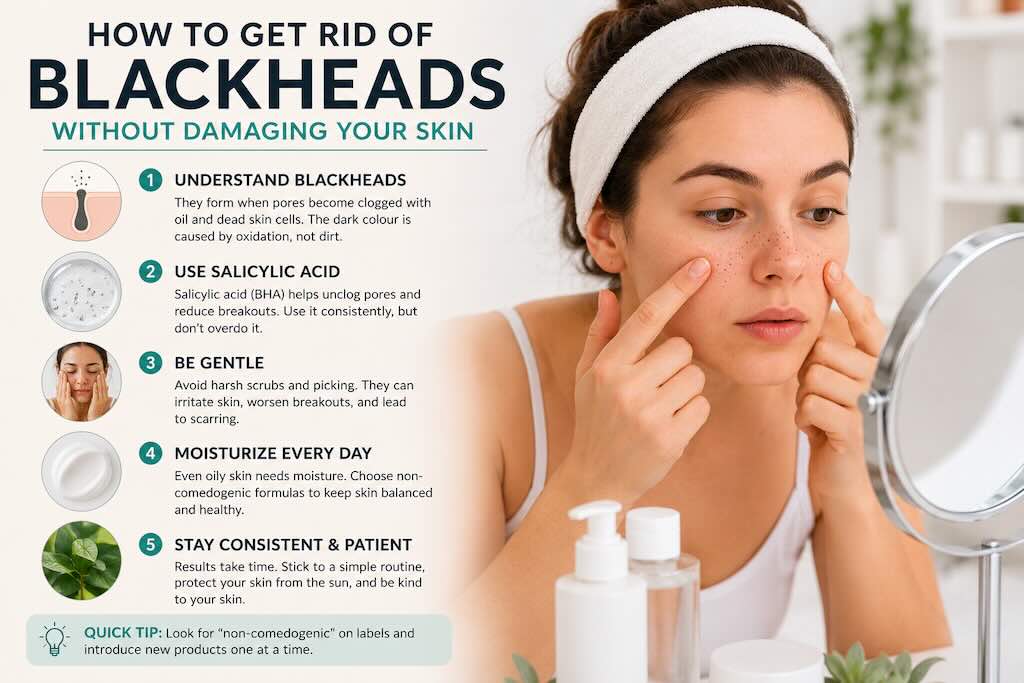
Blackheads have a frustrating habit of returning just when you think you’ve finally cleared them. You cleanse, exfoliate, inspect your skin in the mirror — and somehow those tiny dark dots are still there.
The problem is that getting rid of blackheads isn’t really about extracting every visible one. A better approach is understanding why they form and building a routine that helps keep pores clear without irritating your skin in the process.
First, What Actually Is a Blackhead?
A blackhead is a type of acne called an open comedone. It develops when a pore becomes clogged with sebum and dead skin cells while remaining open at the surface.
And despite what the colour might suggest, that dark tip isn’t dirt.
The material inside the pore is exposed to air and oxidizes, producing the characteristic dark appearance. That distinction matters because trying to scrub the darkness away can simply leave you with irritated skin and the same underlying problem.
Salicylic Acid Is a Useful Place to Start
For blackhead-prone skin, salicylic acid is one of the most useful ingredients to know.
Salicylic acid is a beta hydroxy acid commonly used in acne products. Rather than relying on abrasive scrubbing, products containing salicylic acid can help address the buildup associated with clogged pores.
The American Academy of Dermatology recommends gentle skincare for acne-prone skin and warns that repeatedly scrubbing the skin can irritate acne rather than clear it.
If you’re introducing an exfoliating ingredient for the first time, resist the temptation to use several acids at once. A complicated routine isn’t necessarily a more effective one.
Don’t Try to Scrub Blackheads Away
When something looks clogged, the instinct to scrub it clean is understandable.
Your skin doesn’t need that kind of punishment.
Harsh scrubs, aggressive cleansing and repeatedly picking at pores can cause irritation. Instead, wash your face gently and avoid treating your skin as though you’re trying to polish something off its surface.
That also means resisting the magnifying mirror when possible. Squeezing a stubborn blackhead may be satisfying for approximately three seconds, but picking at acne can increase inflammation and potentially contribute to scarring.
Yes, You Still Need Moisturizer
One of the easiest mistakes to make with oily or acne-prone skin is treating moisture as the enemy.
It isn’t.
Some acne treatments can leave skin dry or irritated, making a suitable moisturizer an important part of the routine. Look for products labelled non-comedogenic or formulated not to clog pores if you’re prone to breakouts.
The goal isn’t to make your face feel completely stripped of oil after cleansing. Skin that feels tight, uncomfortable or irritated isn’t evidence that your routine is working particularly hard.
Be Careful With AHA and BHA Layering
You’ll see the letters AHA and BHA everywhere in modern skincare.
Alpha hydroxy acids and beta hydroxy acids are exfoliating ingredients, but more exfoliation doesn’t automatically mean clearer skin. Using several exfoliating products together — particularly alongside other active ingredients — can make a routine unnecessarily irritating.
Introduce new products gradually and follow their directions rather than assuming an acid should be used every day simply because the packaging allows it.
Look for “Non-Comedogenic”
If clogged pores are a recurring issue, check more than your cleanser.
Moisturizer, sunscreen and makeup all spend significant time on your skin. Choosing products described as non-comedogenic or unlikely to clog pores can be useful for acne-prone skin.
That doesn’t mean you need to replace your entire bathroom shelf tonight. If your routine isn’t working, changing one product at a time also makes it much easier to work out what your skin actually likes.
Don’t Expect Overnight Results
This might be the least exciting skincare advice on the internet, but it’s important: give an appropriate routine time to work.
Constantly switching between cleansers, acids, masks and whatever product happens to be trending this week can make it difficult to tell what’s helping — and may increase irritation.
A simple routine built around gentle cleansing, appropriate acne treatment, moisturizer and daytime sun protection is often a better starting point than an overflowing shelf of active ingredients.
What About Pore Strips?
Pore strips can make your nose look satisfyingly clear immediately after you use one, but that doesn’t address why the pore became clogged in the first place.
Think of them as a temporary cosmetic fix rather than a long-term blackhead strategy.
When Blackheads Won’t Budge
Persistent acne doesn’t mean you haven’t cleansed hard enough.
If blackheads or other acne aren’t improving with appropriate over-the-counter care, are becoming inflamed or are beginning to scar, consider speaking with a pharmacist, GP or dermatologist. The NHS acne guide explains the treatment options available and when medical advice may be appropriate.
Keep the Routine Boring
Blackheads encourage us to do more: scrub harder, squeeze more and add another acid to the bathroom shelf.
Often, the smarter approach is considerably less dramatic.
Cleanse gently. Choose products that suit acne-prone skin. Introduce active ingredients carefully. Moisturize. Protect your skin from the sun. And give the routine enough time to tell you whether it’s working.
Your pores don’t need a battle. They need consistency.