




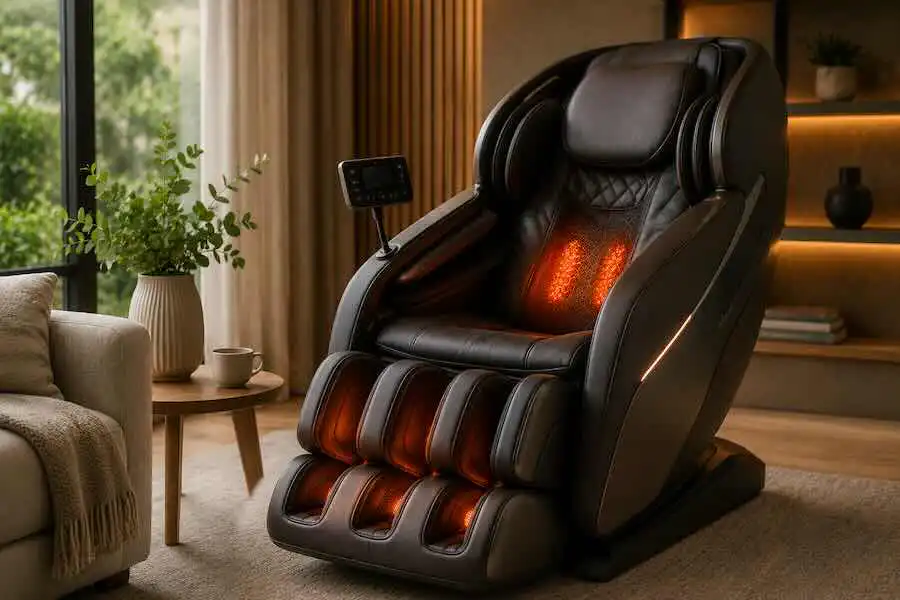
Warmth changes the way a tired body feels almost immediately. Muscles soften. Stiffness can feel less intrusive. The combination of heat and mechanical massage is one reason heated massage chairs have become a familiar part of home recovery routines rather than simply oversized pieces of relaxation furniture.
There is useful physiology behind that sensation, but some claims surrounding heat therapy deserve restraint. A heated massage chair may temporarily ease muscle tension, encourage local blood flow and make movement feel more comfortable. It is not a substitute for medical treatment, and features such as infrared heating or automated programs do not automatically make a chair therapeutic for every condition.
Heat has also long been used alongside other recovery strategies. Divine has previously explored how heat therapy can form part of injury recovery and ways to support health naturally. In a massage chair, the appeal is particularly simple: controlled warmth and pressure arrive at the same time.
What heat actually adds to a massage
Massage rollers provide pressure and movement. Heating elements add another sensory layer, commonly around the lumbar region, although coverage varies considerably between chairs.
Heat causes blood vessels near the treated area to widen and can increase local circulation. It may also reduce the sensation of stiffness and help muscles relax. That combination can make the massage itself feel gentler, particularly after prolonged sitting, exercise or an unusually tense day.
The important distinction is between temporary symptom relief and treating an underlying condition. Heat can feel remarkably good without necessarily correcting the reason something hurts.
Tight muscles tend to respond well to warmth
Think of the rigid feeling across your shoulders after several hours at a desk. Applying warmth can make that tissue feel less guarded before rollers begin working across it.
This is perhaps the most straightforward reason to use the heated function on a massage chair. Gentle warmth may temporarily reduce muscular tension and stiffness, making the experience more comfortable without requiring aggressive pressure.
More intensity is not necessarily better. If a muscle is painful rather than simply tired, increasing the temperature and massage strength can be the wrong response. Acute injuries, swelling and unexplained pain deserve a different approach.
Movement may feel easier afterward
Warm tissue generally feels more pliable than cold, tense tissue. For that reason, heat is sometimes used before gentle movement or stretching when stiffness is limiting comfort.
A heated chair may therefore make getting up and moving around feel easier after a session. That does not mean the chair permanently increases joint mobility. Rather, reduced stiffness can create a temporary window in which comfortable movement feels more accessible.
Heat can change how discomfort is perceived
Warmth provides a strong sensory signal. Combined with rhythmic pressure, it can temporarily alter the experience of aches and muscular discomfort, which helps explain why a heated massage often feels soothing even before a session has finished.
For occasional back tension, that can be useful. Persistent or worsening pain is different. Divine’s guide to distinguishing temporary back pain from a chronic problem is a reminder that recurring symptoms should not simply be masked indefinitely.
Local circulation increases with heat
One of heat therapy’s clearest physiological effects is vasodilation. Blood vessels in the heated area expand, increasing local blood flow while the warmth is being applied.
This is useful context when manufacturers describe a chair as improving circulation. The effect should not be confused with treating cardiovascular disease or providing a lasting whole-body circulatory improvement. The more defensible benefit is local and temporary.
Still, when paired with massage and followed by gentle movement, that warm, loose sensation can make a recovery routine considerably more pleasant.
The quieter benefit may be relaxation
Not every worthwhile effect needs to sound clinical.
A dim room, supported posture, slow rollers and steady warmth can create a clear boundary between an active day and the evening. For someone who habitually carries tension through the shoulders, neck or lower back, that ritual may be the most compelling reason to own a heated massage chair.
Relaxation can also indirectly support a calmer bedtime routine. It is safer, however, to describe a massage chair as helping you unwind rather than claiming that heat itself treats insomnia or guarantees better sleep.
What about recovery after exercise?
Heat and massage can both feel appealing when muscles are tired after activity. A moderate session may help with the subjective feeling of soreness or stiffness, especially when the goal is relaxation rather than treatment of an injury.
Timing matters. Fresh injuries accompanied by swelling, bruising or significant inflammation are not situations where automatically adding heat is wise. If pain is sharp, severe or unexplained, stop and seek appropriate medical advice rather than turning up the chair’s intensity.
Some popular heat-therapy claims go too far
Massage-chair marketing sometimes stretches well beyond relaxation and temporary relief. Claims that a chair can regulate high blood pressure, dramatically increase cellular nutrition, remove toxins or transform skin health should be treated cautiously.
Heat does influence local blood flow. That does not make a consumer massage chair a treatment for hypertension. Likewise, increased circulation should not be translated into claims about detoxification or cellular rejuvenation without appropriate clinical evidence.
The strongest case for heated massage chairs is simpler: warmth, comfort, temporary relief from stiffness and an enjoyable way to decompress.
Choosing a heated massage chair
Ignore the longest feature list for a moment and pay attention to where the chair actually heats your body. Some models concentrate warmth around the lower back. Others extend heating into the legs, feet or rollers. Adjustable temperature is more useful than a single heat setting, particularly if several people will use the chair.
Fit matters just as much. Roller tracks should correspond reasonably well with your height and body shape, while the chair should support you comfortably when reclined. Features such as body scanning and automatic programs can improve usability, but they should complement good mechanical design rather than distract from it.
Specialist retailers such as The Modern Back provide examples of contemporary massage-chair configurations, making it easier to compare heating zones, roller systems and reclining designs before deciding which features are actually useful to you.
Use heat conservatively
A comfortable session does not need to be extremely hot or exceptionally long. Start with a lower temperature and a shorter program, then judge how your body responds. Stop if you experience burning, dizziness, numbness or increasing pain.
Extra caution is sensible for anyone with reduced heat sensation, impaired circulation, certain cardiovascular conditions, pregnancy or another medical issue that could affect safe heat exposure. In those situations, ask a qualified healthcare professional whether heated massage is appropriate before making it part of a routine.
Conclusion
The best heated massage chairs do something relatively uncomplicated very well. They combine controlled warmth, supportive seating and mechanical massage in one quiet place.
That can soften the feeling of muscular tension, temporarily increase local circulation and make stiff areas feel more comfortable. It can also create twenty minutes in which there is little to do except sit still. In a relentlessly busy day, that may be benefit enough.
FAQ: Heat Therapy in Massage Chairs
Can I use the heat function on a massage chair every day?
Many healthy adults can tolerate short, moderate sessions, but manufacturer instructions should always determine duration and temperature. Stop if heat causes discomfort, dizziness or skin irritation.
How long should a heated massage session last?
There is no universal duration for every chair or user. Short sessions are a sensible starting point. Follow the chair manufacturer’s recommendations rather than assuming a longer session produces greater benefits.
Can a heated massage chair treat chronic back pain?
It may temporarily ease muscular tension or discomfort, but it should not be considered a treatment for the underlying cause of chronic back pain. Persistent, severe or worsening pain should be medically assessed.
Is infrared heat automatically better?
Not necessarily. Terms such as infrared can sound impressive, but practical factors including temperature control, heating coverage, comfort and the chair’s overall massage mechanism are more useful when comparing models.
When should I avoid heat therapy?
Heat may be inappropriate over an acute injury, significant swelling or areas with reduced sensation. Certain health conditions can also change how safely the body responds to heat, so seek professional guidance when uncertain.