




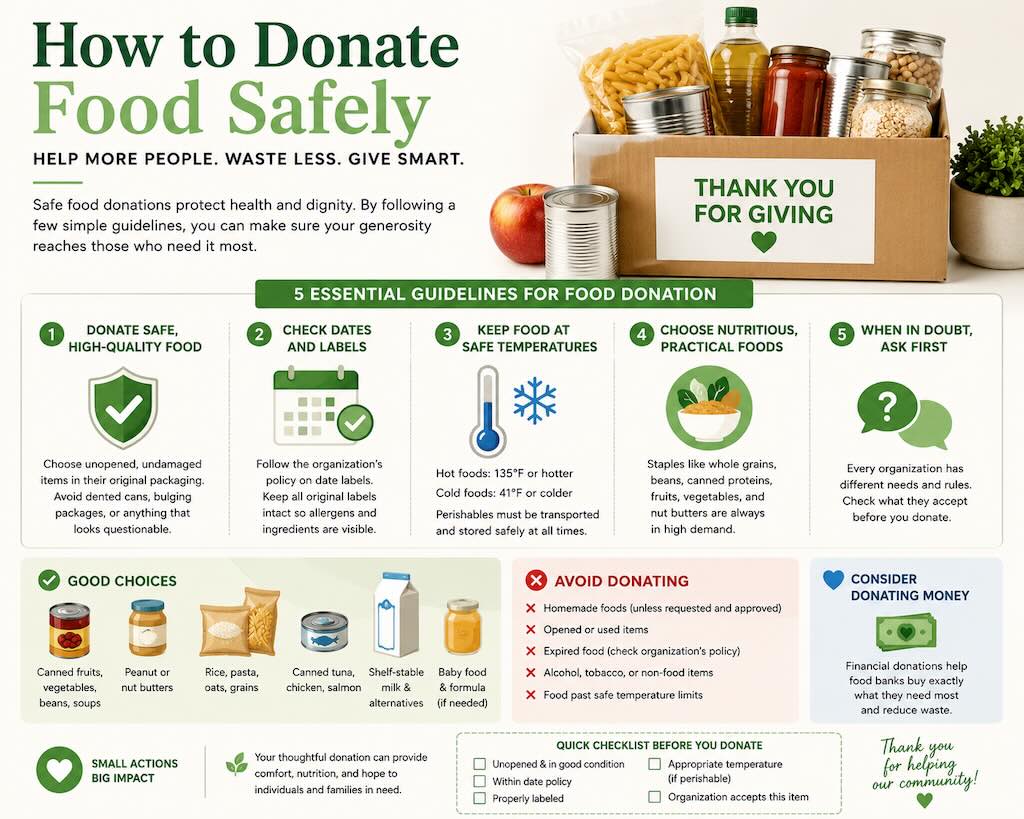
Donating food is one of the most practical ways to support a community, but it requires a little more care than dropping off clothes, books, or household goods. Food banks, shelters, community kitchens, and other organizations need donations they can safely store, identify, and distribute — and what they can accept varies considerably from one organization to another.
Before filling a box or preparing food for a donation drive, the most important step is simple: check what the organization actually needs and accepts. From packaging and expiration dates to allergens and temperature control, a few precautions can help ensure your donation reaches someone who can use it.
Start With the Organization’s Donation Guidelines
There isn’t one universal list of foods that every charity accepts. A food bank may primarily request shelf-stable groceries, while a community kitchen might have facilities for refrigerated or frozen products. Some organizations accept prepared food from approved sources; others don’t.
Before organizing a large collection or planning a donation drive, contact the receiving organization or check its current wish list. Donating what is actually requested reduces waste and saves volunteers from sorting items they cannot distribute.
Choose Food That Is Safe and Intact
For shelf-stable donations, choose products in unopened, undamaged packaging. Cans shouldn’t be badly dented, swollen, leaking, or rusted, while boxes, bags, and jars should still have secure seals.
Dates matter too. Different labels such as “Best By,” “Use By,” and “Sell By” can have different meanings, and individual organizations may have their own policies about what they’ll accept. Rather than assuming an item is suitable, follow the recipient organization’s rules.
Think About Nutrition and Practicality
A useful donation isn’t necessarily the most unusual thing in the pantry. Everyday staples can be especially valuable because they’re easy to store, combine into meals, and distribute.
- Canned beans, vegetables, fruit, fish, or meat
- Rice, pasta, oats, and other shelf-stable grains
- Nut or seed butters where accepted
- Shelf-stable milk or alternatives
- Soups, sauces, and other meal-building staples
- Baby food or other specifically requested products
It’s also worth considering how easily someone can use what you’re donating. Foods that require several additional ingredients, specialist equipment, or extensive preparation may be less practical for recipients with limited cooking facilities.
Temperature Control Matters for Perishable Food
Perishable foods require much more careful handling than canned or packaged goods. Meat, dairy products, prepared meals, and other temperature-sensitive foods shouldn’t simply be left in a donation box and transported like shelf-stable groceries.
If an organization accepts refrigerated, frozen, or hot prepared foods, follow its handling requirements and current local food-safety regulations throughout storage and transportation. Use insulated containers or appropriate refrigeration where required, minimize the time food spends outside safe temperature control, and deliver it directly to the designated recipient.
If you’re uncertain whether the cold chain has been maintained safely, don’t donate the food. When feeding other people, caution is preferable to taking a chance.
Keep Labels and Ingredient Information Intact
Original labels provide information that can be extremely important to both the organization and the eventual recipient. Product names, ingredients, allergen information, manufacturer details, preparation instructions, and date markings shouldn’t be removed or obscured.
This is particularly important for people managing food allergies, intolerances, religious dietary requirements, or other dietary restrictions. An unidentified container may look perfectly usable but can be impossible for an organization to distribute safely.
Be Careful With Homemade Food
A homemade casserole or batch of cookies may feel more personal than a bag of groceries, but many organizations cannot accept food prepared in private homes because its ingredients, preparation conditions, and storage history cannot be independently verified.
Never assume homemade food is welcome. Ask first. If the organization doesn’t accept it, unopened commercially packaged ingredients or a monetary donation may be considerably more useful.
Don’t Use Donation as a Pantry Cleanout
A simple rule makes food donation easier: donate something you would feel comfortable serving in your own home.
That means avoiding damaged packages, questionable products, forgotten food of uncertain age, and anything you wouldn’t personally want to eat. Food donation can reduce waste, but its primary purpose is helping people — not transferring unwanted food from one cupboard to another.
Consider Donating Money Instead
Sometimes the most effective food donation isn’t food at all.
Food banks and similar organizations may be able to use financial donations to purchase exactly what they’re short of, obtain products in bulk, cover transportation, or fill gaps that aren’t obvious to individual donors.
If you’re unsure what to buy, check whether the organization publishes a current wish list or accepts financial contributions before heading to the supermarket.
A Quick Food Donation Checklist
- Check what the organization currently accepts.
- Choose unopened food in good condition.
- Keep original labels and allergen information visible.
- Check the organization’s policy on date labels.
- Only donate refrigerated or frozen foods when the organization can accept them safely.
- Ask before donating homemade or prepared food.
- Prioritize nutritious, practical foods people can easily use.
- Consider money or specifically requested products when you’re unsure what is needed.
Making Every Donation Count
Thoughtful food donation isn’t about filling the biggest box. It’s about giving something safe, useful, and appropriate for the people who will receive it.
Checking the organization’s requirements before donating takes only a few minutes, but it can prevent waste and make the work of food-bank and charity volunteers considerably easier. Give what is needed, keep food properly packaged and handled, and your donation has a much better chance of reaching the table it was intended for.
FAQ: Donating Food Safely
Can you donate food past its Best By date?
Policies vary. Date labels don’t all mean the same thing, and food banks may have their own acceptance rules. Check with the organization before donating products that have passed a printed date.
Can you donate homemade food to a food bank?
Not necessarily. Many organizations don’t accept food prepared in private homes because of food-safety and ingredient-traceability requirements. Always ask the receiving organization first.
What foods are most useful to donate?
The best answer is whatever the organization currently needs. Shelf-stable proteins, grains, canned vegetables and fruit, soups, and other versatile staples are commonly useful, but a current food-bank wish list should take priority over a generic shopping list.
Can refrigerated or frozen food be donated?
Some organizations accept it and others don’t. Perishable food requires suitable storage, transportation, and temperature control, so confirm acceptance and handling instructions before bringing it to a donation location.