




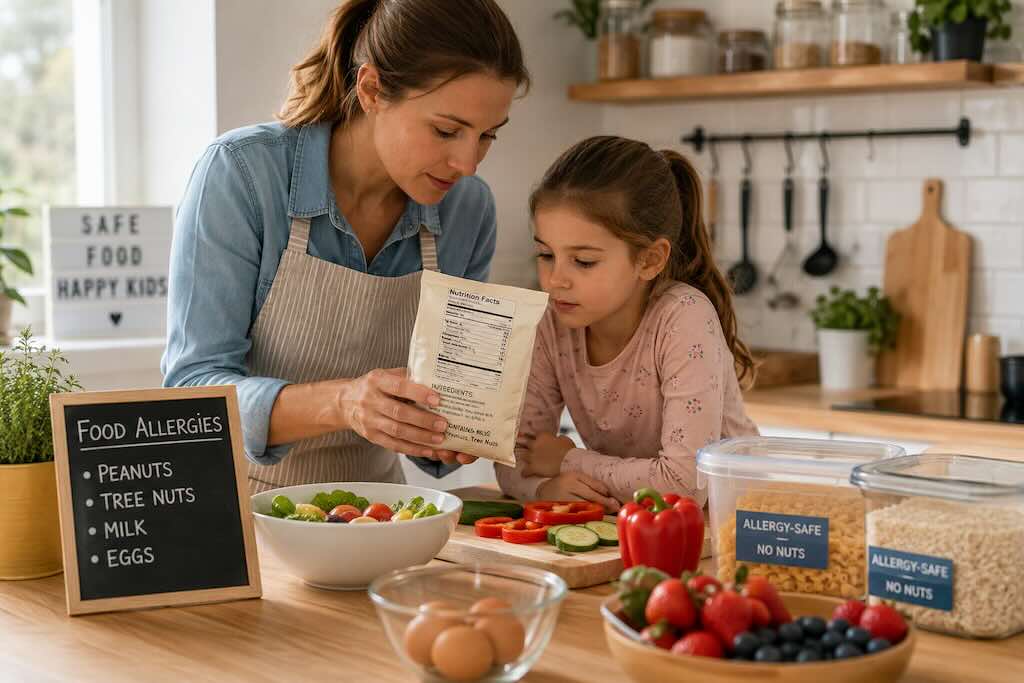
Cooking for a child with a food allergy can make an ordinary family meal feel considerably more complicated. Suddenly, ingredient labels matter more, crumbs on a worktop deserve attention and a familiar product can’t automatically be assumed to have the same recipe it had last month.
The goal isn’t to make family cooking frightening. It’s to create a few reliable habits that reduce the risk of accidental exposure while allowing food to remain an enjoyable part of family life.
If your child has a diagnosed food allergy, their individual allergy management plan and advice from their healthcare team should always take priority. The practical steps below can help make everyday cooking easier and safer.
Read the Label Every Time
A product you’ve bought safely for months can still change.
That’s why checking ingredients needs to become part of the routine rather than something you do only when buying an unfamiliar food.
The NHS recommends checking food labels and ingredients carefully when managing a food allergy. Pay attention to the complete ingredients list as well as any precautionary allergen information on the packaging.
Do the same with the less obvious components of a meal: sauces, marinades, dressings, spice mixes, spreads and desserts can all contain ingredients you weren’t expecting.
Prevent Cross-Contact While Cooking
Keeping an allergen out of the child’s portion isn’t enough if that food has already come into contact with the same utensils, preparation surface or other ingredients.
Before preparing allergy-safe food, wash your hands and thoroughly clean the work surface and equipment you’re going to use. Keep allergenic ingredients separate while preparing the meal and pay attention to utensils, chopping boards and anything else moving between foods.
The Food Standards Agency provides guidance on managing food allergies and avoiding accidental exposure.
If an allergenic ingredient accidentally gets into a dish intended for your allergic child, don’t simply pick it out and serve the rest. Prepare the child’s food again with clean equipment and fresh ingredients.
Give Allergy-Safe Foods Their Own Space
A well-organized kitchen can remove some of the uncertainty.
Clearly label foods that need to remain separate and store open ingredients securely. Families may also find it useful to designate particular shelves, containers or storage areas for allergy-safe foods, especially when other members of the household continue eating the allergen.
The exact system matters less than consistency. Everyone using the kitchen should understand which foods are safe, which aren’t and how they’re supposed to be handled.
Don’t Guess About Ingredients
If you cannot establish whether a food contains your child’s allergen, don’t improvise.
Choose something whose ingredients you can verify instead. This becomes particularly important with food that doesn’t arrive with a straightforward packaged ingredients list.
The same principle applies when someone else cooks for your child. Grandparents, babysitters, friends and other carers should know about the allergy and understand what your child can and cannot eat.
Teach Your Child as They Grow
Food-allergy management shouldn’t always happen invisibly around a child.
As children become old enough to understand, involve them in age-appropriate ways. Teach them the name of their allergen, why they shouldn’t share food without checking and, eventually, how to recognise it on a food label.
This isn’t about making a child afraid of eating. It’s about gradually giving them the knowledge they’ll need to manage their allergy more independently as they get older.
Have a Plan for an Allergic Reaction
A safe kitchen reduces risk, but accidental exposure can still happen.
Make sure the adults caring for your child understand their allergy management plan and know what to do if a reaction occurs. If your child has been prescribed adrenaline auto-injectors, follow the instructions provided by their healthcare team and make sure appropriate carers know how and when they should be used.
A severe allergic reaction, or anaphylaxis, is a medical emergency. Symptoms can include difficulty breathing and swelling of the throat or tongue. In the UK, call 999 for emergency medical help.
Keep Family Meals Enjoyable
Once label checking, cleaning and separation become normal kitchen habits, cooking around a food allergy can become considerably less intimidating.
And there’s an important balance to strike. A child’s allergy needs to be taken seriously, but food shouldn’t become something they associate only with restrictions and anxiety.
Build a collection of meals everyone enjoys, find reliable substitutions where they’re needed and let safe food remain what it should be: one of the everyday pleasures of family life.