




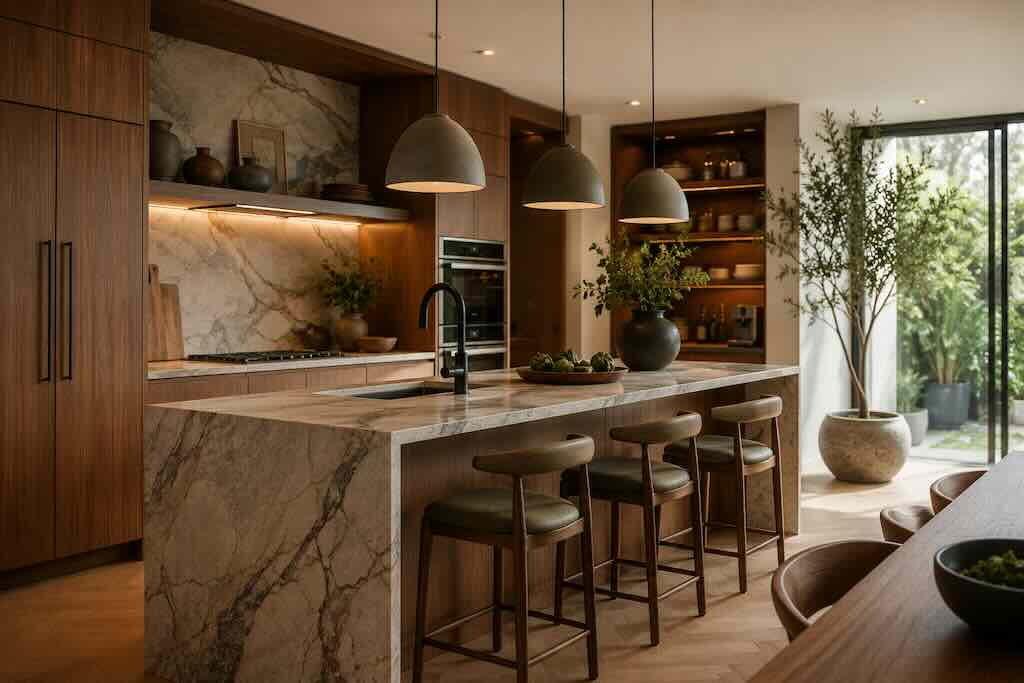
For several years, kitchen design followed a familiar formula: white cabinetry, pale stone, clean lines and as little visual interruption as possible. In 2026, the mood is warmer.
Natural wood, expressive stone, earthy color and concealed storage are bringing texture back into the room, while lighting is becoming softer and more architectural. Technology remains part of the kitchen, but the most convincing applications rarely demand attention.
Editor’s note: This article has been updated for 2026 with current kitchen-renovation data, refreshed design directions and more practical guidance on cabinetry, lighting, storage, materials and long-term planning.
Natural Wood Is Challenging the White Kitchen
White cabinetry is far from disappearing, but natural wood has moved firmly back into the foreground.
In the 2026 U.S. Houzz Kitchen Trends Study, wood was selected by 29% of surveyed homeowners renovating their kitchens, narrowly ahead of white at 28%.
The difference is small. Visually, however, it reflects a larger shift away from kitchens in which every surface seems designed to disappear.
Medium and light woods introduce visible grain and warmth without requiring elaborate decoration. Oak, walnut and other expressive finishes sit naturally beside stone, brushed metal and softly textured walls.
White still has a place. Used beside timber and warmer materials, it can provide breathing room rather than defining the entire kitchen.
Earthy Color Is Softening the Grey-and-White Formula
The retreat from stark white has not produced one replacement color. Instead, kitchen palettes are becoming richer and more organic.
Deep greens, warm browns, clay tones and mineral shades work particularly well with natural timber. At the more expressive end, richer stone and stronger color can become architectural focal points. Architectural Digest’s 2026 kitchen trend report points to earthy reds and dramatic red stone among the directions attracting designers’ attention.
The effect can be quietly cinematic: walnut grain beside heavily veined stone, muted green cabinetry beneath warm evening light, or a deep terracotta island giving visual weight to an otherwise restrained room.
Color does not need to cover every cabinet. A single island, pantry wall or painted section can introduce enough contrast while allowing quieter materials to remain dominant.
Statement Lighting Is Staying, but Layers Matter More
A sculptural pendant above an island can still establish rhythm and provide a strong visual anchor. The more important design decision is what happens around it.
A well-planned kitchen benefits from several layers of light: ambient illumination across the room, focused task lighting where food is prepared, and softer integrated illumination beneath cabinets or shelving.
That approach makes lighting part of the architecture rather than an accessory selected at the end of a renovation. A pendant provides punctuation. The quieter sources determine whether the kitchen feels inviting at breakfast, practical during dinner preparation and calm late at night.
Color temperature matters too. Very cool light can flatten timber and warmer stone, while excessively dim decorative lighting can leave work surfaces frustrating to use. Atmosphere and visibility need to coexist.
Smart Kitchens Are Becoming Less Obvious
Early visions of the smart kitchen focused heavily on screens, apps and voice-controlled appliances. Connected technology has continued to develop, but discreet integration is often more useful than technological spectacle.
That can mean appliances integrated neatly into cabinetry, more precise refrigeration and cooking controls, remote monitoring where it serves a genuine purpose, or ventilation and water systems designed to perform efficiently without becoming visual focal points.
The useful question is not whether an appliance can connect to a phone. It is whether that connection removes friction from something you regularly do.
The smartest kitchen does not necessarily look futuristic. Ideally, the technology recedes into the background until it is needed.
Storage Is Becoming Part of the Architecture
One of the most practical directions in current kitchen planning concerns what you don’t see.
The 2026 Houzz study found that 76% of surveyed homeowners incorporating renovations added built-in features. Pantry cabinets were the most common, appearing in 47% of projects, while beverage stations appeared in 24%.
That focus makes sense. Kitchens naturally accumulate objects: coffee machines, blenders, bottles, chargers, utensils and small appliances. Dedicated storage allows everyday equipment to remain accessible without permanently occupying the worktop.
Think beyond the number of cabinets. Internal drawers, tray dividers, pull-outs and storage positioned close to the activity it supports can matter more than simply adding another cupboard.
The result isn’t simply tidier. It can make the room easier to use.
Stone and Ceramic Are Becoming More Expressive
Natural-looking surfaces remain central to kitchen design, but restraint is no longer the only option. Dramatic veining, richer colors and full-height slab backsplashes can turn a practical surface into the strongest visual element in the room.
Ceramic brings another texture entirely. Glazed tile, handcrafted surfaces and deliberately irregular finishes introduce subtle variation beside smooth cabinetry and stainless appliances.
That tactile contrast matters in a room dominated by hard surfaces. Grain, glaze, stone variation and handmade details keep minimal design from becoming flat.
Practicality still matters. Before choosing a worktop because of a dramatic showroom sample, investigate its resistance to staining, heat, scratching and everyday cleaning. Appearance is only one part of a surface that may be used several times every day.
Matte Finishes Work Better in the Mix
Matte cabinetry once threatened to become an entire kitchen aesthetic. A more durable approach is to mix finishes.
A matte cabinet can sit beside polished stone. Brushed metal can meet natural timber. Glossy ceramic can interrupt a muted wall. Rather than applying the same surface treatment everywhere, contrast gives materials room to register individually.
This also prevents a neutral kitchen from relying entirely on color for visual interest. Even a restrained palette can feel layered when light moves differently across timber, metal, tile and stone.
Function Is Becoming the Quiet Luxury
Some of the strongest kitchen ideas for 2026 barely qualify as trends. They are simply thoughtful solutions to everyday problems.
Better pantry storage, durable work surfaces, useful task lighting and carefully positioned preparation zones rarely produce the immediate visual drama of a new cabinet color. They can, however, determine whether a kitchen still works beautifully years after the renovation photographs have been taken.
That’s particularly important with an expensive room. A kitchen should respond to how its owners actually cook, eat, clean, entertain and move through the space rather than forcing daily life around a fashionable layout.
Think about where groceries land when you enter the room. Where does the coffee machine sit in relation to cups and water? Can two people prepare food without repeatedly crossing each other’s path? Where do recycling and waste go during cooking?
Those small movements are rarely visible in a mood board. They become very visible after living with the kitchen for a year.
How to Update a Kitchen Without Chasing Trends
You don’t need a complete renovation to bring some of these ideas home. Start with the part of the kitchen that isn’t working.
If the room feels cold, warmer paint, timber details or new lighting may be enough to change its character. If worktops are permanently crowded, internal storage may have a greater impact than replacing cabinet fronts. If evenings feel harsh beneath one central ceiling fixture, layered lighting can transform the atmosphere without changing the architecture.
Hardware provides another relatively contained change. Handles and knobs can alter the visual rhythm of cabinetry without sending an otherwise functional kitchen to landfill.
For a larger renovation, put longevity into the expensive decisions. Choose the layout, cabinetry and major work surfaces around durability and how you genuinely live. Let more temporary trends appear through paint, hardware, lighting and smaller decorative details that can change without dismantling the room.
A Practical 2026 Kitchen Checklist
- Start with the layout: Solve movement, preparation and storage problems before choosing finishes.
- Bring in warmth selectively: Natural wood, earthy paint or warmer stone can soften a pale kitchen without requiring a complete redesign.
- Layer the lighting: Combine ambient, task and decorative sources rather than relying on one central fixture.
- Design storage around objects: Decide where appliances, pans, food, recycling and everyday tools will actually live.
- Test surfaces practically: Consider maintenance, staining, heat and scratching alongside appearance.
- Keep technology purposeful: Pay for connected features when they solve a real problem rather than because they appear futuristic.
- Use trends on replaceable elements: Paint, lighting and hardware are easier to change than an expensive layout or stone worktop.
Conclusion
The most appealing kitchens of 2026 don’t seem particularly interested in looking futuristic. Their character comes from material and atmosphere: visible wood grain, earthy stone, a beautifully glazed surface, concealed storage and pools of warm light after sunset.
Technology can sit quietly behind all of it. So can clever storage and carefully planned work zones.
That’s what gives these ideas a life beyond the trend cycle. The kitchen still needs to look good, but it also needs to absorb coffee cups, grocery bags, hurried breakfasts and long dinners. The strongest design leaves room for all of it.
Frequently Asked Questions
Are white kitchens out of style in 2026?
No. White remains widely used, but natural wood and warmer palettes are competing with the all-white kitchen. White can work particularly well as a supporting neutral alongside timber, stone and earthy colors.
What kitchen cabinet colors are popular in 2026?
Natural wood is particularly prominent, alongside greens, warm neutrals, browns, clay tones and other earthy shades. Rather than one dominant color, the broader direction is toward warmer and more material-rich kitchens.
Are pendant lights still in style?
Yes. A pendant can still make an effective focal point over an island or dining area. For practical lighting, combine decorative fixtures with ambient and task lighting rather than asking one fixture to illuminate the entire kitchen.
What is one of the most practical kitchen trends for 2026?
Purpose-built storage has strong long-term value. Pantry cabinets, appliance storage and dedicated beverage or preparation areas can reduce worktop clutter and make everyday routines easier.
Are smart kitchens worth the investment?
They can be when the technology solves a recurring problem. Prioritize functions you will genuinely use, such as useful appliance monitoring or precise controls, rather than paying for connectivity simply because it is available.
Should you design a kitchen around current trends?
Use trends selectively. Expensive elements such as the layout, cabinetry and work surfaces should primarily suit your lifestyle and stand up to daily use. Paint, hardware, lighting and decorative pieces are easier places to experiment.