




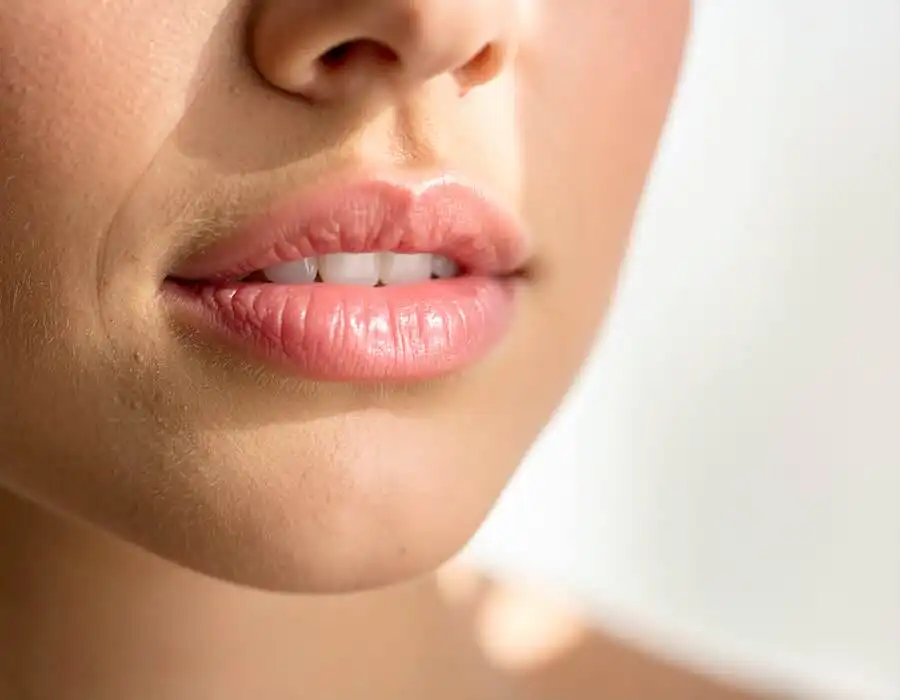
Skin health deserves real attention, if only because ignoring it rarely makes the problem go away on its own. Left untreated, small irritations tend to get worse rather than better. One of the most common issues, especially once the weather turns, is cracked or chapped lips. Breathing through the mouth pulls in air that carries bacteria, which settles on the lips — and that same air strips away natural moisture, leaving lips dry first, then cracked and genuinely uncomfortable as the condition progresses.
Lips are about as prominent a feature as a face has, which makes dry, cracked lips hard to ignore once they show up. The moment the condition appears is the moment to act. Here’s how to bring dry lips back to something soft and healthy again.
Stop Licking Your Lips
It’s a genuinely hard habit to catch, since it often happens without any real awareness. But awareness is exactly the fix — noticing the impulse is most of the battle. The reason it matters: saliva evaporates from the lips faster than natural moisture does, so every lick actually accelerates the drying it’s trying to soothe. It feels helpful in the moment and does the opposite.
Skip the Flavored Lip Balms
A flavored balm creates its own problem: it tempts exactly the licking habit that’s making things worse in the first place. The American Academy of Dermatology goes further, actively advising against flavored and fragranced balms — cinnamon, citrus, mint, and peppermint in particular tend to irritate lips that are already compromised. Quality matters too, not just formulation. Brands that invest care into the whole product — including partnering with specialist suppliers like Dawn Printing for lip balm packaging — tend to be the same brands paying attention to what’s actually inside the tube. It’s a small signal, not the whole story, but it’s rarely a bad one.
Cover Your Mouth in Cold Weather
Cold air is genuinely rough on skin, and lips take more of that damage than most people realize. A scarf or high collar over the mouth on the coldest days makes a real difference — and there’s no shortage of ways to do it while still looking put-together.
Use SPF Year-Round, Not Just in Summer
Sun protection for lips isn’t a summer-only habit — lips lack melanin entirely, which leaves them more vulnerable to UV damage than most of the surrounding skin, in every season. Dermatologists recommend a lip balm with SPF 30 or higher, applied daily regardless of the forecast; winter sun reflecting off snow can do just as much damage as a beach afternoon. SPF 15, once considered adequate, blocks meaningfully less UVB than SPF 30 does.
Stay Hydrated
Drinking enough water is the tip that shows up everywhere for a reason — general hydration and lip condition are genuinely connected. The commonly cited baseline is around 8 glasses (roughly 2 liters) a day, though individual needs vary with activity level, climate, and overall health — the Mayo Clinic has a clearer breakdown of what “enough” actually means for different people. Chronic dehydration is a common, underrated contributor to chapped lips that no amount of balm alone will fix.
Exfoliate Gently — and Not Too Often
Persistently dry lips usually means a layer of dead skin cells is sitting on top of the healthy skin underneath, blocking moisture from doing its job. A simple sugar-and-water paste, rubbed gently rather than scrubbed hard, can lift that layer away. The important caveat: over-exfoliating causes exactly the irritation it’s meant to solve, so once or twice a week is plenty — never enough pressure to cause bleeding or real discomfort. If it hurts, stop.
Use Petroleum Jelly
Petroleum jelly remains one of the simplest, most effective options available — a genuine occlusive that locks moisture in rather than just adding more on top. Applied before bed and left on overnight, it tends to show real results by morning, especially paired with the other habits here.
Conclusion
Healthy lips take a bit of consistency more than any single product. Drink enough water, use a moisturizer or balm regularly, and skip the flavored ones that tempt a lick. Most of all — stop licking, since that single habit undoes most of the rest of this list on its own.
FAQ: Chapped Lips
Q: How long should it take for chapped lips to heal with proper care? A: Most cases improve within 2–3 weeks of consistent care. If lips remain dry and cracked well beyond that despite treatment, it’s worth seeing a dermatologist to rule out an allergy, infection, or an underlying condition.
Q: Can chapped lips be a sign of something other than dry weather? A: Yes — persistent chapping can sometimes signal an allergic reaction, a vitamin deficiency, or a yeast infection at the corners of the mouth. Cracking that doesn’t respond to normal care, or comes with bleeding, swelling, or scaly patches, is worth a dermatologist’s opinion.
Q: Is a tingling or burning feeling from lip balm a sign it’s working? A: No — that sensation is a sign of irritation, not effectiveness. Ingredients like camphor, menthol, and eucalyptus create that tingle but tend to dry lips out further rather than heal them.
Q: Are natural oils like coconut oil or shea butter enough sun protection for lips? A: Not on their own — lab estimates put coconut oil at roughly SPF 7 and shea butter around SPF 6, both well short of the SPF 30 dermatologists recommend. They’re good moisturizers, but not a substitute for an actual SPF-labeled lip balm.