


A good leather jacket has a particular kind of presence. The surface catches light differently as it moves, the structure sharpens a simple outfit, and years of wear can leave subtle creases and changes in tone that make the garment increasingly personal.
Its appeal is not tied to one season or one aesthetic. Motorcycle jackets, café racers, bombers and cleaner minimal designs have moved through decades of fashion while retaining much of their original character. The challenge is less about whether a leather jacket can work in a modern wardrobe and more about finding the right one.
Editor’s note: This article has been updated for 2026 to correct the history of the motorcycle jacket, distinguish between different leather-jacket silhouettes and add more useful advice on fit, materials, styling and long-term wear.
Why the Leather Jacket Has Lasted So Long
Few pieces of outerwear carry so many associations at once. A black motorcycle jacket can suggest rock music and rebellion. A dark brown bomber feels softer and more utilitarian. A streamlined café racer can sit comfortably beside tailored trousers and a fine knit.
Part of that versatility comes from the jacket’s functional origins. Leather outerwear existed long before the modern biker jacket, but an important moment arrived in 1928 when Irving Schott introduced the first modern leather motorcycle jacket. Its asymmetrical closure was designed to provide protection from the wind while riding.
The name Perfecto is sometimes used casually to describe this style, but it is actually a registered Schott NYC trademark, not a generic name for every asymmetrical motorcycle jacket.
Motorcycle culture eventually carried the silhouette far beyond its practical beginnings. Film and music helped turn black leather into a visual shorthand for independence, from mid-century cinema through punk and rock.
1. Start With the Silhouette
The phrase “leather jacket” covers several distinctly different garments, and understanding those shapes makes shopping much easier.
Motorcycle Jacket
This is the familiar rebellious silhouette: asymmetrical zip, pronounced lapels, metal hardware and often a belt at the waist. It carries more visual detail than most leather jackets, which means it can become the focal point of an otherwise simple outfit.
Café Racer
Cleaner and quieter, the café racer usually has a straight front zip, relatively minimal hardware and a small collar or band at the neck. It is one of the easiest styles to integrate into a restrained wardrobe.
Bomber Jacket
The bomber typically has a softer shape with ribbed or elasticated elements around the waist and cuffs. It feels more relaxed than a fitted motorcycle jacket and works particularly well with denim, knitwear and casual trousers.
Leather Blazer or Shirt Jacket
These cleaner interpretations move leather away from its motorcycle associations. The result can feel architectural and understated, especially in chocolate brown, oxblood, charcoal or muted neutral tones.
2. Get the Fit Right Before Thinking About Trends
A beautiful jacket in the wrong proportions rarely gets better with styling.
Check the shoulders first. They should sit naturally unless the design intentionally uses dropped or oversized shoulders. Zip the jacket and move your arms forward. You should be able to move comfortably without excessive pulling across the upper back.
Then look at length. Cropped jackets visually emphasize the waist and work particularly well with higher-rise trousers and skirts. Longer cuts create a straighter line and provide more coverage.
If you expect to wear sweaters underneath, try the jacket with one before buying it. A perfect T-shirt fit may become uncomfortably tight once autumn arrives.
3. Black Is Classic, but Brown Can Be Easier
Black remains the obvious reference point. It creates strong contrast with white, grey and denim and retains the visual connection to motorcycle and rock culture.
Brown changes the mood. Deep espresso, tobacco and warm chocolate leather pair naturally with cream, navy, olive, faded denim and earthy tailoring. The result tends to feel softer and less severe.
Other shades can work too. Burgundy and dark green have enough depth to function almost like neutrals, while lighter tan and cream leather can make the silhouette feel markedly different.
If you are buying one jacket and want maximum versatility, choose the color already represented throughout your wardrobe rather than automatically reaching for black.
4. Real and Synthetic Leather Are Not the Same Material
The old term “poly skin” is too vague to be useful when shopping. What is commonly marketed as faux, vegan or synthetic leather can be produced using different materials and constructions, frequently involving polyurethane or PVC-based coatings.
Real leather behaves differently. Depending on the hide, tanning, thickness and finish, it can soften and develop visible character through wear. It can also require a larger initial investment.
Synthetic alternatives can offer a lower entry price and suit people who do not want animal-derived material, but quality varies considerably. Look beyond the front of the garment. Examine the backing material, seams, lining, zippers and areas around pockets and cuffs where repeated movement will reveal weak construction first.
Do not assume that either material is automatically the more responsible choice based on a single label. Manufacturing methods, raw materials, durability, chemical processing and how long the garment remains in use all matter.
5. Quality Is More Than the Price Tag
An expensive jacket is not necessarily a good jacket, and an affordable one is not automatically disposable.
Run your hands along the seams. Open and close the zippers. Check how the lining has been attached around the cuffs and hem. Look inside the pockets. Move your arms and listen to how the garment behaves.
On leather jackets, hardware contributes heavily to both appearance and longevity. A substantial zip that runs smoothly, securely attached snaps and neatly finished seams are more meaningful indicators than decorative branding.
Some heritage jackets remain deliberately substantial. Schott’s current 618 Perfecto motorcycle jacket, for example, uses heavyweight steerhide, an asymmetrical closure, zippered cuffs and a bi-swing back intended to allow movement. A fashion-oriented leather jacket may use much softer and lighter material.
Neither approach is inherently better. They serve different wardrobes.
6. Keep the Styling Simple
Leather already contributes texture, subtle shine and structure. It rarely needs much help.
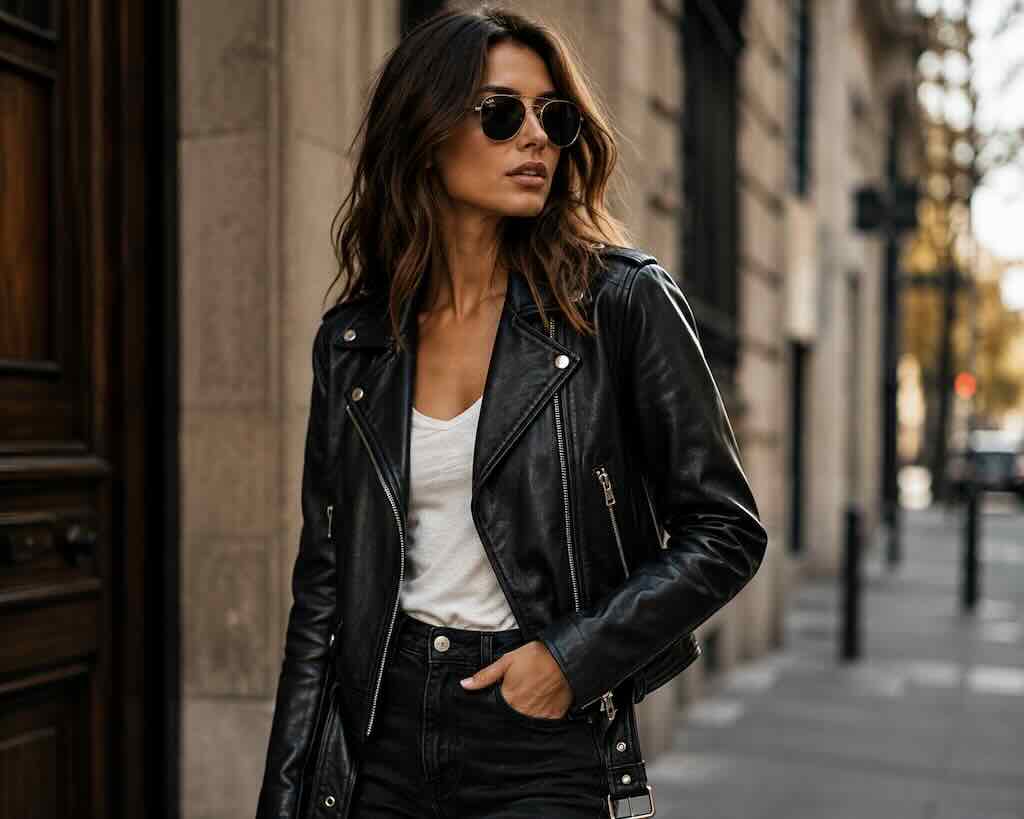
For an uncomplicated everyday combination, wear a black leather jacket with a white or grey T-shirt, straight denim and simple sneakers or boots. The shapes are familiar enough that the quality and proportion of each piece become more noticeable.
For something softer, combine brown leather with a fine knit, relaxed trousers and suede or leather footwear. A leather jacket can also provide useful contrast over a fluid dress or skirt, where the firmness of the outer layer meets softer movement underneath.
Divine’s guide to making your wardrobe feel fresh follows a similar principle: familiar clothes become more interesting when texture and proportion change.
7. A Leather Jacket Can Work With Tailoring
Leather does not have to mean ripped denim and heavy boots.
A minimal café racer over a fine knit and tailored trousers creates a clean contrast between formal and casual materials. A restrained leather blazer can perform much the same role as conventional tailoring while introducing a richer surface.
The more detailed the jacket becomes, the simpler the surrounding pieces can be. An asymmetrical motorcycle jacket with belts, snaps and multiple zippers already has considerable visual energy. Give it room.
This is also where footwear matters. Divine’s guide to choosing shoes for different occasions can help balance the rest of the outfit.
8. Do Not Buy Decoration You Will Tire of Quickly
Studs, embroidery, patches, metallic finishes and exaggerated hardware periodically return to fashion. There is nothing wrong with any of them if that is genuinely your style.
For a jacket intended to stay in the wardrobe for years, however, consider how much of its appeal depends on a particular trend.
A relatively clean design gives you more freedom to change everything around it. Denim becomes wider or narrower. Shoes change. Hemlines move. The jacket remains.
That does not make the classic option boring. Leather has enough natural variation in grain, texture and wear to develop character without additional ornament.
9. Take Care of the Jacket You Already Own
Before replacing an older leather jacket, look carefully at what it actually needs.
Minor wear can be part of the material’s appeal. Dryness, stains, damaged hardware or torn lining are different matters and may be repairable. Follow the manufacturer’s care instructions because treatments suitable for one leather or finish may be inappropriate for another.
Store the jacket on a supportive hanger with enough room around it rather than compressing it into an overcrowded wardrobe. Keep it away from prolonged direct sunlight and sources of intense heat.
If a valuable jacket needs substantial cleaning, stain treatment or repair, a professional familiar with leather garments is safer than experimenting with household products.
10. The Best Leather Jacket Is the One That Fits Your Life
A heavyweight motorcycle jacket can be magnificent and still be the wrong purchase for someone who wants light everyday outerwear. A fashion-focused faux-leather bomber might look excellent but make little sense for someone specifically seeking a garment that develops the patina associated with natural leather.
Think about where you will actually wear it. Consider your climate, the layers underneath, the colors already in your wardrobe and whether you prefer structured or relaxed clothing.
The most useful wardrobe purchases tend to work with clothes you already own. Divine’s guide to navigating fashion with confidence explores why knowing your own preferences is often more useful than chasing every new direction.
A Simple Leather Jacket Buying Checklist
- Silhouette: Decide between motorcycle, café racer, bomber or a more tailored shape.
- Fit: Check shoulders, sleeves and movement with the jacket both open and closed.
- Layers: Try it over the clothes you expect to wear underneath.
- Material: Read the composition label rather than relying on marketing terminology.
- Construction: Inspect seams, lining, pockets, snaps and zippers.
- Color: Choose a shade that works with your existing wardrobe.
- Longevity: Ask whether you can imagine wearing the design after the current trend has passed.
Conclusion
A leather jacket lasts stylistically because it does not need much around it. Denim, a plain knit, tailored trousers or a simple dress can all change its character without erasing it.
The strongest versions also improve through familiarity. The sleeves soften. The shape settles. Natural leather may acquire creases and variations in tone where hands, elbows and weather have repeatedly touched it.
Choose the silhouette carefully, pay attention to construction and buy for the wardrobe you actually have. The result can be less a seasonal fashion purchase than a piece you simply keep reaching for.
FAQ: Leather Jackets
Are leather jackets still in style in 2026?
Yes. Leather outerwear continues to appear in many forms, but its usefulness is broader than any single seasonal trend. Motorcycle jackets, bombers, café racers and cleaner leather silhouettes can all work in contemporary wardrobes.
What color leather jacket is most versatile?
Black is easy to combine and creates a sharper look, while dark brown can feel softer with denim, cream, navy, olive and other earth tones. The most versatile choice is ultimately the shade that already complements most of your wardrobe.
Should a leather jacket fit tightly?
That depends on the design. Traditional motorcycle jackets can have a close fit, while bombers and contemporary fashion styles may intentionally be relaxed. You should still be able to move comfortably and wear the layers you intend to use underneath.
Is faux leather the same as real leather?
No. Synthetic leather and animal-derived leather have different structures and can behave differently as they age. Synthetic products also vary considerably according to their coating, backing material and construction, so check the composition label before buying.
Is an expensive leather jacket worth buying?
It can be, but price alone does not establish quality. Fit, material, construction, hardware, repairability and how frequently you expect to wear the jacket are better measures of whether the purchase makes sense.