Home security doesn’t have to begin with an expensive alarm system or a house full of cameras. Some of the most useful improvements are surprisingly simple: better locks, smarter lighting, clearer sightlines and everyday habits that make it harder for someone to enter unnoticed.
- 1. Start With Your Doors
- 2. Check Every Window
- 3. Don’t Hide Your Home Behind the Landscaping
- 4. Use Outdoor Lighting Strategically
- 5. Consider a Video Doorbell or Security Camera
- 6. Make an Empty Home Look Less Empty
- 7. Don’t Forget the Garage and Outbuildings
- 8. Think Before Hiding a Spare Key
- 9. Decide Whether You Need an Alarm System
- 10. Make Security Part of Your Routine
- Don’t Make Your Home Harder to Escape
- Do a Home Security Walk-Through
- FAQ: Making Your Home More Secure
- What should I improve first for better home security?
- Are security cameras worth having?
- Is a video doorbell enough for home security?
- Should I leave lights on when I’m away?
- A Safer Home Starts With the Basics
The goal isn’t to turn your home into a fortress. It’s to identify the easy opportunities an intruder might notice and quietly remove them, while making sure everyone inside can still get out quickly in an emergency.
Whether you’re improving the security of a house you’ve lived in for years or checking a new property, these ten practical steps are a good place to start.
1. Start With Your Doors
Exterior doors are one of the first places to assess because a good lock isn’t much help if the surrounding door, frame or hardware is weak.
Check that exterior doors close properly, locks operate smoothly and hinges and frames are in good condition. Damaged frames, loose hardware and doors that no longer sit correctly should be repaired rather than ignored.
Don’t forget less obvious entrances either. Side doors, garage access doors and doors leading from a garage into the house deserve the same attention as the front entrance.
2. Check Every Window
Walk around your home and look at the windows from outside. Which ones are easy to reach? Are any routinely left open? Do all of their locks still work?
Repair broken or unreliable window locks and make closing accessible windows part of your routine when leaving the house or going to bed.
If you’re replacing old windows anyway, security can be considered alongside insulation, comfort and energy efficiency. Divine’s guide to how windows influence home comfort and energy expenses explores some of those wider considerations.
3. Don’t Hide Your Home Behind the Landscaping
Privacy is wonderful until the same hedge that shields your patio also gives someone a concealed place to stand beside a door or ground-floor window.
Take a look at shrubs, trees, fences and other landscaping around entrances. You don’t necessarily need to remove them, but keeping vegetation maintained can improve visibility around vulnerable parts of the property.
There’s a balance to find. Your outdoor space should still feel private and welcoming without creating unnecessary hiding places immediately beside entry points.
4. Use Outdoor Lighting Strategically
A dark side entrance or poorly lit path can make it difficult for you to see what’s happening around your own property.
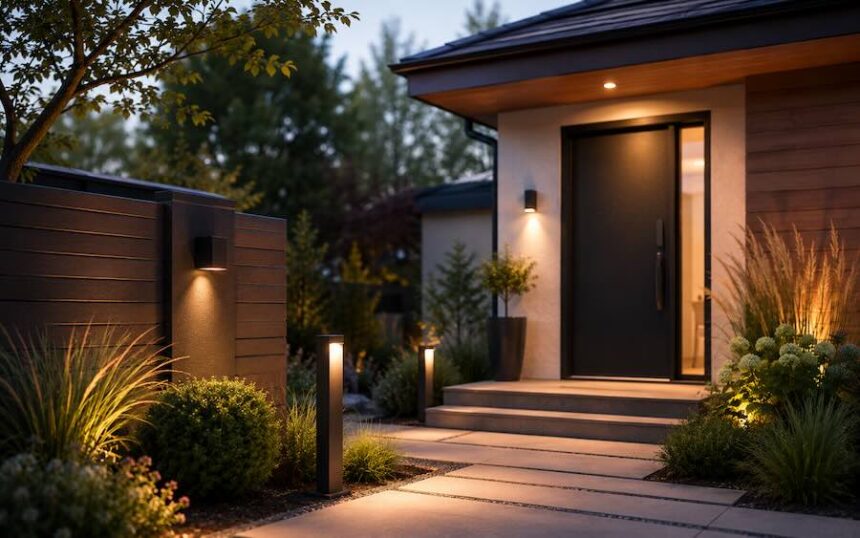
Outdoor lighting around entrances, paths, garages and other frequently used areas improves visibility after dark. Motion-activated lights can be useful in places where you don’t want illumination running continuously.
More light isn’t automatically better, though. Position fixtures where they’re actually useful rather than flooding the entire property with unnecessarily bright lighting.
5. Consider a Video Doorbell or Security Camera
Video doorbells have made basic home monitoring considerably more accessible. They can let you see who is at the door, receive activity notifications and check an entrance when you’re away from home.
For broader coverage, exterior cameras can monitor other important areas such as driveways, garages and secondary entrances.
Before installing cameras, think carefully about placement. The objective should be monitoring your own property rather than unnecessarily recording neighboring homes or private spaces.
Also check how recordings are stored, how long they’re retained, what security protections the manufacturer provides and whether important features require a subscription.
6. Make an Empty Home Look Less Empty
If you’re traveling, avoid making your absence unnecessarily obvious.
Timers or smart lighting can switch selected lamps on and off in the evening. Arrange for mail and deliveries to be handled, and consider asking someone you trust to check the property during longer trips.
Be thoughtful about announcing travel publicly too. Posting every detail of a trip in real time can reveal more about an empty home than you intended.
7. Don’t Forget the Garage and Outbuildings
Garages, sheds and other outbuildings are easy to overlook because they’re separate from the main living space.
Yet they may contain bicycles, tools, gardening equipment and other valuable items. Tools stored outside the house can also potentially provide access to equipment you would rather keep secured.
Check locks, doors and windows on these structures and avoid leaving garage doors open longer than necessary.
8. Think Before Hiding a Spare Key
The flowerpot beside the door may be convenient, but obvious hiding places are obvious to more than the people who live there.
If someone genuinely needs emergency access to your home, consider leaving a spare key with a trusted person rather than placing it in a predictable location outside.
Smart locks and secure key-management options can provide alternatives, but they introduce their own considerations, including batteries, account security and what happens if the technology fails.
9. Decide Whether You Need an Alarm System
An alarm system can add another layer of security, but there isn’t one setup that’s right for every household.
Some systems are professionally monitored, while others send notifications directly to your phone. Before choosing one, compare installation costs, monthly fees, contract terms, sensors, backup options and how the system behaves during internet or power interruptions.
Smart-home compatibility can be convenient, but don’t buy a complicated system simply because it has the longest feature list. The best security system is one your household understands and will actually use.
10. Make Security Part of Your Routine
Technology can help, but everyday habits still matter.
- Lock exterior doors when appropriate.
- Close accessible windows before leaving home.
- Don’t leave keys visible near doors or windows.
- Bring packages inside rather than leaving them outside for long periods.
- Check garages and secondary entrances before going away.
- Periodically test cameras, alarms, lights and other security equipment.
A sophisticated security setup isn’t particularly useful if a back door is routinely left unlocked.
Don’t Make Your Home Harder to Escape
There’s an important difference between making it difficult for someone to enter your home and making it difficult for you to leave it.
Security improvements should always account for emergency escape. Household members should know how to unlock and use exits quickly, and security devices shouldn’t create unnecessary obstacles during a fire or another emergency.
If you’re considering security bars, specialized locks or substantial physical reinforcement, make emergency egress part of the decision rather than an afterthought.
Do a Home Security Walk-Through
One of the simplest ways to spot weaknesses is to walk around your property as though you’ve never seen it before.
Do it once during daylight and again after dark.
Look for poorly lit entrances, broken locks, open gates, overgrown shrubs, accessible windows and expensive items visible from outside. Check whether your house number can be clearly seen by emergency responders as well.
You may discover that the most useful improvements aren’t expensive at all.
FAQ: Making Your Home More Secure
What should I improve first for better home security?
Start with the basics: check exterior doors, window locks, garage access and lighting around entrances. Fix obvious weaknesses before spending money on more sophisticated technology.
Are security cameras worth having?
They can be useful for monitoring entrances and other areas of your property, particularly when you’re away. Compare camera placement, recording storage, privacy features, subscriptions and account security before choosing a system.
Is a video doorbell enough for home security?
A video doorbell can provide useful visibility around the front entrance, but it should be considered one layer rather than a complete security strategy. Good locks, secure windows, lighting and sensible everyday habits still matter.
Should I leave lights on when I’m away?
Instead of leaving the same lights switched on continuously, timers or smart lighting can create a more natural pattern while you’re away. It’s also worth arranging for mail, packages and other obvious signs of absence to be managed.
A Safer Home Starts With the Basics
It’s easy to approach home security as a shopping list of cameras, alarms and smart devices. In reality, the strongest starting point is much simpler.
Make sure doors and windows work properly. Keep entrances visible. Light the places that need lighting. Pay attention to garages and secondary access points. Build simple security checks into your normal routine.
Then add technology where it solves a genuine problem.
The aim isn’t to make your home feel defensive. It’s to make it feel comfortable, considered and secure.