




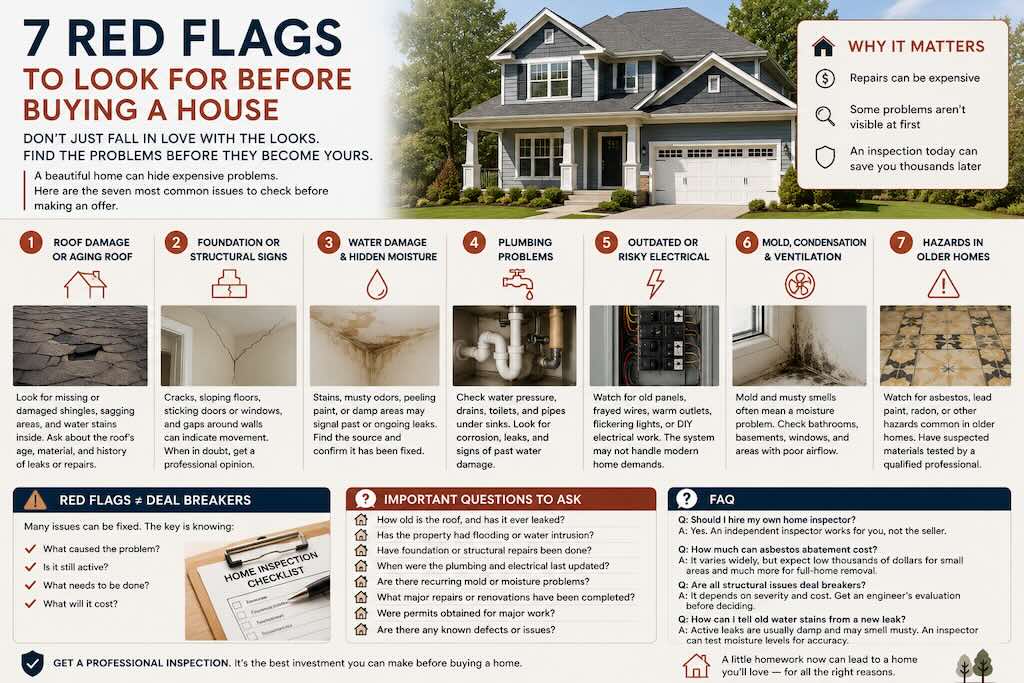
A house can look perfect during a viewing and still be hiding problems that become expensive surprisingly quickly. Fresh paint, beautiful floors and a renovated kitchen are easy to notice. An aging roof, recurring moisture problem or outdated electrical system usually requires a closer look.
That doesn’t mean every crack, stain or old fixture should send you running for the door. The important questions are what caused the problem, whether it’s still active and how much it could cost to put right.
Before making an offer, these are seven house red flags worth investigating — and the questions that can help you distinguish an ordinary maintenance issue from a potentially expensive surprise.
1. Roof Damage or an Aging Roof
The roof is one of the first places to investigate because problems overhead rarely stay there. Water entering through a damaged roof can eventually affect insulation, ceilings, walls and other parts of the home.
You don’t need to climb onto the roof yourself. From ground level, look for obviously missing or damaged shingles, sagging areas and visible deterioration. Inside, staining on ceilings or around the attic can warrant further investigation.
Age matters too. Ask when the roof was installed, what material was used and whether there have been previous leaks or repairs. A roof doesn’t automatically become defective when it reaches a particular age, but knowing where it sits in its expected lifespan can help you anticipate a major future expense.
If there are concerns, a qualified roofer can provide a more detailed assessment than a buyer can make during a viewing.
2. Foundation or Structural Warning Signs
A small crack in a wall doesn’t automatically mean a house has foundation trouble. Buildings move and materials change over time, and some cracking can be cosmetic.
What deserves more attention is a pattern of warning signs.
- Large or widening cracks
- Floors that noticeably slope or feel uneven
- Doors and windows that repeatedly stick or no longer sit squarely in their frames
- Visible movement or separation around walls and ceilings
- Exterior cracks or movement around the foundation
None of these observations alone proves that a house is structurally unsound. They are reasons to ask questions.
If a home inspector identifies signs of possible structural movement, a structural engineer may be needed to determine what’s actually happening and whether repairs are necessary.
3. Water Damage and Hidden Moisture
Water is one of the most important things to look for when viewing a house because moisture problems can originate almost anywhere: the roof, plumbing, basement, windows, bathrooms, exterior drainage or appliances.
Obvious water stains deserve attention, but so do less dramatic clues.
- Musty odors
- Peeling or bubbling paint
- Discoloration on ceilings or walls
- Warped flooring
- Damp areas in a basement or crawl space
- Soft or damaged material around windows, sinks and bathrooms
A stain doesn’t necessarily mean there’s an active leak. It may be evidence of an old problem that was properly repaired. The important thing is establishing where the water came from and whether the underlying cause was fixed.
This is also why covering a stain with fresh paint isn’t particularly reassuring without an explanation of what caused it.
4. Plumbing Problems
A beautiful bathroom tells you very little about the condition of the plumbing behind it.
During a viewing, simple observations can reveal potential problems. Turn on faucets, check how quickly sinks drain, flush toilets and look underneath accessible sinks for signs of leaks or previous water damage.
Low water pressure, slow drains, corrosion, unusual noises or persistent odors don’t necessarily mean the plumbing system needs replacing, but they deserve investigation.
Older homes may also contain plumbing materials that are approaching the end of their useful life or are no longer commonly used in modern installations. The significance depends on the material, condition, local building practices and insurance requirements.
If an inspection raises concerns, getting an estimate from a plumber before proceeding can turn an unknown expense into something you can actually factor into the purchase decision.
5. An Electrical System That Needs Updating
Electrical problems aren’t always as visually obvious as a leaking ceiling, which makes the age and condition of the system especially important.
Look for damaged outlets, scorch marks, loose switches, exposed wiring and obvious DIY electrical work. Frequently tripping breakers or flickering lights can also justify further investigation.
An older electrical system isn’t automatically unsafe simply because of its age. The concern is whether it has been properly maintained and whether it can safely support the demands of a modern household.
This becomes particularly relevant if you’re planning renovations, installing major appliances, adding air conditioning or turning part of the home into an office.
A general home inspection may identify warning signs, but a licensed electrician is the appropriate professional for a detailed assessment of questionable wiring, panels or electrical capacity.
6. Mold, Condensation and Poor Ventilation
Mold is often discussed as though it’s an isolated problem, but visible growth can be a symptom of something else that needs attention.
A leaking pipe, roof problem, persistent condensation, inadequate bathroom ventilation or moisture entering a basement can all create conditions where mold develops.
Look around bathrooms, window frames, basements, utility areas and other places where moisture tends to collect. Persistent condensation and strong musty odors are also worth noting even when obvious mold isn’t visible.
If a moisture problem exists, cleaning the visible surface without addressing its source is unlikely to provide a lasting solution.
Ventilation can influence everyday comfort too. Divine’s guide to how windows influence home comfort and energy expenses explores another part of the relationship between the building envelope and the way a home actually feels to live in.
7. Potential Hazards in Older Homes
Older houses can have enormous character, but their age can also mean materials and building practices that require additional investigation.
What to consider depends heavily on when and where the property was built. Potential concerns can include asbestos-containing materials, lead-based paint, radon and other location-specific environmental hazards.
Asbestos is particularly important to approach correctly. It was historically incorporated into numerous building products, and suspected material shouldn’t be cut, sanded, drilled or otherwise disturbed simply to find out what it is.
Finding asbestos-containing material also doesn’t automatically mean an entire house requires immediate removal. The condition and location of the material, whether it is likely to be disturbed and applicable local regulations all matter. A qualified professional can advise on testing and appropriate management or removal.
The same principle applies more broadly to older-home hazards: identify what you’re dealing with before deciding what needs to happen next.
Red Flags That Don’t Automatically Mean You Should Walk Away
Finding a problem during an inspection isn’t necessarily bad news.
In fact, finding it before buying is considerably better than discovering it afterward.
An aging roof, outdated electrical panel, previous water leak or even a structural repair may be manageable when you understand exactly what you’re buying.
Instead of immediately asking whether a problem is a dealbreaker, ask four questions:
- What caused it?
- Is the problem still active?
- What needs to be done to correct it?
- What is a realistic cost for the repair?
A documented repair completed correctly may be far less concerning than a smaller problem whose cause nobody can explain.
Questions to Ask Before Making an Offer
The viewing is only one source of information. Depending on local disclosure requirements and the information available for the property, ask the seller or agent about the home’s history too.
- How old is the roof, and has it ever leaked?
- Has the property experienced flooding or significant water intrusion?
- Have there been foundation or structural repairs?
- When were the plumbing and electrical systems last substantially updated?
- Have there been recurring mold or moisture problems?
- What major repairs or renovations have been completed?
- Were permits required and obtained for major work where applicable?
- Are there known defects or issues that haven’t yet been repaired?
The rules governing what sellers must disclose vary by location, so don’t assume that the absence of a disclosed problem proves one never existed.
Why a Home Inspection Still Matters
A viewing can help you spot obvious warning signs, but it isn’t a substitute for a professional home inspection.
A qualified inspector can evaluate accessible parts of the home’s major systems and identify areas that deserve closer attention. Depending on what they find, they may recommend bringing in a specialist such as a roofer, plumber, electrician, structural engineer, pest professional or environmental specialist.
That distinction matters. A general inspector isn’t necessarily expected to diagnose every structural, electrical or environmental problem in detail. Their job can include identifying when something requires expertise beyond the general inspection.
Spending money investigating a potential problem before buying can feel frustrating. Discovering a major repair after the keys are yours tends to feel considerably worse.
Look Beyond the Beautiful Kitchen
It’s easy to fall for a house because of the things designed to be noticed: beautiful flooring, fresh paint, a renovated kitchen or the perfect amount of natural light.
The less exciting parts of the house deserve just as much attention.
Roof condition, moisture, plumbing, electrical systems and structural integrity can influence the true cost of a home long after the excitement of moving in has disappeared.
You don’t need to become a building expert before buying a house. You simply need to recognize when something deserves another question — and know when that question should be answered by a professional.
FAQ: Red Flags When Buying a House
What are the biggest red flags when buying a house?
Potential structural movement, active water intrusion, serious roof deterioration, significant electrical or plumbing problems and unexplained moisture are among the issues worth investigating carefully. The severity and repair cost matter more than simply finding that a problem exists.
Are cracks in walls a reason not to buy a house?
Not necessarily. Some cracks are cosmetic or related to ordinary movement, while others can indicate a more significant issue. Large, widening or recurring cracks — particularly when accompanied by sloping floors, sticking doors or other signs of movement — deserve professional assessment.
Should I hire my own home inspector?
Where the buying process allows it, choosing an independent qualified inspector gives you an assessment performed on your behalf. Inspection practices, licensing requirements and contractual rights vary by location, so check the rules that apply where you’re buying.
Should I buy a house that previously had water damage?
Previous water damage isn’t automatically a reason to reject a property. Find out what caused the water intrusion, whether the underlying problem was corrected, what repairs were completed and whether there is evidence of continuing moisture.
Does asbestos have to be removed before buying a house?
Not necessarily. The appropriate response depends on the material’s condition, location, likelihood of disturbance and local regulations. Suspected asbestos-containing materials should be assessed by qualified professionals rather than disturbed or removed as a DIY project.
Can you negotiate after a home inspection finds problems?
That depends on the purchase contract and local real estate rules. Depending on the circumstances, inspection findings may lead buyers to request repairs, renegotiate terms or reconsider the purchase. Your real estate or legal professional can explain the options available in your transaction.