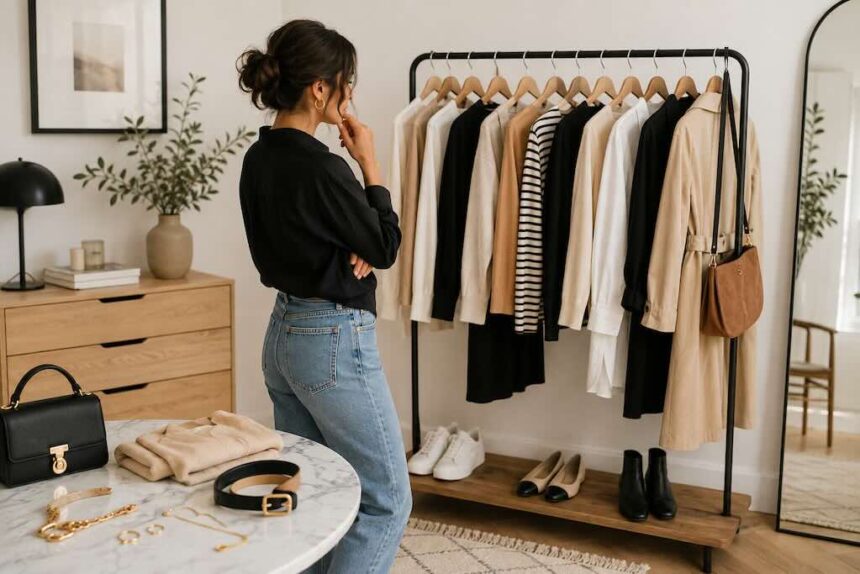
You don’t need a dramatic haircut, an entirely new wardrobe or a carefully curated shopping haul to change the way you dress. Sometimes a style reset begins with something much smaller: realizing that the clothes in your wardrobe no longer feel quite like you.
Personal style isn’t supposed to remain frozen. Jobs change. Bodies change. Daily routines change. The places we go and the people we spend time with change too. It makes sense that the clothes we once reached for instinctively can eventually start feeling disconnected from the person wearing them.
If you’re craving something different, resist the urge to replace everything. A more interesting wardrobe often comes from understanding what you already own — and making a few deliberate changes from there.
Start With the Clothes You Actually Wear
Forget what you think your style is for a moment and look at the evidence.
Which jeans are constantly waiting to be washed? Which jacket gets thrown over almost everything? Which shoes make it out of the wardrobe while three supposedly more exciting pairs gather dust?
Those repeat pieces reveal more about your personal style than a mood board ever could. Look for patterns in silhouette, colour, fabric and proportion. Perhaps you consistently choose wide-leg trousers over skinny jeans, structured jackets over cardigans, or neutral colours with one unexpected accent.
Instead of trying to invent a completely different identity, use those preferences as the foundation of whatever comes next.
Identify What’s Making Your Wardrobe Feel Stale
Sometimes we assume we’re bored with our clothes when we’re actually bored with how we’re combining them.
Try your familiar pieces in unfamiliar pairings before buying replacements. Wear the tailored trousers you normally save for work with sneakers and a simple knit. Put an oversized shirt over a dress. Try the evening jacket with denim. Roll a sleeve, change a belt or swap the shoes.
A surprisingly small styling adjustment can change the character of clothes you’ve owned for years.
Find the Missing Piece
Once you’ve experimented with what you own, the gaps become easier to see.
Maybe your wardrobe doesn’t need ten new pieces. Maybe it needs one excellent blazer. A beautifully cut pair of trousers. Boots that work with both dresses and denim. A bag that makes simple outfits feel intentional.
These are more useful purchases because they connect clothes already hanging in your wardrobe rather than creating another collection of isolated pieces.
Borrow From Trends Without Becoming Them
Trends are most useful as invitations to experiment, not instructions for rebuilding your wardrobe every season.
If a particular colour suddenly feels exciting, introduce it through a knit, scarf or bag. If you’re drawn to a new silhouette, try one piece before buying three versions of it. Accessories, jewellery, shoes and beauty choices can shift the mood of an outfit without demanding a major investment.
The question isn’t whether something is fashionable. It’s whether you can imagine yourself wanting to wear it after the novelty disappears.
Shop Your Wardrobe Before the Shops
There’s another reason to slow down before replacing half your wardrobe. Clothing carries a substantial environmental footprint, and the European Environment Agency points to longer use, reuse and a move away from fast-fashion consumption as important parts of reducing the impact of textiles.
That doesn’t mean you should feel guilty about buying something new. It means buying with a little more intention can be good for both your wardrobe and your wallet. A piece you genuinely love and wear repeatedly is much more valuable than five impulse purchases that never quite make it out of the closet.
Second-hand shops, resale platforms and clothing swaps can also be surprisingly good places to experiment. They allow you to try a different silhouette, colour or designer without automatically defaulting to another brand-new purchase.
Create a Few Reliable Outfit Formulas
People who appear effortlessly well dressed aren’t necessarily inventing a completely new outfit every morning. Often, they’ve simply discovered combinations that reliably work.
Perhaps yours is wide-leg trousers, a fitted top and an oversized jacket. Or straight-leg jeans, a crisp shirt and loafers. Maybe it’s a midi dress, boots and a long coat.
Having a handful of these formulas doesn’t make your wardrobe boring. It gives you a framework that can change through colour, texture, accessories and proportion.
Let Some Clothes Leave
A wardrobe can become difficult to understand when it’s crowded with clothes belonging to previous versions of ourselves.
You don’t have to conduct a ruthless clear-out. Start with pieces that don’t fit comfortably, haven’t been worn in years or repeatedly lose the competition whenever you’re deciding what to wear.
Sell, donate, repair or responsibly recycle what you can. More importantly, notice why those pieces stopped working. That information can prevent you from buying their replacements in a slightly different colour.
Give Your Style Time to Evolve
The most convincing personal style rarely arrives as a perfectly planned transformation. It develops slowly through wearing things, getting combinations wrong, discovering unexpected favourites and becoming increasingly comfortable ignoring what doesn’t suit you.
So don’t rush to build your “new wardrobe.” Wear what you have differently. Add something only when you understand what it’s going to contribute.
Your wardrobe doesn’t need to look completely new. It just needs to start feeling like yours again.