




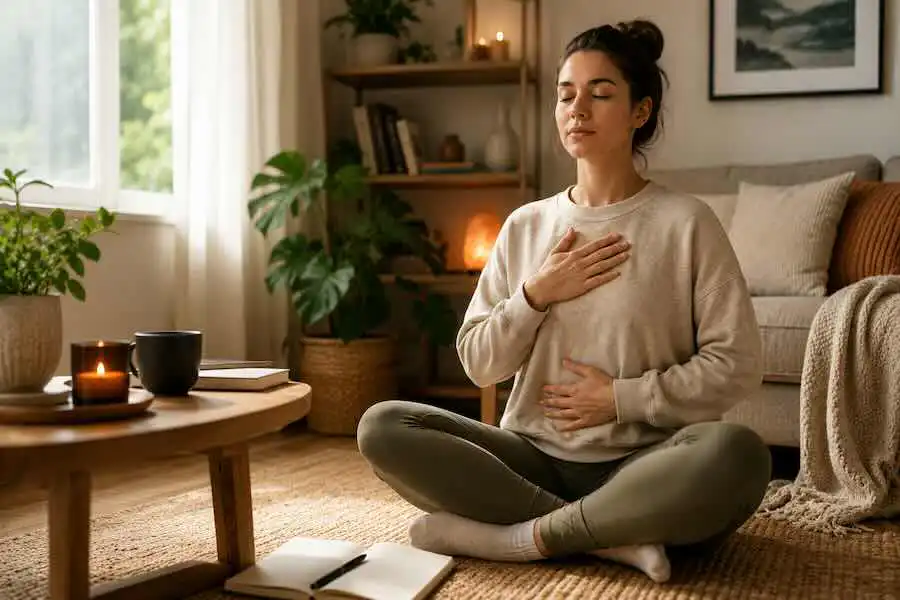
Stress rarely arrives with perfect timing. It appears in the bright glare of an overloaded inbox, during a difficult conversation, or at 2 a.m. when tomorrow’s problems suddenly seem much larger than they did at dinner. You cannot remove every source of pressure from life, but you can become more deliberate about what happens next.
That distinction matters. Stress is a normal response to challenging situations, and the goal is not to engineer a permanently calm existence. Instead, useful stress management creates small points of control: ways to settle your body, protect your attention and recognize when ordinary pressure has become something that deserves additional support.
Start With the Next Breath, Not the Entire Problem
When tension rises, solving everything immediately can feel impossible. Breathing gives you something smaller to work with.
Find a comfortable position and allow your breathing to become slower and steadier for a few minutes. You do not need elaborate equipment, perfect silence or a meditation room. It can happen at your desk, in a parked car, on the sofa or before walking into a difficult meeting.
The aim is not to pretend the stressful situation has disappeared. It is to create a little space between the sensation of being overwhelmed and your response to it. The National Center for Complementary and Integrative Health includes deep breathing among relaxation techniques that may help produce the body’s relaxation response.
If focusing intensely on your breathing makes you uncomfortable, try another grounding activity instead: notice the physical sensation of your feet against the floor, take a short walk, or quietly identify objects around the room. Stress management does not need to look identical for everyone.
Put Something Enjoyable Back Into the Week
A calendar filled exclusively with obligations eventually starts to feel like a room without windows.
Hobbies interrupt that rhythm. Reading twenty pages of a novel, cooking without rushing, working on a small creative project, gardening, playing music or taking a bike ride can shift attention away from the demands that have occupied it all day.
What you choose matters less than how it feels. A useful hobby should not become another performance metric. You do not need to monetize it, master it, document it online or become unusually good at it. Sometimes pleasure is enough of a purpose.
This is also where routine can help. Rather than waiting until you magically have spare time, protect a small piece of the week for something restorative. Divine’s guide to staying healthy with minimal effort explores the value of making manageable habits part of everyday life.
Separate What You Can Change From What You Cannot
Some stress comes from circumstances beyond your immediate control. Other stress is quietly amplified by patterns you can change.
Your phone is a good place to look. If twenty minutes of social media regularly becomes an hour of arguments, alarming headlines and comparison, reducing that exposure may give your attention some breathing room. Turn off unnecessary notifications. Move distracting apps away from your home screen. Establish periods when the phone stays somewhere else.
The same principle applies offline. A recurring disagreement may need a respectful conversation. An overloaded schedule may need a firm no. A chaotic morning might improve by preparing a few things the previous evening.
None of these changes controls other people’s behavior or removes serious external problems. They simply identify where your own decisions can reduce unnecessary pressure.
Sometimes the Best Stress Strategy Is Physical
When your thoughts have been circling the same problem for an hour, changing location can be surprisingly useful. Step outside. Walk around the block. Stretch. Put on music and move around the room.
Physical activity has benefits that extend well beyond fitness. The Centers for Disease Control and Prevention notes that regular physical activity can support brain health and reduce short-term feelings of anxiety.
This does not mean an exhausting workout is required whenever life becomes difficult. A ten-minute walk beneath trees, with cold air against your face and your phone left in your pocket, may be the more realistic intervention.
Protect the Basics When Life Gets Busy
Stress has a way of dismantling the habits that make stressful periods easier to tolerate. Bedtime gets later. Meals become irregular. Movement disappears. Caffeine creeps further into the afternoon.
Rather than attempting a complete wellness reset, protect a few foundations. Maintain a reasonably consistent sleep schedule when possible. Eat regularly. Make space for movement and time outdoors. Keep contact with people whose company leaves you feeling steadier rather than depleted.
These habits will not solve a financial problem, difficult workplace or complicated relationship. They can, however, give you a stronger platform from which to deal with one.
Know When Self-Care Is No Longer Enough
There is an important boundary between everyday stress management and trying to carry persistent distress alone.
If stress is regularly interfering with sleep, work, relationships or your ability to manage everyday life, consider speaking with a qualified healthcare or mental health professional. The National Institute of Mental Health provides information about stress and anxiety, including signs that professional help may be appropriate.
Seeking support does not mean the smaller strategies failed. Breathing exercises, hobbies, boundaries and movement are tools. professional care is another tool, and sometimes it is the appropriate one.
For the Next Difficult Day
You do not need to wait until life becomes quiet to feel more grounded. Quiet may not be arriving anytime soon.
Instead, build small interruptions into the noise. Slow your breathing. Step outside. Protect an hour for something you enjoy. Change the parts of your routine that repeatedly drain you, and leave room for other people to help when the pressure becomes too heavy.
Stress management is less about creating a life without difficult days and more about knowing what you can reach for when one arrives.
Common Questions About Managing Stress
What can I do when I feel stressed immediately?
Try reducing the situation to one manageable action. Slow your breathing, step away from the immediate trigger if possible, take a short walk or use a grounding technique. Once the initial intensity settles, decide what practical action the situation actually requires.
Can hobbies really help with stress?
Enjoyable activities can provide psychological distance from responsibilities and create time for relaxation, creativity or social connection. Choose activities you genuinely enjoy rather than turning leisure into another obligation.
Can social media make stress worse?
It can for some people, particularly when use exposes them repeatedly to conflict, distressing information or comparison. Pay attention to how you feel during and after using particular platforms and adjust your habits accordingly.
When should I get professional help for stress?
Consider professional support when stress feels persistent, becomes difficult to manage, or begins interfering with sleep, work, relationships or everyday functioning. A healthcare professional can help assess what is happening and discuss appropriate support.