




Home maintenance is rarely exciting, but it becomes considerably more expensive when it’s ignored. A clogged gutter can contribute to water problems, a small plumbing leak can quietly damage cabinets or flooring, and neglected caulk around windows can make a home less comfortable and efficient.
The easiest way to stay ahead of those problems is to stop treating home maintenance as one enormous annual project. Spread the work across the year instead, tackling the jobs that make the most sense for each season.
This seasonal home maintenance checklist covers the essential tasks worth checking throughout the year, along with a few things every homeowner should keep an eye on regardless of the month.
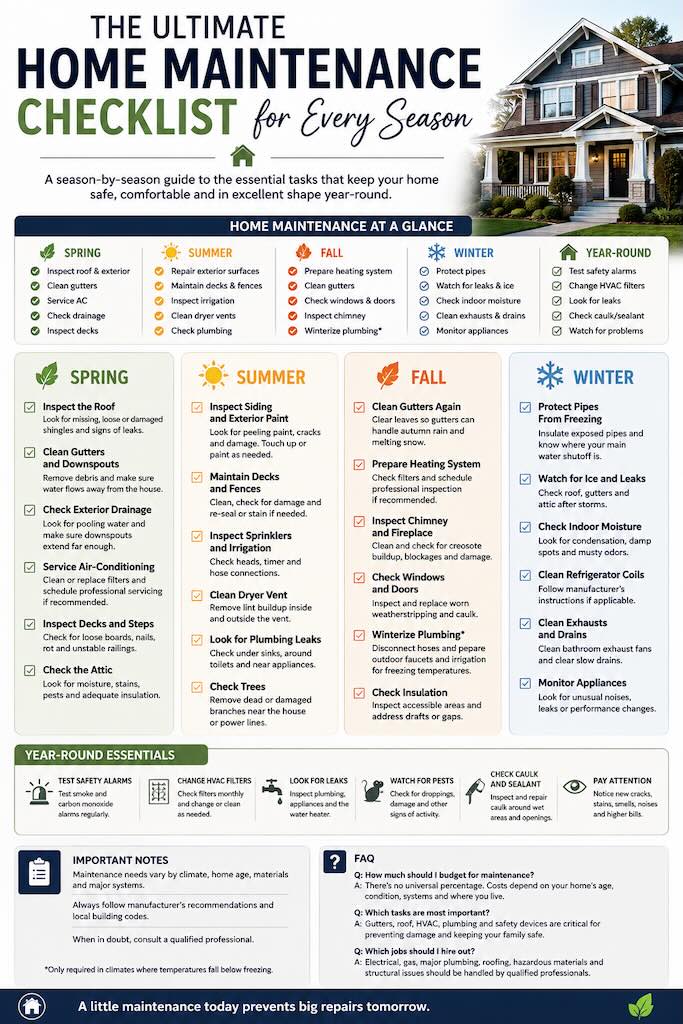
Home Maintenance Checklist at a Glance
Don’t have time to work through the entire guide right now? These are the major areas to keep on your year-round maintenance radar.
- Spring: Inspect the roof, clean gutters, service air conditioning, check exterior drainage and examine decks and patios.
- Summer: Repair exterior surfaces, maintain decks and fences, inspect irrigation, clean dryer vents and check plumbing for leaks.
- Fall: Prepare heating systems, clean gutters, inspect weatherstripping, check the chimney and prepare outdoor plumbing for freezing weather where necessary.
- Winter: Watch for leaks and ice-related damage, protect pipes from freezing, inspect indoor plumbing and tackle interior maintenance.
- Year-round: Test safety devices, watch for moisture, change HVAC filters when needed and deal with small problems before they become large ones.
Spring Home Maintenance Checklist
Spring is the season for finding out what winter did to the house. Once severe weather has passed, walk around the property and look for damage that may have developed during colder months.
Inspect the Roof
Look from ground level for missing, loose or damaged shingles, visible sagging and anything else that appears different from the previous season. Check ceilings and attic areas for signs of moisture as well.
Don’t climb onto a roof simply to perform a routine inspection if you aren’t trained and properly equipped to do so. Suspected damage is better assessed by a qualified roofing professional.
Clean Gutters and Downspouts
Remove leaves and debris that accumulated over winter and make sure downspouts are moving water away from the house rather than depositing it beside the foundation.
While you’re there, look for loose sections, leaks and areas where gutters appear to be pulling away from the roofline.
Check Exterior Drainage
Spring rain can quickly reveal drainage problems. Look for water collecting close to the foundation, persistently soggy areas and downspouts that empty too close to the house.
Good drainage helps move rainwater away from the structure rather than allowing it to collect where it can contribute to moisture problems.
Service the Air-Conditioning System
It’s much better to discover an air-conditioning problem during mild spring weather than during the first serious heat wave.
Replace or clean appropriate filters, clear debris from around outdoor equipment and consider professional servicing when recommended for your particular system.
Inspect Decks, Steps and Railings
Winter moisture and temperature changes can be hard on exterior wood. Check decks, porches and steps for loose boards, protruding fasteners, deterioration and unstable railings.
Cleaning now also prepares wood surfaces for any sealing or refinishing work planned for suitable weather later in the season.
Check the Attic for Moisture and Pests
Look for staining, damp insulation, unusual odors and evidence that pests have moved in during the colder months. Moisture in an attic can point toward a roof leak, condensation or ventilation problem that deserves further investigation.
Summer Home Maintenance Checklist
Longer days and generally more predictable weather make summer a useful time for exterior projects. It’s also a good opportunity to deal with the smaller maintenance jobs that are easy to overlook during spring cleaning.
Inspect Siding and Exterior Paint
Walk around the house and look for peeling paint, cracked siding, damaged trim and openings where water or pests could enter.
If exterior painting or sealing is needed, follow the product manufacturer’s requirements for temperature and weather conditions rather than assuming every summer day is suitable.
Maintain Decks and Fences
Clean outdoor wood and check whether protective finishes are still doing their job. Look closely for rot, splintering, loose boards and unstable posts.
A small repair now is generally easier than replacing a larger section after deterioration spreads.
Inspect Sprinklers and Irrigation
Run irrigation systems and watch where the water actually goes. Broken or misaligned sprinkler heads can waste water and may repeatedly soak siding, walkways or areas close to the foundation.
Clean the Dryer Vent
Lint doesn’t only collect in the removable lint screen. It can also accumulate within the dryer vent system, reducing efficiency and creating a potential fire hazard.
Inspect and clean the vent according to the dryer manufacturer’s recommendations, and make sure the exterior vent isn’t obstructed.
Look for Plumbing Leaks
Check underneath kitchen and bathroom sinks, around toilets and near accessible plumbing connections for moisture, staining or corrosion.
Don’t forget appliances. Washing machines, dishwashers, refrigerators with water connections and water heaters can all develop leaks that remain unnoticed until surrounding materials are damaged.
Check Trees Around the House
Look for dead, damaged or unstable branches that could fall onto the roof, vehicles or other parts of the property during severe weather.
Large trees, branches near utility lines and potentially hazardous limbs should be handled by appropriately qualified professionals rather than treated as DIY pruning projects.
Fall Home Maintenance Checklist
Fall maintenance is largely about preparing the house for colder, wetter and potentially harsher weather. In climates with freezing winters, this can be one of the most important maintenance periods of the year.
Clean the Gutters Again
Once most leaves have fallen, clear gutters and downspouts again. Water needs somewhere to go during autumn rain and winter snowmelt, and gutters packed with leaves can’t do their job properly.
Prepare the Heating System
Don’t wait until the coldest night of the year to discover that the heating system isn’t working correctly.
Check filters and follow the manufacturer’s maintenance schedule for your equipment. Depending on the type and age of the system, professional inspection or servicing may also be appropriate before the heating season begins.
Inspect the Chimney and Fireplace
If you use a wood-burning fireplace or another system connected to a chimney, make sure it is inspected and cleaned at appropriate intervals.
Creosote accumulation, blockages and structural deterioration can create serious safety problems, so chimney work is one area where professional inspection can be particularly valuable.
Check Windows and Doors for Drafts
Inspect weatherstripping and caulk around windows and exterior doors. Damaged seals can allow drafts and moisture inside while making heating and cooling less efficient.
Divine’s guide to how windows influence home comfort and energy expenses looks more closely at the role windows play in year-round comfort.
Prepare Exterior Faucets for Freezing Weather
In climates where temperatures fall below freezing, disconnect garden hoses and prepare exterior faucets and irrigation systems according to the equipment manufacturer’s recommendations and local climate conditions.
Water left where it can freeze and expand may damage pipes or irrigation components.
Check Insulation Where Accessible
Fall is a useful time to investigate rooms that are difficult to heat, persistent drafts or unusually high heating costs. Accessible attic insulation can also be checked for obvious gaps, compression or moisture damage.
Insulation requirements vary by climate and building design, so significant upgrades are better planned around the specific home rather than treated as a universal annual maintenance task.
Winter Home Maintenance Checklist
Winter maintenance is less about major exterior projects and more about monitoring the house while cold weather puts its systems under additional pressure.
Protect Pipes From Freezing
In freezing climates, pay particular attention to plumbing in unheated or poorly insulated areas. Know where the main water shutoff is located before an emergency occurs.
If you suspect a frozen pipe, don’t use an open flame to thaw it. Follow appropriate safety guidance or contact a plumber if you’re unsure how to proceed.
Watch for Roof and Gutter Problems
After significant snow, ice or severe storms, visually inspect the roof and gutters from a safe location for obvious damage.
Ice dams can develop in some cold climates and contribute to water entering beneath roofing materials. Persistent ice buildup or suspected roof damage deserves professional attention rather than a risky climb onto an icy roof.
Check for Indoor Moisture
Condensation on windows, damp areas and musty smells can become more noticeable during winter when homes remain closed for longer periods.
Persistent moisture shouldn’t simply be wiped away and forgotten. Look for the underlying source, which could involve ventilation, plumbing, insulation or water intrusion.
Clean Refrigerator Coils When Required
If your refrigerator model has accessible condenser coils that require cleaning, follow the manufacturer’s instructions for removing accumulated dust and debris.
Not every modern refrigerator requires the same maintenance, so check the appliance manual before pulling anything apart.
Clean Exhaust Fans and Drains
Clean bathroom exhaust fan covers and make sure fans are operating properly. Good bathroom ventilation helps manage the moisture produced by showers and baths.
It’s also a convenient time to clean slow drains before a minor buildup turns into a complete blockage.
Home Maintenance Tasks to Do Throughout the Year
Not everything fits neatly into one season. A few maintenance habits deserve attention throughout the year.
- Test smoke and carbon monoxide alarms according to manufacturer and local safety recommendations.
- Check HVAC filters regularly and replace or clean them at the interval appropriate for your system, household and filter type.
- Look for water leaks beneath sinks, around toilets and near water-using appliances.
- Watch for pests and investigate droppings, damaged materials or other signs of activity early.
- Check caulk and sealant around wet areas and exterior openings and repair deteriorated sections when appropriate.
- Pay attention to unusual changes. New cracks, stains, smells, noises or unexpectedly high utility bills can be early signs that something needs investigation.
Don’t Forget the Water Heater
The water heater is easy to ignore because it tends to sit quietly in a basement, garage or utility closet until something goes wrong.
Inspect the surrounding area periodically for moisture, corrosion or other visible changes. Maintenance requirements vary considerably between conventional tank, tankless and other water-heating systems, so follow the manufacturer’s instructions rather than applying generic advice to every unit.
If you notice leaking, significant corrosion, unusual noises or unreliable hot water, have the system assessed before a minor issue becomes a larger one.
What About a Sump Pump?
If your home relies on a sump pump, don’t wait for heavy rain to discover that it has stopped working.
Test and maintain the pump according to its manufacturer’s instructions, keep the surrounding pit free of inappropriate debris and make sure discharged water is being directed to an appropriate location.
Homes with a history of basement flooding may also benefit from a backup system, depending on local conditions and the consequences of a power failure during severe weather.
Home Maintenance Depends on Where You Live
No home maintenance checklist can apply perfectly to every house.
A homeowner in Minnesota may spend fall preparing plumbing for freezing temperatures and winter dealing with snow and ice. Someone in Florida may be more concerned with air conditioning, humidity, drainage and storm preparation. Homes in dry climates bring their own maintenance priorities.
The age of the house matters too. An older property may need closer monitoring of roofing, plumbing and electrical systems, while a newer home may have different manufacturer-specific maintenance requirements.
Use a seasonal checklist as a framework, then adapt it to your climate, property and equipment.
The Best Home Maintenance Habit Is Consistency
The goal isn’t to spend every weekend fixing something around the house. It’s to notice small problems while they’re still small.
Walk around the property occasionally. Look beneath sinks. Notice when a room suddenly feels draftier, when a gutter starts overflowing or when a stain appears where there wasn’t one before.
A simple seasonal routine makes home maintenance much less overwhelming — and gives you a better chance of dealing with inexpensive maintenance before it becomes an expensive repair.
FAQ: Annual Home Maintenance
What home maintenance should be done every year?
Common annual tasks include inspecting the roof and exterior, cleaning gutters, checking heating and cooling systems, looking for plumbing leaks, examining caulk and weatherstripping, maintaining decks and exterior surfaces, and checking appliances and safety equipment according to their manufacturers’ recommendations.
How much should homeowners budget for maintenance?
There isn’t one percentage that works for every property. Maintenance costs depend on the home’s age, size, condition, climate, construction and major systems. Older homes or properties with aging roofs, HVAC equipment or plumbing may require a considerably larger reserve than newer homes.
What is the most important fall home maintenance?
In colder climates, preparing the heating system, clearing gutters, checking windows and doors, inspecting fireplaces or chimneys that will be used, and protecting vulnerable outdoor plumbing are among the most important fall tasks.
How often should gutters be cleaned?
It depends on the property. Homes surrounded by trees may require gutter cleaning several times a year, while other properties need it less frequently. The important thing is keeping gutters and downspouts clear enough to move water away from the house effectively.
How often should HVAC filters be changed?
There is no universal schedule because filter type, HVAC equipment, pets, household conditions and system usage all matter. Inspect filters regularly and follow the recommendations provided for your particular system and filter.
Which home maintenance jobs should not be DIY?
Jobs involving significant electrical work, gas systems, hazardous materials, major structural concerns, dangerous roof access and other work requiring specialist knowledge are generally better handled by qualified professionals. Local licensing and permit requirements should also be considered.