




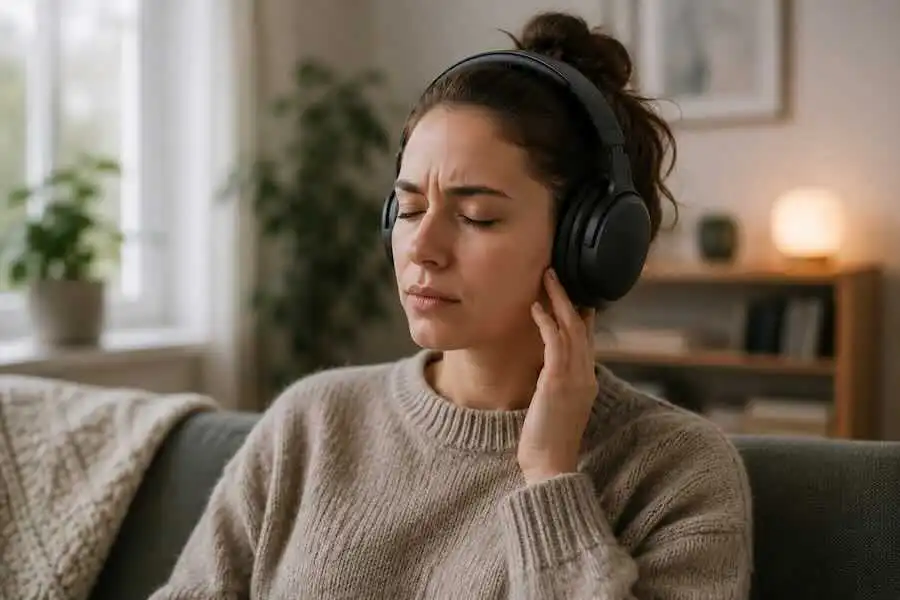
You put on a pair of noise-cancelling headphones, switch on active noise cancellation and the room seems to contract. The air conditioner fades. Traffic retreats. Then something stranger happens: your ears feel blocked, your head feels slightly pressurised, or there is a sensation that resembles the first few seconds of an aeroplane descent.
It can feel remarkably physical. Yet in normal use, active noise cancellation is not actually changing the air pressure inside your ears. The sensation is better understood as a collision between acoustics, perception and the way our brains interpret very low-frequency sound.
Why noise cancellation can feel like pressure
The curious sensation starts with how noise-cancelling headphones work. Instead of relying only on padding to physically block sound, active noise cancellation — usually shortened to ANC — uses microphones to monitor environmental noise.
Electronics inside the headphones then generate an opposing sound wave designed to reduce that unwanted sound before it reaches your ears. This process is particularly effective against steady, low-frequency noise: aircraft engines, ventilation systems, road rumble and the mechanical hum that often sits beneath a working day.
The important distinction is that ANC manipulates sound waves, not atmospheric pressure. Your headphones are not creating the same pressure change that occurs when an aircraft climbs or descends.
Still, your auditory system can interpret the altered low-frequency environment in a way that feels surprisingly similar.
Your brain is part of the equation
Hearing is not simply a microphone connected to the brain. What we perceive is assembled from information arriving through the ears, expectations about our surroundings and other sensory signals.
Switch powerful ANC on and a familiar layer of low-frequency information can disappear almost instantly. A room that contained ventilation rumble a moment earlier suddenly becomes acoustically still. The change can be dramatic enough for some listeners to perceive fullness, suction or pressure even though the actual atmospheric pressure around the eardrum has not meaningfully changed.
This helps explain why the sensation can be difficult to describe. It is not necessarily pain. It may feel more like heaviness behind the ears, a faint inward pull or the instinct to swallow and equalise your ears.
The sealed earcups can add another sensation
ANC is only part of the experience. Over-ear headphones also create a relatively enclosed space around each ear. Thick cushions press against the skin, while the earcups reduce the amount of outside sound reaching the ear mechanically.
That seal is useful. Passive isolation gives the electronic cancellation system less work to do. But it can also make the headphones feel physically enclosed, especially during long sessions. Heat builds. The cushions compress. Small changes in fit become more noticeable.
Someone who already finds closed-back headphones claustrophobic may therefore associate several sensations with ANC when some of the discomfort actually comes from clamping force, earcup sealing or prolonged wear. Comfort matters just as much as specifications when headphones stay on for hours at a time. That was also a key consideration in our earlier look at headphones for remote work.
Why some people notice it more than others
Two people can wear the same headphones and describe completely different experiences. One hears an unusually peaceful room. The other wants to remove them after ten minutes.
Individual sensitivity to low-frequency sound appears to matter, as does the particular ANC implementation. Different headphones use different microphone arrays, processing algorithms, earcup designs and levels of cancellation. Fit also changes what reaches the ear.
That means stronger ANC is not automatically more comfortable ANC. A flagship model may remove more environmental rumble while simultaneously producing a perceptual effect that one listener dislikes.
Is the pressure sensation dangerous?
The pressure-like sensation associated with ANC should not be confused with a genuine change in atmospheric pressure. Properly functioning consumer noise-cancelling headphones reduce sound through acoustic interference rather than pressurising the ear.
Volume is a separate issue. Noise cancellation can make listening in loud environments more comfortable because there is less background noise to compete with your music, podcast or call, but safe listening levels still matter. The World Health Organization recommends managing both listening volume and exposure duration to reduce the risk of hearing damage.
Persistent pain, significant dizziness, ringing in the ears or symptoms that continue after the headphones are removed deserve more attention. Those experiences should not simply be assumed to be a normal ANC effect; consider stopping use and seeking medical advice if symptoms are persistent or concerning.
Can noise-cancelling headphones cause dizziness?
Some listeners report mild dizziness, disorientation or an unusual floating sensation while using strong noise cancellation. Again, perception matters.
The inner ear contributes to both hearing and balance, while the brain continuously combines auditory, visual and vestibular information to understand where the body is in space. An abruptly altered acoustic environment may feel unfamiliar to a sensitive listener even without an actual pressure change.
If the sensation appears immediately when ANC is activated and disappears when it is switched off, reducing the cancellation intensity — where the headphones allow it — can be a useful test.
How to make ANC headphones feel more comfortable
The simplest fix is often less intensity rather than abandoning noise cancellation entirely. Many modern headphones offer adjustable ANC, adaptive cancellation or transparency modes. Try a moderate setting and allow some environmental sound back into the mix.
- Start with a lower ANC setting if your headphones support adjustment.
- Take short breaks during long listening or working sessions.
- Check whether the earcups are creating excessive clamping pressure.
- Keep playback volume moderate rather than using ANC as permission to listen louder.
- Try transparency or ambient mode periodically.
- Compare ANC on and off in the same quiet room to separate electronic cancellation from physical fit.
Fit deserves particular attention. A small adjustment to headband length or earcup position can change the seal around the ear and make a surprisingly large difference. The goal is isolation without feeling compressed.
Do all noise-cancelling headphones create the same feeling?
No. ANC systems vary considerably between manufacturers and even between models from the same brand.
Headphones from Sony, Bose, Apple and Sennheiser each combine different hardware, processing and acoustic design. One model can feel completely natural to a listener who finds another uncomfortable.
This is one reason a short listening test can reveal something a specification sheet cannot. Noise-reduction measurements tell you how effectively a headphone suppresses sound. They cannot tell you exactly how your auditory system will react to the resulting silence.
The practical takeaway
If ANC makes your ears feel strange, first separate perceived pressure from actual physical discomfort. Switch ANC off while keeping the headphones on. If the sensation immediately changes, the cancellation itself may be contributing. If discomfort remains, the earcup seal, heat or clamping force may be the larger problem.
Then experiment. Reduce ANC strength. Use an ambient mode. Take the headphones off for several minutes. Try another model if possible. The strongest noise cancellation on paper is not necessarily the best setting for eight hours at a desk.
Conclusion
That strange plugged-ear sensation is one of the more counterintuitive details of active noise cancellation. The room becomes quieter, yet your ears can insist that something has changed physically.
Usually, what changed is the acoustic landscape. Low-frequency sound has been stripped away, the earcups have sealed you into a smaller listening space and the brain is interpreting a suddenly unfamiliar environment. For many people, the feeling fades with familiarity. For others, gentler ANC or a different headphone simply feels better.
Silence, it turns out, has a texture of its own.
Frequently Asked Questions
Why do noise-cancelling headphones make my ears feel clogged?
Strong ANC removes low-frequency environmental sound very quickly. Some listeners perceive the resulting acoustic change as fullness or pressure even though the headphones are not creating an aircraft-like atmospheric pressure change inside the ear.
Do noise-cancelling headphones actually create pressure?
Active noise cancellation works by generating sound waves that counter unwanted environmental noise. It does not need to increase atmospheric pressure around your eardrum to cancel sound.
Why does ANC make me feel dizzy?
Some people report mild dizziness or disorientation when using strong ANC. If this happens, switch ANC off, take a break and try a lower cancellation level. Persistent or significant dizziness should not simply be dismissed as a normal headphone effect.
Does the ANC pressure feeling go away?
For some listeners it becomes less noticeable as they become accustomed to the altered acoustic environment. Others remain sensitive and may prefer weaker ANC, transparency modes or headphones with a different cancellation system.
Can I reduce the weird feeling without turning ANC off?
Yes. If your headphones support adjustable noise cancellation, try reducing its intensity. Shorter listening sessions, a more comfortable fit and occasional use of transparency mode can also help.