



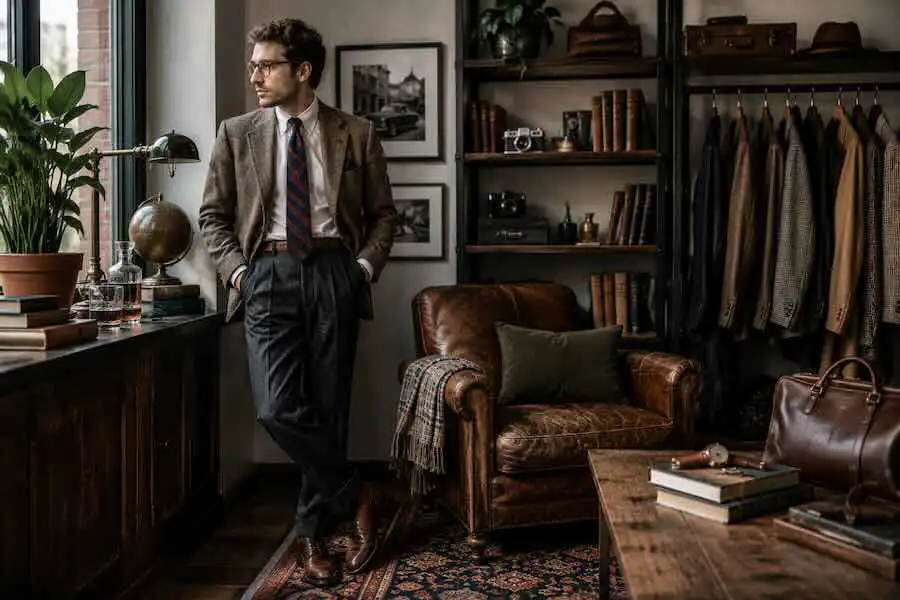
Vintage menswear works best when it feels lived in rather than performed. A softly structured blazer, high-rise trousers, brushed wool, faded suede or a shirt with the relaxed proportions of another decade can give an outfit character without turning it into costume. In 2026, the strongest approach is selective: borrow the construction, texture and confidence of earlier eras, then let contemporary pieces keep the silhouette grounded.
The distinction between vintage-inspired and outdated often comes down to editing. You do not need to dress entirely from one decade. In fact, combining heritage pieces with contemporary fashion usually produces a more convincing result. Start with quality, pay close attention to proportion, and allow one or two historical references to carry the look.
Invest in timeless pieces First
A vintage wardrobe becomes much easier to navigate when its foundation is simple. A well-cut blazer, wool trousers, crisp shirt, trench coat, loafers and a good overcoat can move between decades without looking tied to any single one.
Look beyond labels and examine construction. Natural fibers, substantial buttons, clean seams and fabric with enough weight to drape properly often matter more than whether a garment is technically vintage. Secondhand shopping can be particularly rewarding here because older tailoring frequently offers details that are expensive to reproduce today.
Do not assume that buying new automatically gives you a better wardrobe. A beautifully maintained wool coat from twenty years ago may have considerably more life left in it than a cheaply constructed new alternative. The aim is longevity rather than accumulating pieces simply because they fit an aesthetic.
Build a Restrained Vintage Color Palette
Color is one of the quickest ways to suggest a period without recreating it literally. Tobacco brown, olive, cream, rust, burgundy, charcoal and deep navy carry a quiet heritage quality and combine easily with modern basics.
Rather than wearing several retro colors and patterns simultaneously, establish a neutral foundation and introduce contrast through one element. Cream trousers beneath a dark brown jacket feel considered. An olive overshirt over an off-white knit creates depth. Burgundy loafers can bring warmth to navy tailoring without becoming theatrical.
The same restraint applies to pattern. Checks, herringbone, stripes and subtle geometrics can reference earlier decades beautifully, but they need visual space. Pair a patterned jacket with quiet trousers, or place a striped shirt beneath an otherwise monochromatic outfit. Divine’s guide to minimalism in fashion offers a useful counterpoint when editing a more expressive wardrobe.
Let Texture Do More of the Work
Vintage menswear is tactile. Tweed catches low winter light differently from smooth worsted wool. Corduroy creates shadow between its ribs. Linen wrinkles. Suede develops a patina. These surfaces make relatively simple outfits feel richer without requiring loud branding or complicated styling.
Try combining contrasting textures within a narrow color family: brushed wool trousers with polished leather loafers, a suede jacket over cotton knitwear, or heavyweight denim beneath a soft cardigan.
For warmer weather, terry cloth shirts for men can introduce a distinctly mid-century leisure mood. Keep the rest uncomplicated with tailored shorts, relaxed chinos or straight-leg trousers and minimal footwear.
Material claims deserve scrutiny, particularly when sustainability is part of the purchase decision. Recycled, organic or alternative fibers are not automatically environmentally superior in every context. Durability, manufacturing, transportation, care and how long you intend to keep a garment all contribute to its impact.
Fit Matters More Than the Decade
One of the easiest mistakes in vintage dressing is assuming that contemporary slim proportions are universally flattering. They are not, and they can erase much of the character that makes older menswear interesting.
Many vintage silhouettes rely on higher trouser rises, fuller legs, longer coat lines and jackets with more deliberate structure. Instead of automatically narrowing everything, study how the garment was intended to sit on the body.
At the same time, historical accuracy is not the objective. Alter proportions that feel distracting while preserving the elements that give the piece character. A tailor can adjust sleeve length, trouser hems and waist suppression without stripping away the original silhouette.
Measurements are especially important when shopping vintage because sizing standards have changed considerably. Chest, shoulder, waist, rise and inseam measurements tell you far more than the number printed inside an old label.
Use Accessories as Punctuation
Accessories can make vintage style convincing, but they can also push it directly into costume. A pocket watch, fedora, tie bar, patterned braces, signet ring and vintage briefcase worn simultaneously tell too many stories at once.
Choose one or two details. A slim mechanical watch with a worn leather strap. Tortoiseshell eyewear. A silk scarf tucked beneath a coat. A simple signet ring. A beautifully aged belt.
These pieces work because they reward closer inspection rather than announcing themselves across the room. Divine’s guide to essential men’s fashion accessories provides further ideas for building a considered collection.
Mix Decades Rather Than Recreating One
The most natural vintage outfits rarely look as though they came from a complete period wardrobe. Try a 1970s suede jacket with contemporary trousers. Wear a 1950s-inspired camp-collar shirt beneath a modern overshirt. Put vintage loafers under relaxed denim and a clean crew-neck knit.
This tension keeps the clothes connected to the present. It also gives you freedom to choose what genuinely suits your body and personality rather than following historical rules that were never designed around you.
Shop Vintage With Condition in Mind
Age alone does not make a garment worth buying. Inspect seams, linings, zippers, buttonholes and high-friction areas such as cuffs, collars and trouser seats. With knitwear, look carefully for moth damage. With leather, check for cracking and dryness rather than assuming every mark is desirable patina.
Online marketplaces can broaden the search considerably, but measurements, detailed photographs and clear condition descriptions are essential. When possible, ask sellers about alterations and repairs before purchasing.
Practical Takeaway: A Simple Vintage Formula
- Start with one vintage focal point: a jacket, coat, shirt, trousers or pair of shoes.
- Keep the supporting pieces quieter: contemporary basics prevent the outfit from becoming costume-like.
- Work with texture: wool, suede, corduroy, linen and heavyweight cotton add character naturally.
- Respect original proportions: do not automatically slim every vintage garment.
- Edit accessories: one distinctive detail usually has greater impact than five competing ones.
- Buy for condition and longevity: an older garment is only sustainable if you can realistically wear and maintain it.
Conclusion: Vintage Style Should Still Look Like You
The appeal of vintage menswear is not nostalgia alone. Older clothing offers different proportions, richer surfaces and design details that can interrupt the sameness of a contemporary wardrobe.
The trick is knowing when to stop. Choose the beautifully cut jacket. Keep the high-rise trousers. Wear the old watch. Then leave enough contemporary space around those pieces for your own identity to come through. The result feels less like dressing for another era and more like developing a wardrobe that simply refuses to expire.
FAQ: Men’s Vintage Style
How do men wear vintage clothes without looking outdated?
Combine one or two vintage pieces with contemporary basics. Modern footwear, simple knitwear or clean trousers can counterbalance a strongly period-specific jacket or shirt.
Which vintage pieces should a beginner buy first?
Start with versatile pieces that integrate easily into an existing wardrobe, such as a wool blazer, leather jacket, overcoat, loafers or vintage watch. Avoid building an entire period-specific wardrobe before discovering which silhouettes actually suit you.
Should vintage clothes fit differently from modern clothes?
Often, yes. Older tailoring may have higher rises, wider trousers, stronger shoulders or different jacket lengths. Judge the proportions as a complete silhouette rather than expecting every garment to fit like contemporary slim-cut clothing.
What colors work well for vintage-inspired menswear?
Olive, tobacco, rust, cream, navy, burgundy, camel and charcoal are particularly versatile. Their muted character also makes it easier to combine vintage textures and patterns without creating visual overload.
Is buying vintage clothing more sustainable?
Buying an existing garment can extend its useful life and reduce demand for new production, but sustainability depends on more than age. How frequently you wear the item, its durability, care requirements, transportation and whether it replaces rather than supplements unnecessary purchases all matter.