
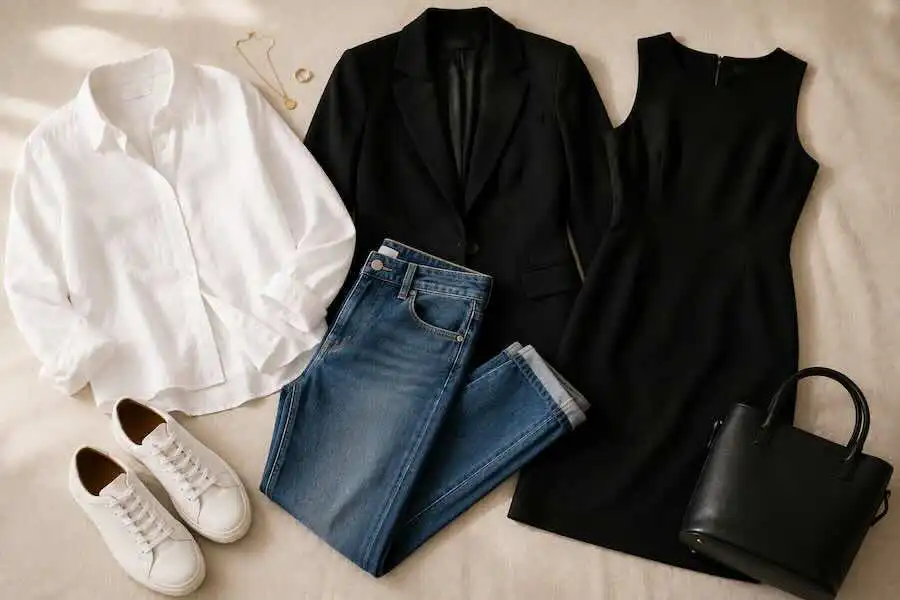
A wardrobe rarely needs more clothes. More often, it needs better anchors: the pieces you reach for when the morning is rushed, the invitation is vague, or everything else suddenly feels too trend-driven.
That is where classics earn their space. Their strength is not that they remain completely unchanged, but that their basic shapes survive fashion cycles remarkably well. Proportions shift. Denim gets wider, tailoring softens, sneakers become slimmer. The foundation remains familiar.
If you want a wardrobe that feels current without rebuilding it every season, these five pieces provide a particularly useful starting point.
The button-up shirt does more than office duty
A crisp button-up has a certain visual clarity. White cotton against denim. Pale blue beneath a dark blazer. An oversized shirt with sleeves loosely rolled on a warm afternoon. Few garments move between settings quite as easily.
White, black, cream and soft blue are especially adaptable, but fabric matters as much as color. Cotton poplin creates a sharper silhouette, while linen and softer cotton weaves introduce movement and make the same basic garment feel more relaxed.
Fit does not have to mean rigid tailoring either. A slightly generous cut can look contemporary worn open over a simple top, while a closer fit works neatly beneath jackets and knitwear. Rather than buying several versions immediately, find one whose collar, shoulders and length work with the clothes you already own.
A black dress leaves room for personality
The little black dress became a cliché for a reason. Strip away the mythology and it is simply an exceptionally practical canvas.
A clean black dress can move from dinner to work, an exhibition opening or an informal weekend depending on what surrounds it. Heels and restrained jewelry sharpen the mood. A leather jacket changes the silhouette. White sneakers immediately pull it towards daytime.
There is no requirement for one particular hemline or body-hugging cut. Someone building a vintage-inspired wardrobe might prefer a defined waist and fuller skirt, while a minimalist wardrobe may suit a straighter, architectural shape. The enduring quality comes from simplicity rather than a prescribed silhouette.
Good denim gets better when it feels personal
Denim carries evidence of being worn. Creases appear at the hips, indigo gradually softens and the fabric begins to follow the body. That character is part of its appeal.
Instead of chasing whichever jean shape dominates a particular season, concentrate on proportion and fit. Straight, relaxed, wide and tapered cuts can all have longevity when they work with your body and the rest of your wardrobe.
classic blue remains the easiest choice for casual dressing, while dark indigo and black denim can create a cleaner evening silhouette. Fit becomes especially important with jeans, which is why made-to-measure denim and alterations can be worth considering when standard sizing consistently misses the mark.
A useful pair should also connect naturally with everything around it: the button-up shirt, a fine knit, an old T-shirt or the next piece on this list.
The blazer has become less formal
Modern tailoring is at its most useful when it does not look as though it belongs exclusively in an office. A well-cut blazer brings structure to soft clothing and can make an otherwise ordinary combination feel intentional within seconds.
Black is dependable, but charcoal, navy, camel and chocolate brown can be equally versatile. Look beyond color to the shoulder line, fabric weight and length. Softer construction feels relaxed with denim and sneakers; sharper tailoring works when the occasion calls for something more polished.
The contrast is often what makes it interesting. Try tailoring with a plain T-shirt instead of a formal blouse, or wear a blazer over knitwear with relaxed jeans. A classic becomes more convincing when it looks lived in rather than carefully preserved for special occasions.
White sneakers are the quiet connector
White sneakers may be comparatively casual, yet their usefulness has pushed them firmly into modern wardrobe territory. Their clean surface creates a visual pause beneath denim, tailoring, dresses and wide-leg trousers.
For greater longevity, avoid choosing a pair solely because its exaggerated shape happens to be fashionable. Simple leather, suede or canvas uppers with restrained detailing tend to move between seasons more easily.
Maintenance makes a difference here. White footwear loses some of its versatility once it becomes heavily marked, so occasional cleaning and sensible rotation will keep a good pair looking intentional rather than neglected.
Build around repetition, not novelty
The most useful wardrobe is not necessarily the largest one. It is the wardrobe in which pieces recognize each other.
A button-up works with the jeans. The jeans work with the blazer. The blazer works with the dress. White sneakers can sit beneath almost all of them. That compatibility creates dozens of combinations from a surprisingly small number of garments.
Before adding another trend-led purchase, ask a simple question: can you picture yourself wearing it with at least three things you already own? If the answer is no, the garment may be creating another styling problem rather than solving one.
The lasting wardrobe is edited slowly
timeless style does not require dressing conservatively or ignoring fashion. It simply gives experimentation a stable background. Trends can come through color, jewelry, bags, sunglasses or an unusual silhouette while dependable pieces hold everything together.
Buy slowly. Notice what you repeatedly wear. Pay attention to fabric, construction and fit rather than the promise that something is a permanent essential. The best classic is ultimately the piece that survives years in your wardrobe because you still want to put it on.
Questions about building a timeless wardrobe
What colors are best for classic wardrobe pieces?
Black, white, navy, cream, grey, camel and denim blue are easy to combine, but your own palette matters more than following a fixed list. Choose neutrals that complement the colors you naturally wear most often.
Does timeless fashion mean avoiding trends?
No. A foundation of versatile clothing can actually make trends easier to wear. Introduce seasonal ideas selectively through accessories, color, texture or one statement garment rather than replacing an entire wardrobe.
Is expensive clothing always a better investment?
Not necessarily. Price alone does not guarantee durability. Examine fabric, stitching, construction, care requirements and how frequently you expect to wear the garment before deciding what represents good value.
How many classic pieces does a wardrobe need?
There is no universal number. Start with the gaps in your actual routine. Someone working in a creative studio will need a different foundation from someone attending formal meetings every week. Versatility matters more than hitting a prescribed quantity.